Jax Says
The AI Capability Gap Starts With a Simple Question
Most companies are asking the wrong question about AI. They ask: Which tool should we buy? That is not the right starting point. The...

Most companies are asking the wrong question about AI.
They ask:
Which tool should we buy?
That is not the right starting point.
The first-principles question is:
What creates value in our business, what slows it down, and where can AI change the work itself?
That matters because AI does not create value by existing.
It creates value only when it improves a task, shortens a workflow, raises output quality, or helps people make better decisions.
This is where the real AI capability gap begins.
Not between companies that have AI and companies that do not.
But between companies that experiment with AI and companies that rebuild work around it.
Start From First Principles
Every business runs on the same basic logic:
- Value comes from useful outputs
- Outputs come from workflows
- Workflows are made of tasks
- Tasks consume time, judgment, coordination, and skill
- If AI improves those inputs, the workflow changes
- If the workflow changes, the business result can change
So the real AI question is not:
Can we use ChatGPT?
It is:
Which tasks create drag, and which workflows matter enough to redesign?
That shift sounds small.
It is not.
It separates AI theater from AI leverage.
What the 2026 Data Actually Shows
Current data points in the same direction.
OpenAI’s January 2026 workplace report says over a quarter of U.S. workers report using ChatGPT for work, and 43% of U.S. knowledge workers use AI. It also notes that more than half of workplace AI users engage with it four or more days a week, and that daily usage doubled over the last year.
That means the tool layer is spreading fast.
But spread is not the same as transformation.
McKinsey’s Global Tech Agenda 2026 says top CIOs are rewiring their companies for growth, using AI and data to build intelligence-driven operating models, and deploying agentic AI to create measurable business value. The divide is no longer between companies with tech budgets and those without. It is between companies that modernize systems and companies that redesign how work gets done.
BCG makes the same point even more clearly. In its February 2026 report, it says future-built companies show three-year total shareholder returns roughly four times higher than AI laggards. It also argues that only about 10% of AI value comes from algorithms and 20% from technology, while the remaining 70% comes from the people side, meaning skills, roles, learning, and organizational redesign.
So from first principles and from current evidence, the conclusion is the same:
AI value is mostly a workflow and capability problem, not a tool problem.
Why Most AI Efforts Stall
Most companies follow a predictable path:
- They buy licenses
- They run a few workshops
- Teams test prompts
- A few people get excited
- Nothing structural changes
Why?
Because tools were added, but the work system stayed the same.
If reporting still takes five handoffs, AI will not fix that by itself.
If strategy still depends on one overloaded manager, AI will not fix that by itself.
If marketing, sales, operations, and leadership are still working in silos, AI will not fix that by itself.
The bottleneck usually is not intelligence.
It is process design.

The Better Way to Think About AI
A useful model is simple:
1. Find the friction
Look for tasks that are:
- repetitive
- slow
- unclear
- blocked by missing expertise
- heavy on synthesis, writing, analysis, or coordination
2. Group tasks into workflows
Do not stop at single tasks.
Map the full sequence.
Example:
- research
- analysis
- decision-making
- content creation
- reporting
- follow-up
3. Measure where value lives
Ask:
- Does this save time?
- Does this increase quality?
- Does this reduce cost?
- Does this raise speed to action?
- Does this improve revenue or margin?
If the answer is vague, the use case is weak.
If the answer is measurable, it is worth testing.
The Six Practical AI Levers
OpenAI’s 2026 business guide on identifying and scaling AI use cases breaks discovery into practical categories and recommends focusing on immediate business value, employee-led use case discovery, and prioritization. It also emphasizes leadership support and faster wins over impressive but slow-moving complexity.
In practice, most useful business applications fall into a small set of levers:
- content creation
- research
- coding
- data analysis
- ideation and strategy
- automation
These are not trends.
They are work patterns.
That is important because it means AI adoption can be operationalized.
You do not need magic.
You need structure.
A First-Principles Example
Take a CEO who spends 8 hours each week on:
- reading updates
- rewriting notes
- preparing summaries
- checking decisions with incomplete context
- chasing follow-ups
At first principles level, the problem is not “too much email.”
The problem is this:
- too much information enters the system
- too little of it is structured
- decision-quality depends on synthesis
- synthesis consumes executive time
- executive time is high-value and limited
So the intervention is obvious.
Use AI to:
- summarize inputs
- surface key changes
- structure decisions
- draft outputs
- standardize follow-up
Now the workflow changes.
If that reduces 8 hours to 3, and improves decision speed, the value is real.
That is what good AI coaching should do.
Not teach random prompts.
But redesign the way work moves.
What Leaders Should Do Now
If you lead a company or a department, the next step is not another generic AI session.
It is to answer three first-principles questions:
Where is time being wasted?
Find the recurring drag.
Where is judgment being overloaded?
Find the roles where decision-making is slowed by too much raw input.
Where does better output create real business impact?
Find the workflows tied to revenue, margin, speed, customer experience, or execution quality.
Start there.
Not with hype.
Not with “cool tools.”
Not with experiments disconnected from business value.
The Harsh Truth
Most companies do not have an AI tool problem.
They have a capability problem.
They do not know how to:
- identify the right workflow
- redesign the task chain
- train teams around useful patterns
- measure business impact
- scale what works
That gap is where the opportunity sits.
Because while many firms are still playing with prompts, others are quietly building operating advantage.
And operating advantage compounds.
Final Thought
AI should augment expertise.
But from first principles, that only happens when expertise is linked to better systems, better workflows, and better decisions.
If AI does not change how work flows, it will not change business results in a meaningful way.
If it does, the effect can compound across every department.
That is the real opportunity.
If you want to assess where your company is losing time, value, or decision speed, and where AI can actually improve the workflow, you can book a short strategy call here: Jax 15-minute strategy call
Source notes
- OpenAI workplace adoption patterns, January 22, 2026.
- McKinsey Global Tech Agenda 2026, February 9, 2026.
- BCG, AI Transformation Is a Workforce Transformation, February 4, 2026.
- OpenAI, Identifying and scaling AI use cases.
See other posts

Embracing the Power of Consistency: My Journey with Flux in Visual Modeling
Today, I’m excited to share the results of a journey that took time, patience, and a...

Don’t Wait for AI to Be “Perfect” – It’s Ready to Boost Your Work Today
If you're looking for AI to boost business performance, now is the perfect time to act....
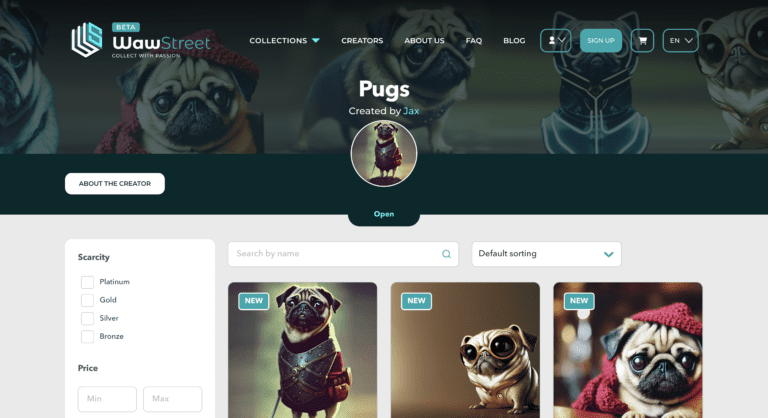
Introducing WawStreet, the newest and coolest NFT platform to hit Belgium!
The world of NFTs is rapidly growing and expanding, and now, with the launch of WawStreet,...