AI Hardware & Infrastructure · 27 Oct 2026 · 17:46 CET
Oracle Cloud Infrastructure to Offer Google’s TPU Accelerators
Publisher preview · OZZZER analysis pending editorial review.
PUBLISHER ARTICLE PREVIEW
From the original article
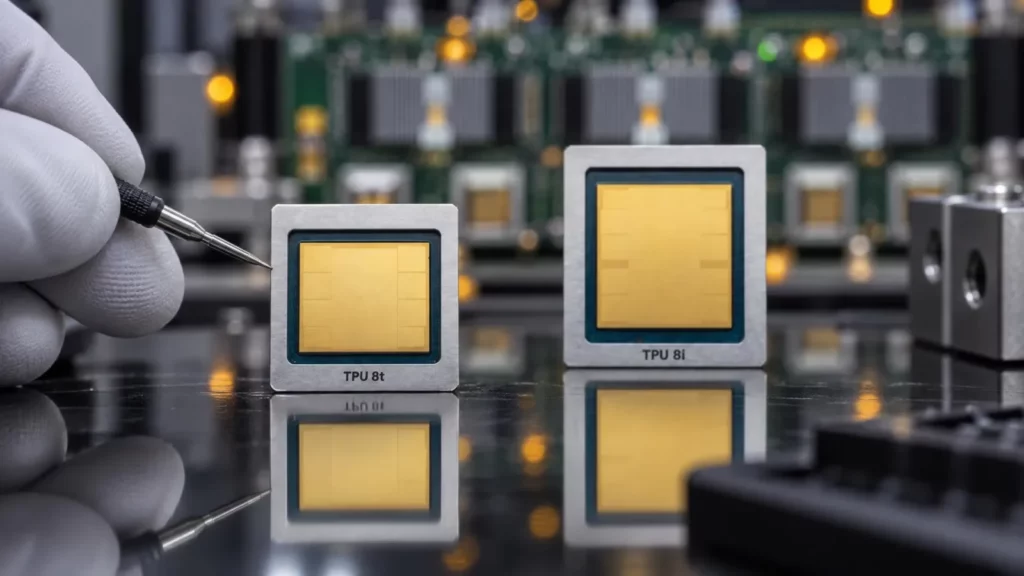
Oracle and Google announced on October 27, 2026, at Oracle AI World in Las Vegas that Google’s Tensor Processing Units (TPUs) will be available through Oracle Cloud Infrastructure (OCI). Oracle’s announcement describes OCI as the first hyperscale cloud platform outside Google to offer Google TPUs, with availability planned for calendar year 2027.
OCI will provide the power, cooling, and datacenter networking to deploy Google TPUs at scale within Oracle’s infrastructure. Oracle and Google said the TPUs can support large-model training and post-training, including dense and mixture-of-experts (MoE) models, as well as production inference for reasoning, agentic, and long-context applications. Customers will be able to choose Google TPUs within OCI optimized for their workloads, performance requirements, and cost objectives.
“Different AI workloads have different compute needs,” said Mahesh Thiagarajan, president of Oracle Cloud Infrastructure. “Bringing Google TPUs to OCI gives customers access to multiple leading AI compute architectures in one cloud.”
Amin Vahdat, senior vice president and chief technologist for AI and infrastructure at Google, said the next generation of AI will require a diverse range of compute. He said bringing Google TPUs to OCI will give more organizations access to the technology and greater flexibility in how they build and run their most complex AI applications.
The companies described Google TPUs as custom accelerators co-designed with open software to power the full AI lifecycle, from frontier training and large-scale inference to the multi-step reasoning demands of agentic AI. They said the TPU portfolio draws on more than a decade of custom AI silicon development, and described the architecture as designed to maximize AI processing from each watt of electricity, with fast access to model data and rapid communication between chips.
Source
Unite.AI · 27 Oct 2026 · 17:46 CET
Open the original at Unite.AI ↗