AI · 26 Oct 2026 · 14:31 CET
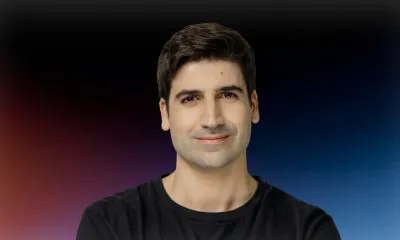
Will Bodewes, Co-Founder and CEO of Phonely – Interview Series
Publisher preview · OZZZER analysis pending editorial review.
PUBLISHER ARTICLE PREVIEW
From the original article
Will Bodewes is the Co-Founder and CEO of Phonely, a voice AI company focused on helping businesses answer calls and improve the outcomes of customer conversations. Before starting the company, he pursued a PhD at the University of Melbourne, researching applied artificial intelligence and systems that could follow instructions while communicating naturally. He previously founded an audio-technology startup and competed in NCAA cross-country skiing and ultra-endurance cycling.
At Phonely, he brings that research background to the practical challenges of deploying voice agents, including conversational reliability, latency, integrations, and the continuous optimization of bookings, sales, and customer-service workflows.
Phonely is an AI voice-agent platform that enables businesses to automate phone conversations, schedule appointments, qualify leads, route calls, and connect customer interactions with existing software. Its tools combine customizable conversation workflows with call histories, analytics, and A/B testing so teams can measure performance and improve results over time. The company serves organizations ranging from small businesses to large enterprises and says it supports more than 10,000 businesses and handles over 120,000 calls per day.
Phonely also develops its own conversational models, including Alma, with a focus on making automated calls faster, more reliable, and better suited to real-world business conversations.
You began building Phonely while pursuing a PhD in AI at the University of Melbourne, with an early focus on creating systems that could follow instructions while communicating naturally. What convinced you that voice AI had reached the point where it could support a standalone company, and what did you see in the market that others were missing?
There was no proof of voice AI being able to support a standalone company at the time. There were a couple of companies working on it that had around five or 10 users, but no one had successfully deployed voice AI that wasn’t an IVR system. So when we started Phonely, it was a bet.
At the time, everything was focused on chat, so voice was a new medium. It was a problem that wasn’t solved, so we thought, “Why not go after it? Why not try to solve it?”
Your PhD research began with the goal of creating an AI that could “follow instructions like a robot and talk like a person.” What technical breakthroughs made you realize that this research could become the foundation for a commercial voice AI platform?
The research was valuable and important for understanding the fundamental technology of what was happening. It allowed me to see around the curve and see what was coming up in the pipeline. I had the technical understanding of what these models were and how they worked, and that gave me the ability to make a bet.
Specifically, I wanted to build a company and make an impact, and this was the area most related to what I knew about and could see coming. I wanted to be a part of that.
You’ve described every phone call as a funnel that businesses historically haven’t been able to systematically optimize. What does optimizing a phone conversation actually look like, and how can AI improve conversion, resolution rates, or customer experience over time?
Let’s say you’re scheduling an appointment with a plumber. The person on the phone is trained to collect your details and schedule the appointment, but depending on how they ask the questions, they may be able to teach you about things you didn’t know were part of that business. So you might schedule an appointment for your plumbing issue, and it turns out you also needed to fix your sink.
A voice AI agent that’s trained really well does the same thing and helps the business upsell customers and generate more money.
Source
Unite.AI · 26 Oct 2026 · 14:31 CET
Open the original at Unite.AI ↗