AI · 24 Oct 2026 · 13:00 CEST
The datacentre next door: on the frontline of tech’s latest David v Goliath battle
Publisher preview · OZZZER analysis pending editorial review.
PUBLISHER ARTICLE PREVIEW
From the original article
The AI boom is pitting local residents against corporate giants seeking to power their energy-hungry networks – but one Welsh city is fighting back…
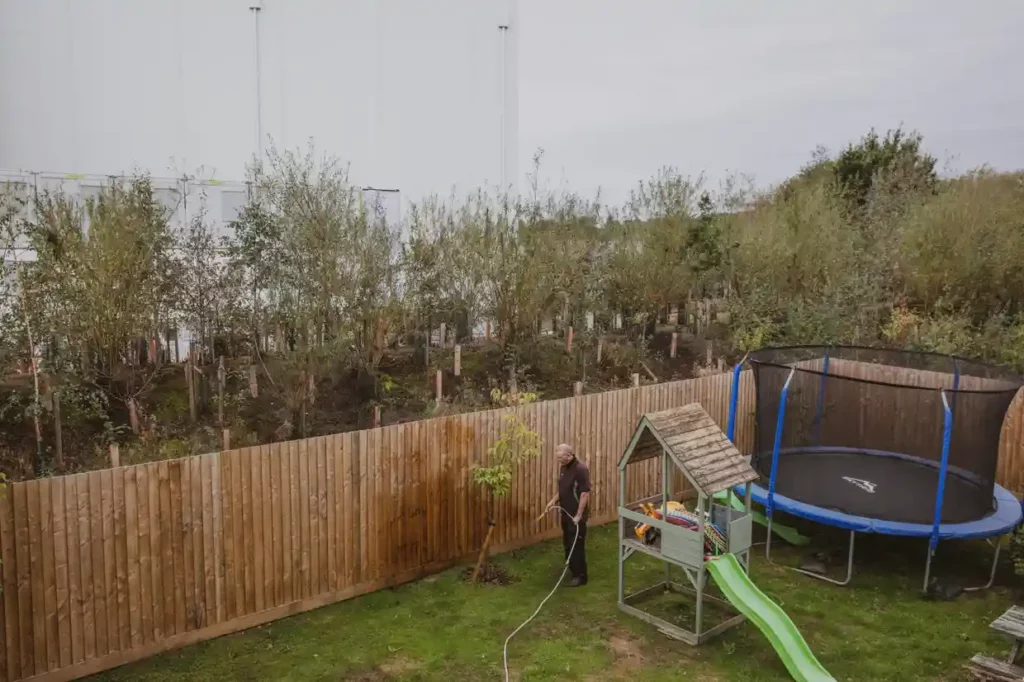
Dale Johnston opens the gate to his neat suburban garden on the western fringes of Newport in South Wales. There’s a trampoline and a slide on the lawn for his grandchildren, and chairs for him and his wife. He should be enjoying the light draining from the perfect autumnal sky – but almost his entire view is blotted out by a vast expanse of prefabricated panels.
The 23 metre-high grey hulk looming over him and his neighbours is a hyperscale datacentre. It is heralded by the area’s Labour politicians as a job creator, yet all Johnston can think about is what he has lost: “Before, the sun used to come around here and it was lovely.” The way residents have been treated is “disgusting”.
Johnston, who used to work for a chemical company in the city, worries what their lives will be like when the centre is switched on: the 36 sets of air blast coolers, needed to stop the chips inside overheating, most likely generate a constant drone, while regular testing of 60 back-up diesel generators, to prevent costly interruption to the flow of data, could produce harmful fumes.
He already has to keep his bathroom window closed to stop the low hum from another facility on the rapidly expanding 46-acre datacentre campus that borders the small enclave of 27 houses. His wife, a nurse who works night shifts, can barely sleep already. He shakes his head in despair: “We just don’t know what’s going to happen.”
Johnston can talk about little else, but he feels no one in authority is listening. He’s invited councillors and MPs backing the development to visit his garden. But “they won’t come around here to see what they’ve done”.
This is the frontline of Britain’s datacentre boom, which is pitting residents against giant US tech firms seeking to build a network of facilities capable of providing the immense computing muscle for powerful AI models. There are 315 hyperscale datacentres waiting to connect to the national grid, which carries electricity from power plants to homes and businesses (hyperscale typically means facilities with at least 5,000 servers and 10,000 sq ft in size).
Combined, these new centres will require 73GW of power, 28GW higher than the typical peak energy demand of 45GW on a cold winter’s day.
Wales is one of the main development hotspots outside London. It already has the largest datacentre capacity beyond the capital, with new hyperscale facilities planned for former industrial and urban sites. The Keir Starmer-led Labour government viewed this as an inevitable revolution, which the country must embrace or be left behind. It established five AI growth zones to push more datacentres through the planning system and speed up connections to the national grid.
The new prime minister, Andy Burnham, has signalled little will change, turning down calls for a moratorium and insisting datacentres bring economic benefits. But anti-datacentre groups springing up in villages, towns and cities across the country see it rather differently: as the imposition of a resource-hungry, polluting industry that increases profits for often US big tech, with little tangible benefit to local people or the country as a whole.
Digital storage is nothing new. The first home PC users saved files on floppy discs and hard drives; businesses used their own server rooms in the 80s and 90s, then moved to off-site facilities as their needs grew. But the development of cloud computing services in the 2010s, such as Google Drive, and AI chatbots in the 2020s, like ChatGPT, led to even greater information and processing demands, which the tech industry insists can only be met by larger and larger datacentres.
This has driven huge speculative bets on hyperscale hubs, which investors and tech firms hope will one day reap the rewards of an AI-led transformation of the economy. Globally, it is estimated spending on new facilities could reach $7tn by 2030 – more than double the cost of the New Deal, the Marshall Plan to rebuild Europe after the second world war and the Apollo space programme combined, even allowing for inflation.
The US is at the forefront of the boom, already hosting roughly half of the world’s hyperscale capacity. But the industry is facing a furious backlash, with three- quarters of Americans now opposed to datacentre development and blaming it for increasing energy bills, threatening water supplies in drought-hit areas and spewing out toxic fumes.
More than 500 counties and municipalities have passed permanent or temporary datacentre bans.
Loudoun County in northern Virginia sits in what is known as Data Center Alley because it is home to more facilities than anywhere else in the world. Greg Pirio’s life was turned upside down when a gas-powered datacentre opened 150 metres from his home last year. “This neighbourhood was calm and peaceful, and it’s turned into this nightmare,” he says on a video call. “Our quality of life has been degraded so much.”
The noise from the centre’s eight gas turbines is “like being at an airport with all these engines roaring,” Pirio says. “It has given many of my neighbours headaches. It has kept children up at night.” Pirio, who used to work for the Voice of America radio station, has also developed health problems since it opened, including dry eyes and chest tightness.
Once he had to leave his house because he was struggling to breathe: “I know whenever the diesel generators are on, because I feel it in my lungs.”
The UK has not yet seen the same level of opposition as the US. But anti-datacentre groups are gathering momentum. Residents in east London are waging a high-profile campaign against a new datacentre on Brick Lane, including protesting outside the offices of Angela Rayner, the communities secretary, who overturned a council decision blocking the scheme.
Source
Guardian AI · 24 Oct 2026 · 13:00 CEST
Open the original at Guardian AI ↗