AI · 2 Oct 2026 · 00:06 CEST
If a data center is camouflaged in the woods, will anyone hate it?
Publisher preview · OZZZER analysis pending editorial review.
PUBLISHER ARTICLE PREVIEW
From the original article
Microsoft is expanding ‘biomimicry’ at its data centers as it faces more pushback from locals over construction, pollution, and noise.
San Antonio City Councilmember Ric Galvan remembers when data centers first arrived in his city in the 2000s, looking like relatively unassuming office buildings. But that’s changed in recent years, as data centers have grown into massive “hyperscale” facilities spanning millions of square feet and housing the physical infrastructure for AI.
There are now more than a dozen data centers in Galvan’s roughly 55-square-mile district, and he expects that number to grow to around 20 over the next few years if proposed projects are completed. They’re clustered along two main roads, concentrating nuisances in the same neighborhoods: traffic and trees cut down during construction, followed by constant bright lights and noise when the data center is operating.
A lot of the area used to be green fields, he explains, allowing many residents to feel close to nature. Now, he says, “that [feeling] gets taken away pretty quickly when you make a gigantic data center.”
“That [feeling] gets taken away pretty quickly when you make a gigantic data center.”
Across the US, more and more communities are rising up against these hulking data warehouses — protesting the effects they could have on quality of life, pollution, water, and electricity bills. Tech companies have responded with promises to mitigate any potential harm by paying for infrastructure upgrades needed in local water and power systems.
Microsoft is also taking a different approach to soften the impact its data centers have. It announced plans to make its data centers less jarring to local communities and the environment through what it describes as “biomimicry.”
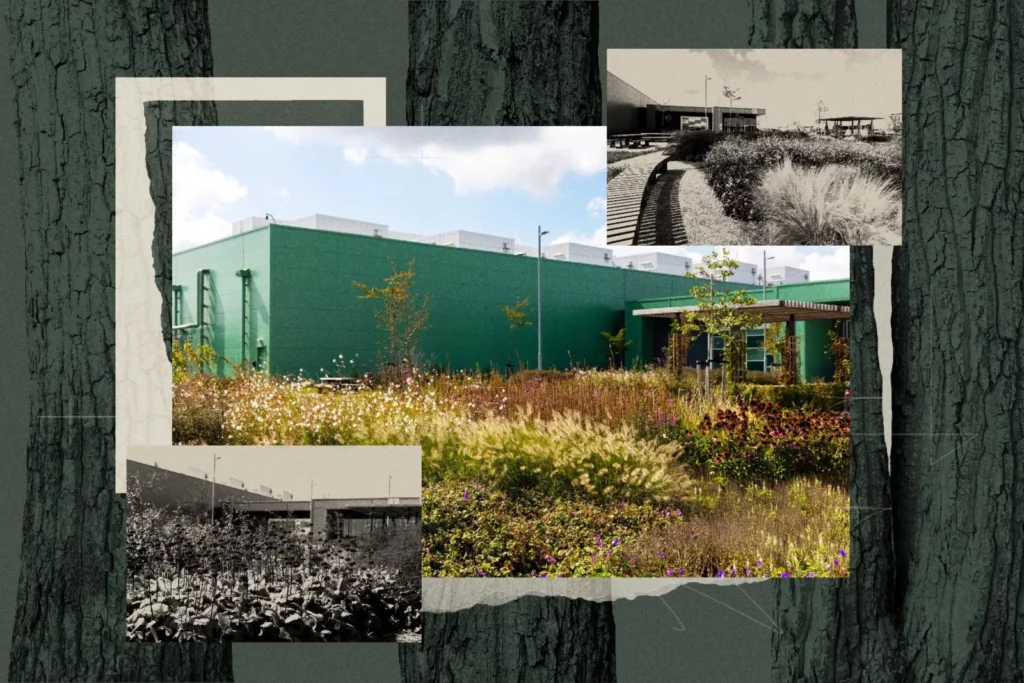
Biomimicry is sort of a catch-all term for many of the ways technologies take inspiration from nature, from “painless” needles that imitate a mosquito’s proboscis to naturally ventilated buildings modeled after termite mounds. In Microsoft’s case, biomimicry involves “blending our datacenters into the natural landscape” to “create resilient ecosystems that support biodiversity, strengthen community ties, and help our datacenters become better neighbors.”
Essentially, Microsoft wants to make its data centers greener, literally, with more gardens and native trees on-site. It’s also promising to invest in projects that repair damaged ecosystems where it has data centers. The company thinks these efforts will limit problems its facilities have caused for neighbors, like noise pollution and the loss of green space.
It’s a nice gesture, advocates and sustainability experts tell me. Microsoft has tried to set itself apart from its rivals by engaging more with communities where it builds data centers. The strategy has appeased some local concerns — depending on whom you ask.
But these data centers are expanding so fast that they’ve simultaneously razed thousands of trees, and Microsoft’s greenhouse gas emissions are growing with the energy demands of AI. Advocates and residents near these data centers want to see more from the company to limit its larger impact on communities and the environment.
“Maybe … they’re trying to just make sure that they’re covering their bases,” Galvan says. “But also, I think if that’s the case, that’s fine,” he adds — as long as Microsoft and other data center operators are actually addressing concerns residents have brought up for years around pollution, water use, and the destruction of natural green spaces.
Microsoft has operated data centers in the Greater San Antonio area for almost a decade, and is spending hundreds of millions of dollars to build several more. In 2022, the company upset residents in San Antonio when it cut down more than 2,600 trees across a 33-acre expanse to build a data center. That — along with Microsoft’s requests for a zoning change and tax incentive — was a big controversy, Galvan says.
Source
The Verge AI · 2 Oct 2026 · 00:06 CEST
Open the original at The Verge AI ↗