Automation & Agents · 25 Nov 2026 · 18:28 CET
Guilherme Joventino, Co-Founder & COO of MIGNOW – Interview Series
Publisher preview · OZZZER analysis pending editorial review.
PUBLISHER ARTICLE PREVIEW
From the original article
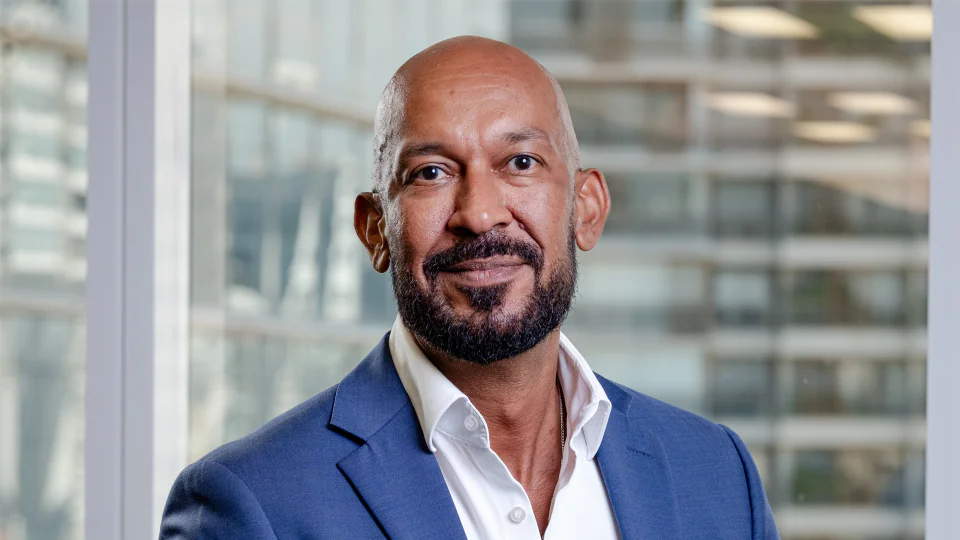
Guilherme Joventino is Co-Founder and COO of MIGNOW. His background includes work on global SAP teams at Philips, Sandoz, and Bayer. At MIGNOW, he focuses on making enterprise modernization more predictable through phased delivery, automation, and continuous system evolution, while retaining the business expertise and accountability needed for critical ERP environments.
MIGNOW develops proprietary software that uses AI and machine learning to automate SAP migration, upgrades, and ongoing modernization. Its approach combines strategy and planning, technical conversion, stabilization, and continuous evolution, with tools for assessing legacy environments and moving toward SAP S/4HANA and a cleaner, more adaptable core.
You’ve worked on global SAP teams at Philips, Sandoz, and Bayer before co-founding MIGNOW. What recurring challenges convinced you that enterprise modernization needed a different approach?
One pattern kept repeating. Companies kept adding “what ifs” to their SAP projects. What if we also redesign this process? What if we add this new requirement? What if we solve that old problem while we’re at it? Each idea made sense on its own, but together they turned migrations into huge projects that were very hard to predict.
Timelines slipped, budgets grew and everything rested on one high-risk go-live.
Scale made this worse. When SAP announced the end of mainstream maintenance for ECC, it became clear the market couldn’t keep working this way. Around 40,000 SAP ECC customers worldwide need to move to SAP S/4HANA, and the industry doesn’t have enough specialists to run that many complex, manual projects.
That’s why we see transformation as a series of clear, measurable phases rather than one big event. You start with the destination, then move step by step. Each phase has a defined scope, so the company always knows where it stands and what comes next. A predictable process carries less risk, and it starts delivering value sooner.
For readers who are less familiar with enterprise software, how can an aging SAP system limit a company’s AI ambitions, and which limitations are hardest to overcome?
I usually compare it to a smartphone that hasn’t been updated in ten years. It still makes calls, but the new apps don’t run on it.
An older SAP ERP keeps the business running, but it wasn’t built for the way AI works today. SAP’s newest AI capabilities, such as Joule and SAP Business AI, are designed for SAP S/4HANA and the cloud. On top of that, many legacy environments are hard to integrate. One IT leader we worked with put it simply: before the migration, every time the business asked to integrate something, the answer was “we can’t.”
Technology isn’t the hardest limitation to overcome. Accumulated complexity is. Years of custom code, poorly documented business logic and data spread across different structures make it difficult for any AI tool to understand what the system is doing. AI is only as useful as the environment it works in. If the foundation is fragmented, AI just makes that complexity move faster.
What does making an SAP environment “AI-ready” actually involve beyond migrating to the cloud? How do you assess whether its data, integrations, and business processes can support useful AI applications?
Moving to the cloud changes where the system runs. It doesn’t automatically change how ready the system is. For me, an AI-ready SAP environment has four characteristics: a current version of SAP S/4HANA, a core that is as clean and standard as possible, reliable data and integrations that work through modern interfaces instead of point-to-point workarounds.
Clean Core is a central part of this. When customizations are kept outside the core, the system can receive SAP’s updates and innovations, including AI features, without breaking what the business built over the years.
Our assessment starts before any conversion. In the first phase of our methodology, we use our own AI-powered tools to analyze the current landscape: what is customized, what is actually used, where the critical gaps are and which dependencies could create risk. That gives the company a factual picture of its environment and a roadmap based on its real system, not on assumptions or deadlines.
Could you walk us through how MIGNOW modernizes a legacy SAP environment, explaining where you use AI, where you rely on rules-based automation, and where human expertise remains essential?
Source
Unite.AI · 25 Nov 2026 · 18:28 CET
Open the original at Unite.AI ↗