Robotics · 25 Nov 2026 · 17:46 CET
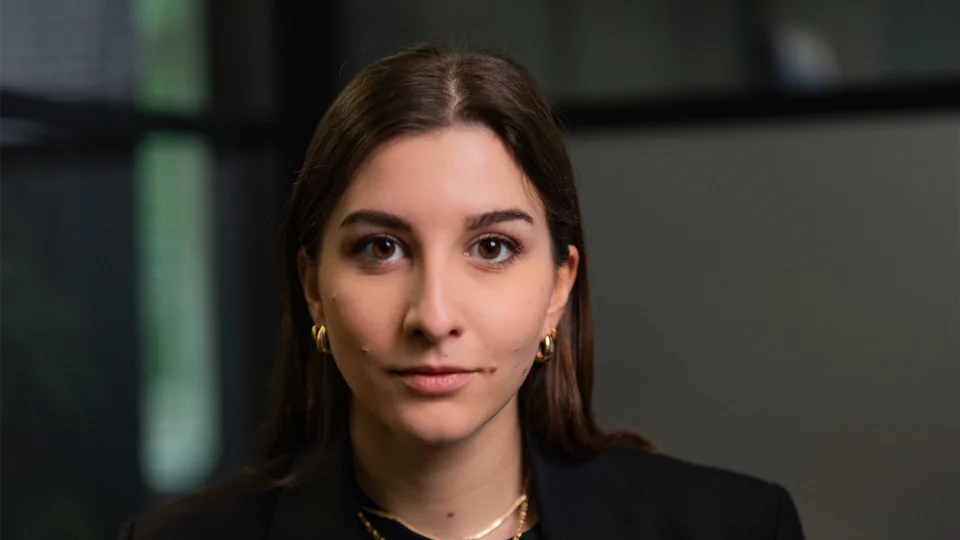
Elisa Seghetti, Co-Founder & CEO of Saturn Dynamics – Interview Series
Publisher preview · OZZZER analysis pending editorial review.
PUBLISHER ARTICLE PREVIEW
From the original article
Elisa Seghetti is Co-Founder and CEO of Saturn Dynamics, with a background spanning biotech, computational chemistry, and enterprise AI. She previously founded AiGot, growing its engineering team from three to more than 35 people and working with Fortune 500 companies on their AI strategies. Her focus at Saturn Dynamics is helping physical AI learn to operate safely and reliably alongside people.
Saturn Dynamics develops physics-based world models for robotics and embodied AI. Its Arc model creates interactive simulated environments where robotics teams can generate training data, explore variations in physical tasks, and evaluate control policies before carrying out experiments on real hardware.
After scaling AiGot’s enterprise AI business, what gap in robotics training led you to co-found Saturn Dynamics and pursue a physics-based world model?
I founded AiGot in 2021 to help businesses use AI to automate complex processes. As we scaled the company and worked with Fortune 500 businesses, I saw first-hand the challenges of making AI reliable in real-world environments: lack of data, misaligned expectations, hype. But I also began to see a new opportunity emerging. AI would not be confined to screens forever; increasingly, it would be interacting with the physical world.
Having spent years building AI that enterprises could trust, I sought to apply that experience to a new challenge: developing better ways to train physical AI to operate safely and reliably side by side with humans. That led me to co-found Saturn Dynamics and pursue a physics-based world model.
Today, much of robotics training relies on video-based learning and egocentric data collection, with people wearing cameras to capture demonstrations of everyday tasks. While this provides valuable data, it is expensive and time-consuming to collect at scale, and watching an action doesn’t necessarily teach a robot how to replicate it or understand its physical consequences.
We saw an opportunity to move beyond learning through observation alone, giving robots an interactive environment to learn through trial and error without relying entirely on real-world data collection.
For readers unfamiliar with world models, how would you explain how a robot learns a task using Arc?
A world model is essentially a model that learns how the world behaves and how it changes in response to different actions.
Imagine you are training a robot to move a tyre along a factory production line. You could show it thousands of videos of the task, but that doesn’t necessarily teach it how much force to apply, how the tyre will respond if it slips, or how its approach should change if the tyre is heavier than expected.
We have created Arc, a world model that allows robotics teams to place physical AI in an interactive simulation where it can try different approaches, observe the predicted outcomes and improve its next attempt. It can rapidly explore multiple scenarios in parallel, testing different actions without having to carry out every experiment on physical hardware.
This allows teams to test potentially risky situations without risking damage to equipment or putting people working on the factory floor in harm’s way.
How does embedding mathematical symmetries and physical principles into Arc distinguish it from conventional simulators and video-based world models?
The physical world is governed by mathematical relationships that remain consistent across different environments. At Saturn Dynamics, our team combines expertise in theoretical physics, reinforcement learning and machine learning to build these principles directly into Arc’s architecture and training approach.
Conventional physics simulators typically rely on engineers defining the environment and specifying the physical properties and parameters that govern how objects behave. While this can produce highly accurate simulations, configuring and adapting them to different scenarios can require a lot of work.
Source
Unite.AI · 25 Nov 2026 · 17:46 CET
Open the original at Unite.AI ↗