Automation & Agents · 24 Nov 2026 · 20:30 CET
Agentic system personalizes physical controls to help users “DJ their art”
Publisher preview · OZZZER analysis pending editorial review.
PUBLISHER ARTICLE PREVIEW
From the original article
In 2017, Apple removed the home button from its iPhones. Users lost a convenient, tangible control — part of a larger shift to digital buttons, knobs, and sliders we also see in cars (like with radio presets and air conditioning) and kitchens (see smart fridges).
We can’t leave physical controls behind entirely, though. They tend to be more convenient and efficient — think of how you can use a physical gaming controller without looking at it — and, at times, more precise, like when you use a dial to get the volume just right. But tangible controls are typically preprogrammed to do a specific thing, minimizing their usefulness.
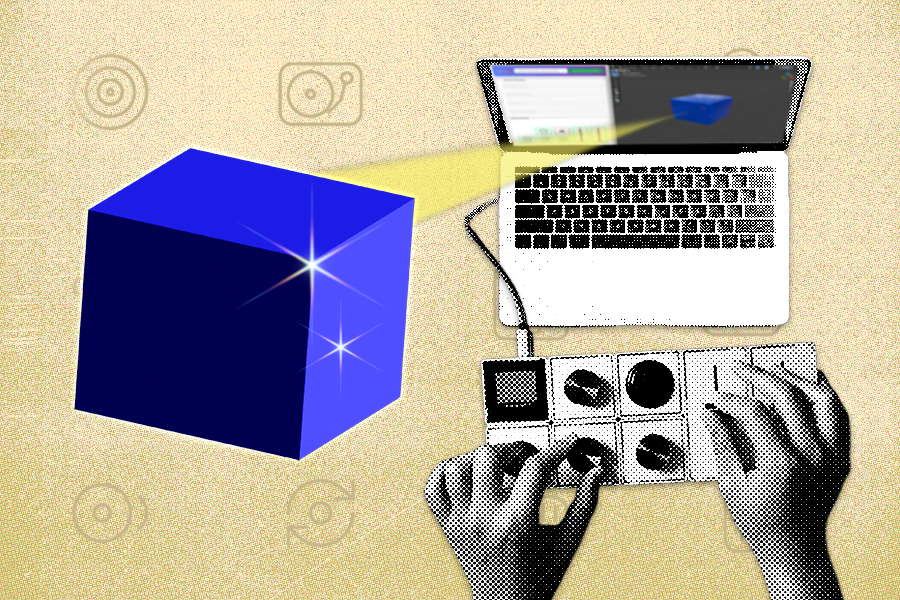
A new system called “TangiMap,” co-developed by an MIT graduate student and researcher at MIT’s Computer Science and Artificial Intelligence Laboratory (CSAIL), helps bring tangible control back to your software. The system personalizes the physical controls on everyday devices by mapping digital widgets onto tangible inputs, turning things like editing photos, animation, performing music, and creating 3D models into more dynamic and tactile experiences.
Just as a DJ’s pads switch between triggering cues, loops, and samples, TangiMap gives a device’s controls entirely new roles.
But how, exactly? TangiMap relies on an AI agent, or semi-autonomous programs that “think” and complete well-defined tasks, to find and act on context about the software you’re using, your tendencies, and the device used to control that program.
Source
MIT AI NEWS · 24 Nov 2026 · 20:30 CET
Open the original at MIT AI NEWS ↗