Models & tools · 17 Nov 2026 · 06:00 CET
Q&A: Why building math muscles remains important in the AI era
Publisher preview · OZZZER analysis pending editorial review.
PUBLISHER ARTICLE PREVIEW
From the original article
You may not alter the images provided, other than to crop them to size. A credit line must be used when reproducing images; if one is not provided below, credit the images to "MIT."
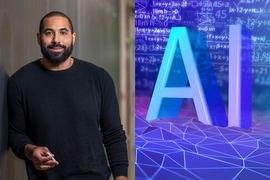
John Urschel PhD ’21, the Class of 1956 Career Development Assistant Professor in the MIT Department of Mathematics, is no stranger to building muscle: Before earning his PhD at MIT, Urschel strengthened his offensive muscles as a lineman for the Baltimore Ravens. He remains committed to helping his students exercise, but now his focus is on critical thinking skills.
In the classroom, Urschel shares with his students his lifelong love for solving puzzles, while honing their abilities to be strong qualitive thinkers — skills he argues will be essential in an artificial intelligence-enabled world.
Urschel recently published two preprints on arXiv, one on the growth factor of random matrices, the other on worst-case behavior in Gaussian elimination, in which he used a combination of human insight and AI tools to solve problems that had stumped mathematicians for decades. That experience provided Urschel with new insights into the future of mathematics and higher education, and the enduring importance of the in-person, residential education offered on college campuses, where students can experience the importance of struggle, problem solving, and human connection.
Urschel recently chatted with MIT News about education, AI, and mathematics; excerpts from the conversation follow.
Q: What is it about studying math that you hope to share with your students?
A: When I was very little, I loved solving puzzles, whether that’s Sudoku puzzles or Martin Gardner math puzzles or crossword puzzles. I think there’s something really enjoyable about being faced with some problem that you don’t quite understand, trying to get your bearings, trying to make your way through it, and finally gleaning some sort of understanding from it.
That’s a process that I’ve enjoyed for as long as I can remember, and that’s the thing that I’ve really enjoyed most about math.
When it comes to teaching, first, I want to help our students train themselves and hone their ability to solve problems and their ability to be strong quantitative thinkers.
The second part, which is more specific to whichever course I’m teaching, is to help them assimilate the big ideas or tools or techniques or themes that help them become better problem solvers in that specific discipline. If they’re taking a course on a specific subject, the idea is for me to try to convey important fundamentals so that they can use that learned expertise to become better problem solvers out in the world.
Q: You recently used AI to assist in solving two proofs. Can you talk a bit about the experience?
A: These are the first two papers where I’ve ever touched the machine, and it does feel different. It’s not unlike having a collaborator, but it’s a collaborator who has access to unlimited resources, seemingly, and does certain things much, much faster than I ever could.
Source
MIT AI NEWS · 17 Nov 2026 · 06:00 CET
Open the original at MIT AI NEWS ↗