AI · 16 Nov 2026 · 17:05 CET
TestDynamics Secures $9 Million With Series A Backing for Medical Imaging AI Evaluation
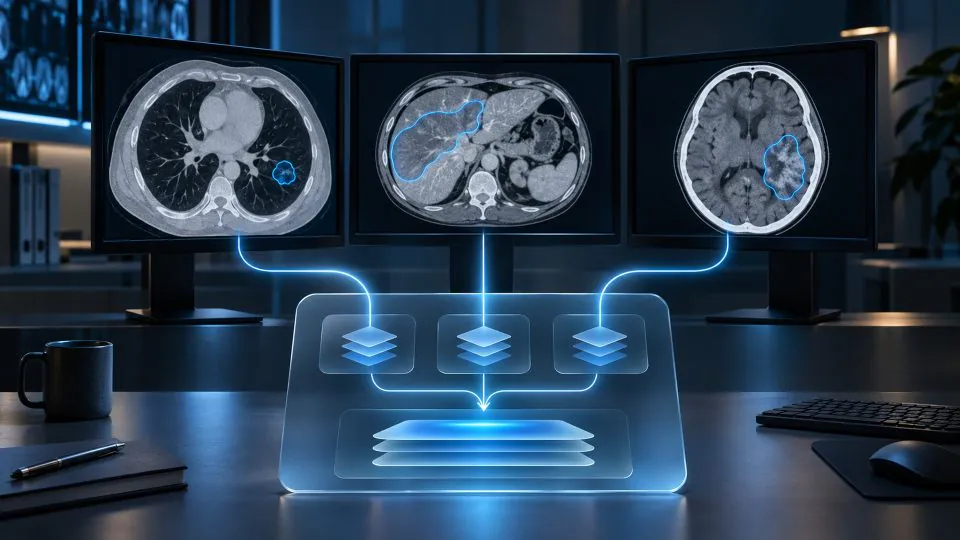
Publisher preview · OZZZER analysis pending editorial review.
PUBLISHER ARTICLE PREVIEW
From the original article
TestDynamics has secured $9 million in funding, with a Series A led by Healthier Capital and strategic participation from Cedars-Sinai Technology Ventures. The Austin-based company will use the capital to expand Satori, a vendor-neutral platform that evaluates medical imaging AI algorithms and brings their findings into radiologists’ existing workflows.
The financing targets a problem that grows as hospitals adopt more AI: selecting an algorithm is only the beginning. Health systems also need to establish how it performs on their patients, connect it to clinical software, and determine whether it continues to deliver useful results after deployment.
TestDynamics says Satori is already in clinical use at several of the ten highest-ranked U.S. medical centers. It plans to expand its clinical validation team, deploy across more health systems, and extend its evaluation and orchestration capabilities into additional imaging subspecialties. The announcement does not name those medical centers or disclose a valuation.
Medical imaging AI is often specialized. One tool might flag suspected bleeding on a head CT, while another measures structures on an MRI or identifies possible fractures on an X-ray. Buying several tools can leave radiologists reconciling separate interfaces, findings, and vendor-specific performance claims.
Satori sits above those tools rather than competing as another narrow diagnostic algorithm. TestDynamics calls its approach Amalgamated Intelligence: evaluating outputs from multiple systems and organizing the results into a prioritized clinical view. The company says it benchmarks algorithms against both reference findings, often called ground truth, and competing products.
“Evaluation must come from outside the model,” said founder and CEO Lior Eshel in the announcement. His argument is that hospitals need an evaluator whose role is separate from the companies selling the algorithms.
The platform description adds a practical detail to that position: candidate tools are tested on the provider’s own de-identified imaging studies before clinicians and leadership choose them. Their results establish a local baseline for subsequent monitoring.
Source
Unite.AI · 16 Nov 2026 · 17:05 CET
Open the original at Unite.AI ↗