Robotics · 13 Nov 2026 · 06:00 CET
Helping robots fit into the human workplace
Publisher preview · OZZZER analysis pending editorial review.
PUBLISHER ARTICLE PREVIEW
From the original article
You may not alter the images provided, other than to crop them to size. A credit line must be used when reproducing images; if one is not provided below, credit the images to "MIT."
Despite fears about robots replacing humans at work, there are still plenty of things humans can do far better than machines. That’s fine with Robust AI, a startup building robots designed to complement what humans do best.
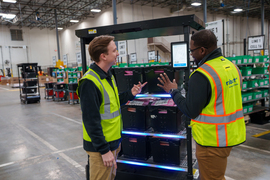
The company’s mobile robot, named Carter, resembles a utility cart on wheels and is designed to fit seamlessly alongside humans in fast-changing warehouse and factory environments. Carter features a force-sensitive handlebar for easy guidance, an AI-powered vision system, and holonomic wheels for instant movement in any direction.
As a result, humans can cut Carter off, push and pull it in any direction with one hand, and direct it with gestures or the onboard touch screen.
The company’s robots are currently deployed in logistics warehouses and on factory floors, where they help humans while picking or stocking shelves and moving items across facilities autonomously.
“In these environments, what really determines success is how the overall system performs,” explains Anthony Jules ’92, SM ’92, who co-founded the company with MIT Professor Emeritus Rodney Brooks. “The robot does some of the work, the people do some of the work, and the backend systems do some of the work. It’s that combination that determines how well your system performs.
We believe it’s really important that people have an appropriate level of agency and input so that they’re always moving the system forward.”
Source
MIT AI NEWS · 13 Nov 2026 · 06:00 CET
Open the original at MIT AI NEWS ↗