Automation & Agents · 4 Nov 2026 · 17:13 CET
Phaze Raises $8.75M Seed Led by a16z for Human and AI Agent Remote Access
Publisher preview · OZZZER analysis pending editorial review.
PUBLISHER ARTICLE PREVIEW
From the original article
Phaze has raised $8.75 million in seed funding led by a16z to give employees and AI agents access to powerful remote computers. The company announced the round on November 4, with participation from Indie, NextView, Makers Fund, and Lerer Hippeau.
The Utah-headquartered startup plans to expand engineering, develop the product, and support customer growth. Its founders previously built Parsec, the remote-access business acquired by Unity in 2021. Their new venture combines a high-performance remote desktop with tools for managing workstations as shared infrastructure.
The investment targets a practical question behind the rise of computer-using AI: where should an agent actually do its work? Phaze’s answer is a company-managed machine that an employee or agent can reach remotely, with access governed by the organization’s existing permissions.
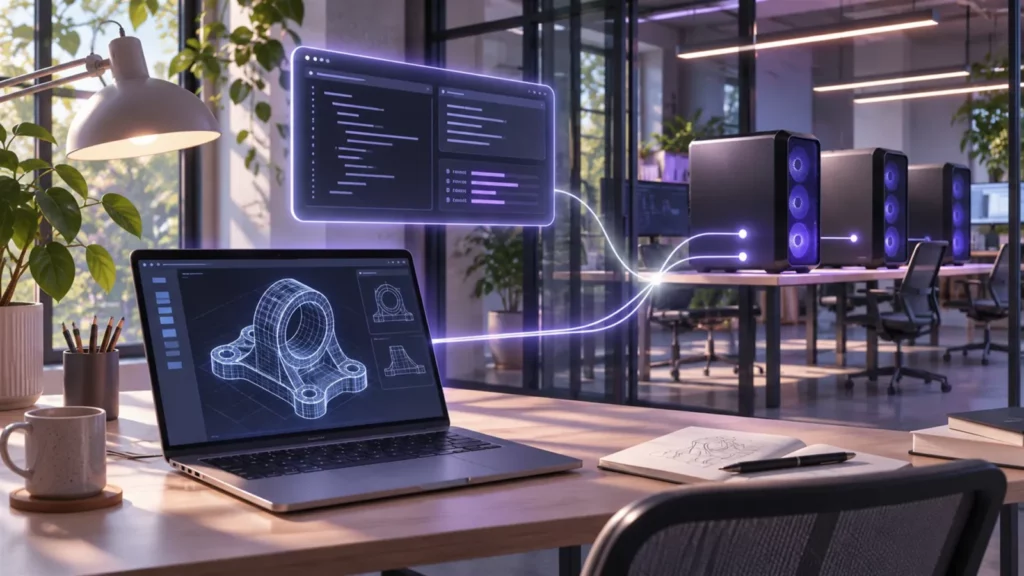
Phaze starts with a familiar requirement: making a workstation somewhere else usable from the device in front of you. Its website emphasizes responsive input, 3D graphics, color quality, and multiple monitors for workloads such as CAD and design. Those are performance claims from the company, rather than results from an independent benchmark.
The broader proposition is that remote access should serve people and their agents through the same infrastructure. A designer might use a workstation interactively, while an agent connects to another machine to test software or monitor a long-running process. Work can continue without the agent occupying the employee’s active desktop.
That separates the device someone uses to connect from the hardware that executes the task. It also gives IT a way to assign access to existing machines rather than treat every new agent as a reason to purchase another dedicated workstation.
In his earlier interview with Unite.AI, Boxer pointed to better connectivity and hardware video encoding and decoding as foundations for modern remote desktop performance. He also highlighted software testing and end-user troubleshooting as tasks where operating a full computer can be more useful than calling an application API.
The company’s AI product page describes a local Model Context Protocol (MCP) server through which agents can operate remote computers using the desktop or command line.
Source
Unite.AI · 4 Nov 2026 · 17:13 CET
Open the original at Unite.AI ↗