Models & tools · 27 Oct 2026 · 15:28 CET
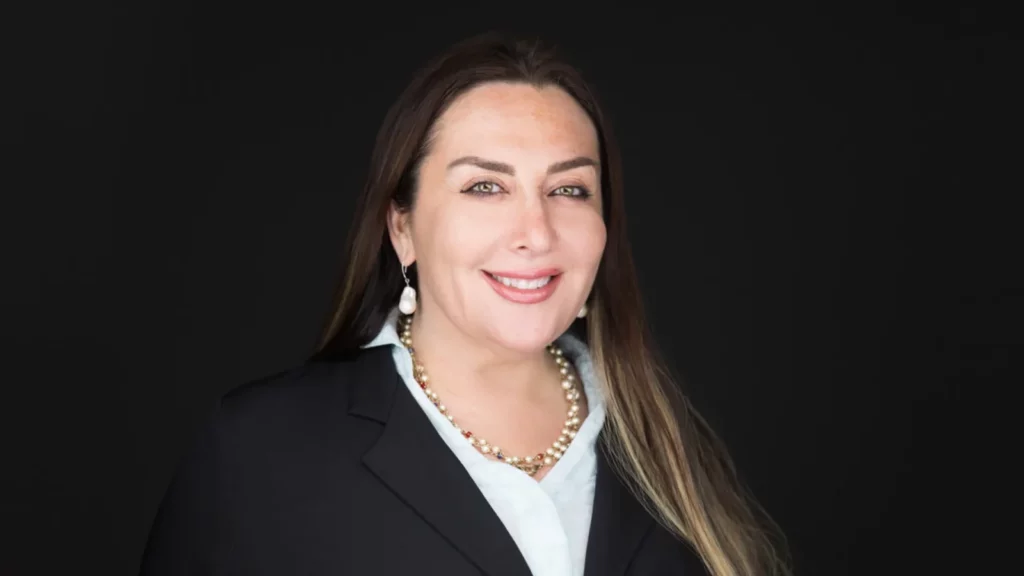
Olga Beregovaya, VP of AI at Smartling – Interview Series
Publisher preview · OZZZER analysis pending editorial review.
PUBLISHER ARTICLE PREVIEW
From the original article
Olga Beregovaya is Vice President of AI at Smartling, where she leads AI strategy across translation, data, quality, and safety. She has worked in natural language processing since 1997, spanning rule-based systems, statistical models, neural networks, and large language models. Before joining Smartling, she served as VP of AI Innovation at Welocalize and CEO of PROMT Americas.
Smartling provides enterprise translation and localization software and services, combining AI and machine translation with human expertise. Its platform supports multilingual workflows for websites, applications, marketing, documents, and multimedia, with access to more than 20 LLMs and machine translation engines. In this interview, Beregovaya discusses the multilingual AI divide, translation quality, model selection, and the role of human oversight in automated localization.
How has that journey shaped the way you think about AI’s role in language, and what drew you to lead AI strategy at Smartling?
I studied how languages are structured and how language families work. That taught me that translation is about structure and meaning, not word-for-word substitution. I think about AI the same way.
I started working in natural language processing in 1997, when systems were built on hand-written rules. Since then, I’ve worked through statistical models, neural networks and today’s large language models. Each solved some problems and created others. I don’t believe any one model is the answer.
I joined Smartling because it was built to translate every kind of enterprise content, from websites and apps to legal documents, marketing and video. I started as VP of Machine Translation, but the role quickly expanded beyond translation into prompting, data, quality and safety. So the title became VP of AI.
What does that divide look like in practice, and why could it become more consequential as generative AI becomes a primary interface?
The divide used to be simple: either an AI system supported your language or it didn’t. That question is mostly settled now, but the divide has changed shape. What matters now is how well the model’s training data represents that language, its speakers and its culture. Most model training data is in English, so it carries English-speaking assumptions with it.
A translation can be technically accurate and still impose an English-speaking perspective on another language.
AI is becoming the way people interact with banks, doctors, schools and other essential services. A language AI handles well gives you an advantage, and a language it handles poorly puts you at a disadvantage.
What surprised you most, and what explains cases where Swedish outperforms Hindi despite far fewer speakers?
Speaker count is a surprisingly poor indicator of translation quality. Swedish, with about 10 million speakers, produced some of the best results. Hindi, with about 600 million speakers, was among the weakest, along with Estonian and Thai.
Language structure and data quality matter much more. Swedish has relatively simple grammar and plenty of clean training data.
Source
Unite.AI · 27 Oct 2026 · 15:28 CET
Open the original at Unite.AI ↗