AI · 24 Oct 2026 · 21:00 CEST
‘Synthetic twin’: Why Socceroo Cristian Volpato is the latest footballer to license his AI clone
Publisher preview · OZZZER analysis pending editorial review.
PUBLISHER ARTICLE PREVIEW
From the original article
Athletes’ scramble to control – and monetise – their digital identities at the cutting edge of AI rights deals…
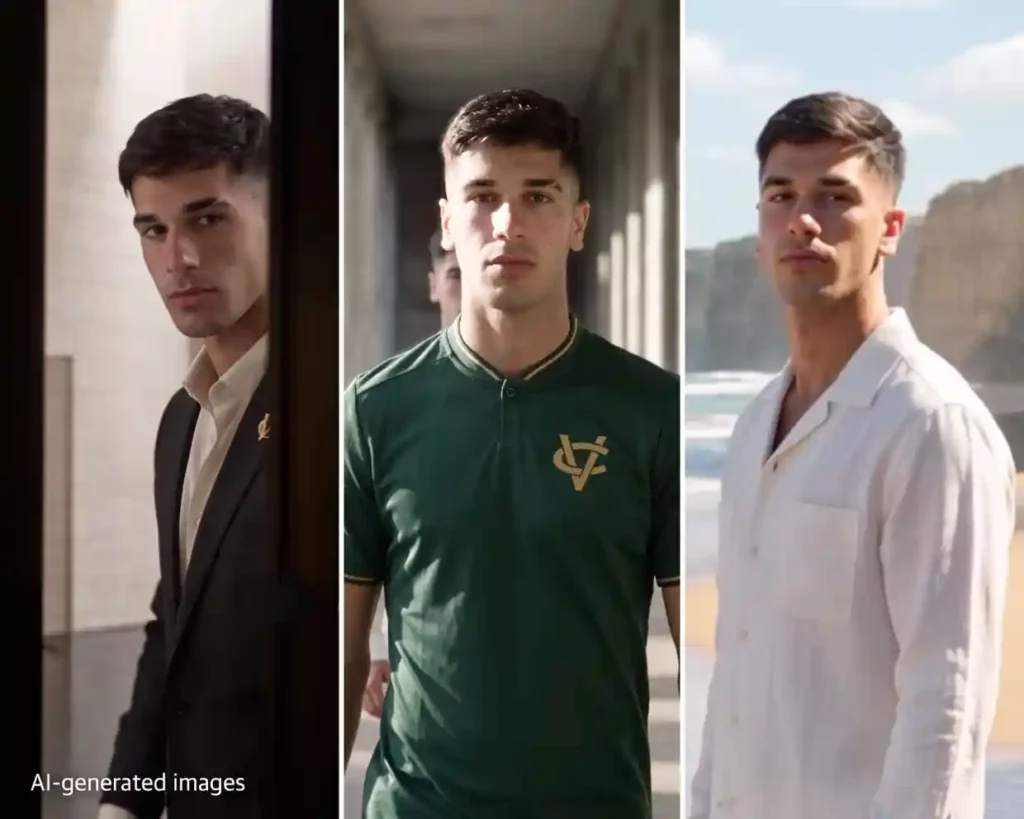
The Socceroos star stares at the camera as he strides through an enormous atrium, the sound of his football boots on polished concrete echoing around him. Suddenly, he spawns four digital clones that peel off out of view to re-emerge in different settings around the world.
This scene from a social media video is fake and generated by artificial intelligence. But it has been authorised by the very real 22-year-old footballer, Cristian Volpato, the latest professional athlete to licence and monetise his AI likeness.
Draped in a white linen suit with his feet on the sand, Volpato’s “synthetic twin” turns towards a photographer as the limestone stacks of the Twelve Apostles tower behind him. Another dominates a large digital billboard wearing a football jersey. One smiles into a mirror while adjusting a sharp grey suit.
This video was produced by a new company that acts as an AI licensing agent for professional athletes. Experts believe it is one small part of a nascent online industry that could transform the future of image rights and sports content.
As bookmakers, broadcasters and brands increasingly use athletes’ images in AI generated content without their permission, some players are fighting back.
In mid-September, Volpato, who plays for Italian Serie A club, Sassuolo, struck a deal with the California-based company Callandor to license his AI image.
As part of the deal, Callandor was given exclusive rights to Volpato’s digital likeness, voice, biometric profiles and performance data. The company will monetise his AI image by landing brand deals, taking a cut, and help restrict content that does not have his approval.
From Los Angeles, Callandor’s co-founder, Michael Fisk, tells Guardian Australia he’s in the business of making “synthetic twins”.
“Cristian is constantly training,” Fisk says. “He’s constantly out there playing. If he has any free time whatsoever, he’ll probably want to spend it with family and friends, so he loses on a lot of opportunities on brand placements.
“A synthetic twin could be used 24-7, year-round by brands. Assuming it’s approved, right?”
Source
Guardian AI · 24 Oct 2026 · 21:00 CEST
Open the original at Guardian AI ↗