AI · 23 Oct 2026 · 23:00 CEST
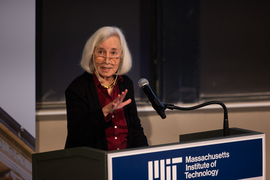
At MIT, Martha Minow speaks on sustaining democracy, both by using and overcoming AI
Publisher preview · OZZZER analysis pending editorial review.
PUBLISHER ARTICLE PREVIEW
From the original article
You may not alter the images provided, other than to crop them to size. A credit line must be used when reproducing images; if one is not provided below, credit the images to "MIT."
Legal scholar Martha Minow delivered this fall’s Compton Lecture at MIT on Thursday, examining the civic foundations of democracy — and describing how artificial intelligence is undermining it, but could be used to help reinforce traditional U.S. governance.
“It’s not a good time for democracy or constitutionalism,” said Minow, who is the 300th Anniversary University Professor at Harvard University, and a prominent expert in constitutional law and human rights. She noted a litany of challenges to democracy in recent years, including violations of laws and norms, the stifling of free speech, a diminution of congressional authority, disregard of legal rulings, the common vilification of others in society, and more.
Recent Gallup polling, Minow observed, shows 77 percent of people saying that the founders of the U.S. would be disappointed in the contemporary condition of the country.
“Many people genuinely wonder whether this nation’s system of government and rule of law, ignited 250 years ago, will survive,” Minow said.
Her remarks assessed the state of the U.S. in terms of what she called four key “ingredients” of democracy: education, reliable and accessible information, security from violence, and fairness. Minow evaluated how AI has, among other things, influenced these areas of life — but also suggested ways people could use contemporary technology to help.
“It’s very familiar to hear blame attributed to digital technologies and experts of all stripes, but a turnaround, I believe, is genuinely possible if people at MIT and elsewhere pour time and talent towards real and much-needed solutions,” Minow said.
A substantial portion of her remarks focused on the pitfalls of AI in education. That issue compounds some other troubling trends: The U.S. already has large local and regional disparities in educational funding, Minow noted, while schools have actually become significantly more segregated in economic and ethnic terms over the last three decades.
Source
MIT AI NEWS · 23 Oct 2026 · 23:00 CEST
Open the original at MIT AI NEWS ↗