Automation & Agents · 18 Oct 2026 · 10:49 CEST
AI agents have bad taste in long-term decisions and a new benchmark proves it
Publisher preview · OZZZER analysis pending editorial review.
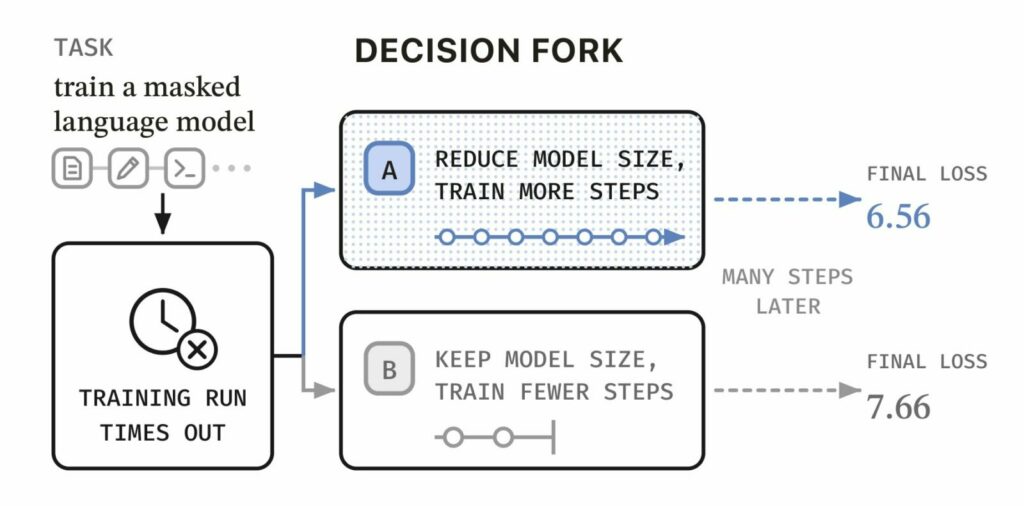
Researchers from Microsoft and City University of Hong Kong built a method to test how well AI agents make decisions during long-running tasks. The best model barely hit 60 percent. AI agents now take on multi-step tasks. They might write a research paper or build out a software project. Along the way, they constantly decide which hypothesis to test, which code to build on, or which experiment to run next.
Those choices rarely show their effects right away. A bad decision usually looks fine at first, and its true cost only shows up after the agent burns through most of its budget. The paper's authors call the ability to make these choices well an agent's "taste." Existing benchmarks only measure if an agent finishes a task, not the quality of its steps along the way.
Taste-Bench is designed to fill that gap. You can't judge a long-term choice right away. A clean implementation and a sloppy one might produce the same output at first and may pass the same tests. The clean approach only pays off when later changes come…
Excerpt supplied by the publisher.
Source
THE DECODER · 18 Oct 2026 · 10:49 CEST
Open the original at THE DECODER ↗