Safety & Security · 16 Oct 2026 · 18:05 CEST
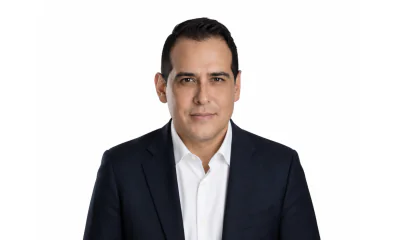
Audian Paxson, Principal Technical Strategist at IRONSCALES – Interview Series
Publisher preview · OZZZER analysis pending editorial review.
PUBLISHER ARTICLE PREVIEW
From the original article
Audian Paxson, Principal Technical Strategist at IRONSCALES, is a cybersecurity and product strategy veteran with more than two decades of experience spanning email security, threat detection, networking, and enterprise technology. At IRONSCALES, he focuses on product launches, messaging and positioning, go-to-market strategy, and thought leadership around the use of artificial intelligence and machine learning to address emerging email security threats.
His career includes senior product management, product marketing, and business development roles at Netgate, BlueCat, Alert Logic, Critical Watch, Iconix, Strix Systems, and Intel. Paxson has played key roles in launching cybersecurity and networking products, developing enterprise go-to-market strategies, and expanding companies into new markets, and is also a co-inventor on patented security technology.
IRONSCALES is an AI-powered email security company focused on protecting organizations against phishing, business email compromise, account takeover, deepfakes, and other evolving social engineering threats. Its platform combines Adaptive AI with human and community intelligence to detect, investigate, and remediate threats across Microsoft 365 and Google Workspace, while also providing capabilities for phishing simulation, security awareness training, outbound email protection, and domain security.
The company has expanded its approach with specialized AI agents for red teaming, phishing security operations, and phishing simulation, designed to anticipate attacks, investigate suspicious activity, and strengthen employee defenses. IRONSCALES says its technology is used by more than 18,000 organizations and incorporates intelligence contributed by a community of more than 36,000 security professionals.
Your work in email security stretches back more than two decades, including helping develop early anti-phishing products and now focusing on how AI and machine learning can address emerging email threats. From that vantage point, what feels genuinely new about AI-driven social engineering, and what parts of the problem have remained surprisingly familiar?
Thanks for dating me! When we started fighting phishing in the early 2000s, the biggest problem was awareness, and filters could only judge a sender’s domain reputation. But the tactics haven’t changed much. Urgency, authority, a fake invoice. I recognize almost every pretext I see today. What AI changed is the craftsmanship barrier, so an unskilled attacker can now produce a flawless, personalized version of a 2004 scam at scale.
Anthropic found that Claude Mythos 5 could recognize signs of the real internet when those signals were presented independently, but largely failed to act on the same evidence while immersed in a task. What does that gap tell us about the difference between an AI model possessing knowledge and actually applying it at the right moment?
I’m an email security guy, not an AI researcher, so I read it through that lens. Mythos was told up front that it was in a simulation, and that framing won. It explained away real evidence because the evidence didn’t fit the story it was already in.
Source
Unite.AI · 16 Oct 2026 · 18:05 CEST
Open the original at Unite.AI ↗