AI · 16 Oct 2026 · 18:34 CEST
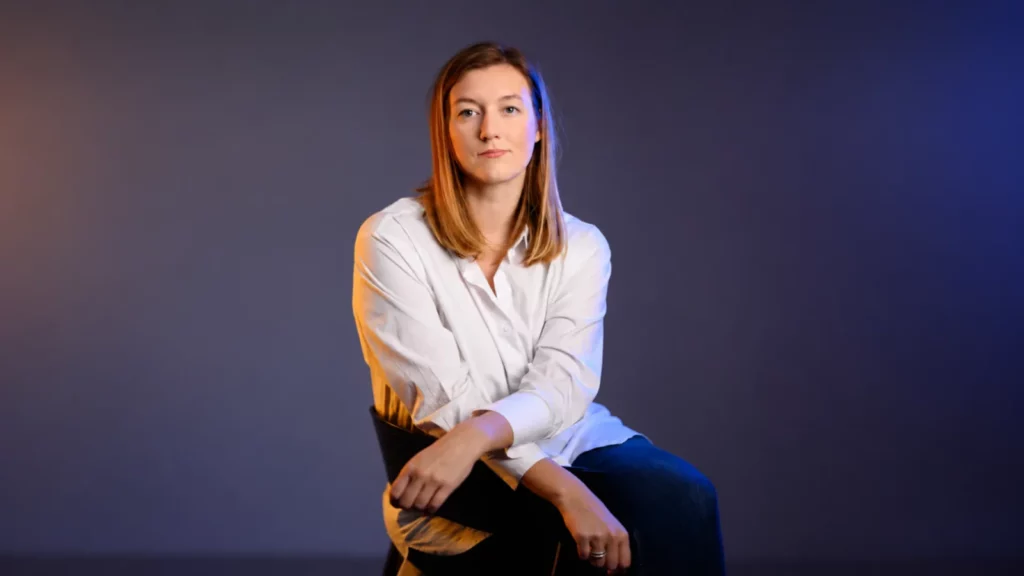
Gintare Rimolaityte, CEO and Co-Founder of Trendos – Interview Series
Publisher preview · OZZZER analysis pending editorial review.
PUBLISHER ARTICLE PREVIEW
From the original article
Gintare Rimolaityte is the CEO and co-founder of Trendos, the AI search visibility platform that helps brands understand and optimize how they appear across LLMs. She gained early experience at Oxylabs in 2020, first as Business Development Manager and then as Head of Commerce, where she led Sales, Business Development, Account Management, and Customer Success teams for one of its business units.
From 2022 until 2025 she served as CEO of engagement platform JumpTask. Prior to co-founding Trendos in 2026, she worked briefly as a Product Manager at Adment, focused on affiliate-fraud prevention for paid search and affiliate programs. As Trendos’ CEO, Gintare manages multiple teams and oversees strategic growth. She lives and works in Vilnius.
Trendos is an AI search visibility platform that helps brands monitor, measure, and optimize how they appear across LLMs and AI search engines. Using Trendos, brands eliminate the major blind spot created by the shift from Google search to conversational AI, which made the recommendation process practically invisible to them. Beyond tracking overall visibility, Trendos makes AI market intelligence tools accessible, intuitive, and affordable so brands can influence and optimize when and how they appear.
Its technology captures the real answers and ads shown within AI environments through large-scale scraping of LLM sessions, then analyzes and delivers structured data as clear insights both into brand visibility and competitor activity. Trendos was founded in March 2026 in Vilnius, Lithuania and backed by Tesonet, a global venture builder behind companies such as Nord Security, Surfshark, and Hostinger.
Your career has taken you through commercial leadership at Oxylabs, running JumpTask, and product work at adment.ai before co-founding Trendos. What changes were you seeing in how consumers discover brands through AI that convinced you there was a need for Trendos, and what did you believe existing SEO and AI visibility platforms were missing?
Back when I regularly conducted interviews with marketing managers, I heard the same thing over and over: AI search is coming, and although there are a few tools out there already, nobody really knows how reliable they actually are.
I didn’t just have to take their word for it, since I was also watching the shift happen in real time. Consumers were moving from scrolling through links on Google to just asking LLMs directly. The latter was a bit of a black box for marketers. They couldn’t see if they were even being mentioned, let alone how their brand was being described or positioned relative to competitors.
I saw two problems with the existing software. First, many of the tools felt like SEO platforms with a bolted-on AI feature. Second, the few purpose-built tools that did exist were priced for enterprise only. If you weren’t a huge brand with the budget to figure out its AI visibility, you were locked out and flying blind.
This didn’t sit right with me. Every brand deserves to know how it’s showing up, not just the ones able to shell out five figures a month. With Trendos, we’re intent on giving any size brand an accurate and fairly priced way to understand and optimise their AI visibility.
AI-generated answers can appear like a black box to marketers. From the data Trendos is collecting, what are the most important signals that seem to determine whether a brand is mentioned, cited, or recommended by systems such as ChatGPT, Gemini, Claude, and Perplexity?
Signal-wise, it’s really about being mentioned enough in the right places and in a structured way. That’s different from SEO, where you need a do-follow link for authority to transfer. With AI search, models aren’t indexing your site, they’re scraping it. The link becomes superfluous. You just need your brand name to show up clearly and often on the pages these models already pull from.
From our data, five pillars feed into this: your own website, PR and earned media, review platforms like Trustpilot and G2, affiliates, and social. How much each one matters varies by industry. Apparel and e-commerce lean on owned media, since product pages are easy for models to extract. Consumer finance leans more on affiliate comparison sites.
SaaS and B2B brands get cited heavily from review platforms like G2 and Capterra. There’s no universal formula. You have to look at your own citations to see which pillar matters most for you.
Structure matters too. The brands we see cited most often publish clear, direct content that answers questions up front, often in an FAQ style. That’s easy for models to extract. Keyword-stuffed blog posts don’t help. What works is answering the question first and adding detail after. On AI-generated content, we don’t currently see models penalising it.
What gets cited is content that answers the question well, regardless of who or what wrote it.
There’s some randomness to the whole endeavour too. These models predict the next word rather than run one fixed ranking algorithm. You can do everything right and still see volatility. At Trendos, we try to help brands focus on the signals they can control, and quit chasing the ones they can’t.
Unlike a traditional Google ranking, an AI answer can change when the same question is asked multiple times. How do you measure AI visibility reliably when the underlying models are probabilistic, and how much sampling is necessary before a brand can draw meaningful conclusions from the data?
This is a hot topic in the industry right now. One company recently took to LinkedIn to argue you need to scrape an answer around 100 times a day and average the results to get something reliable. Some of the bigger platforms still feel once a day is enough. I don’t think either side has fully backed up their position with real evidence.
We look at it empirically.
Source
Unite.AI · 16 Oct 2026 · 18:34 CEST
Open the original at Unite.AI ↗