AI · 8 Oct 2026 · 16:28 CEST
The U.S. Nuclear Plant Fleet Is Leaning into AI
Publisher preview · OZZZER analysis pending editorial review.
PUBLISHER ARTICLE PREVIEW
From the original article
AI assistants can help a shrinking, specialized workforce maintain aging power plants
Andrew Moseman is the online communications editor at Caltech and a freelance contributor to IEEE Spectrum.
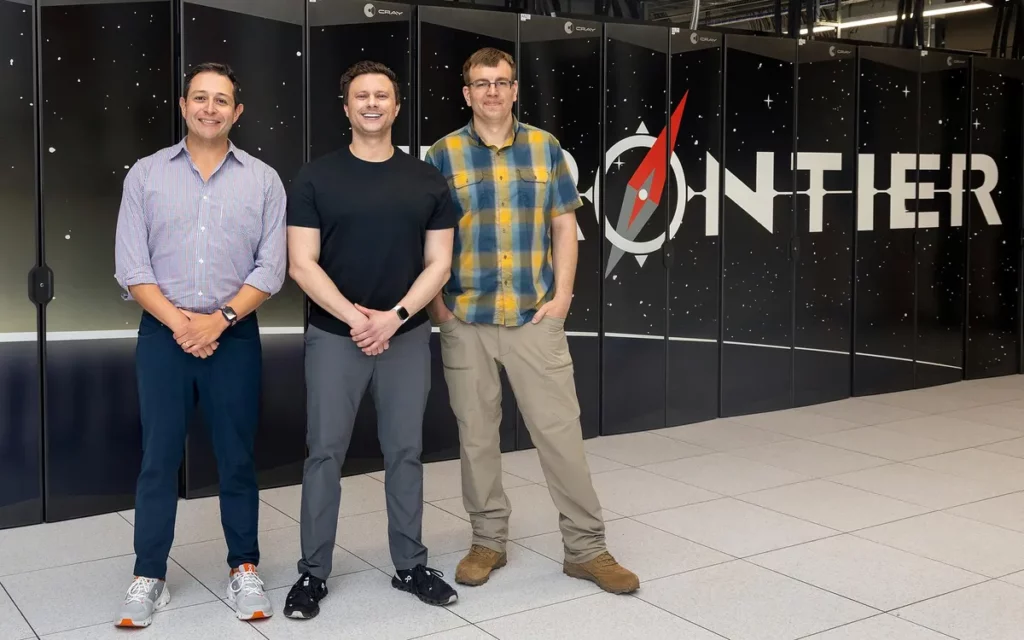
The team at Atomic Canyon, one of the leading companies integrating AI into the nuclear industry, stands in front of Oak Ridge National Laboratory’s Frontier supercomputer.
If there is any place that would be off-limits to AI, the control room of a nuclear power plant certainly sounds like one. The nuclear industry is historically cautious and risk averse—understandable given the possible catastrophic consequences of an accident or a mistake. Even well-trained managers struggle with the operational complexity of a nuclear reactor.
It’s not the kind of setting that seems well suited to a powerful but error-prone new technology.
Reality tells a startlingly different story. A variety of companies have begun to offer AI solutions for nuclear power. This year, nearly the entire fleet of 94 U.S. nuclear reactors has been offered the chance to integrate AI into its operations, and most have taken it.
In August, California-based Atomic Canyon launched NIVA, the Nuclear Industry Virtual Assistant, which was developed in cooperation with nuclear industry groups. The assistant was pilot tested in nuclear plants run by Constellation Energy and is now available to the United States’ entire fleet of reactors. (Constellation declined to be interviewed for this story.) Meanwhile, the AI-for-nuclear startup Nuclearn says its products have gone to work with more than 65 U.S. partners, a total that includes many traditionals plants but also an integration with NuScale Power Corporation that is working toward advanced small nuclear reactors.
Microsoft and Nvidia have collaborated on a project to apply AI toward optimizing “the entire lifecycle of a nuclear plant, spanning site permitting, design, construction, and continuous operations.”
The reason for the rapid adoption, according to Nuclearn CFO and cofounder Jerrold Vincent, is twofold. First, the technology companies banking their futures on AI are also keen on a revival of nuclear power to provide the electricity for all those data centers. Vincent says AI is also ideal for addressing some of the nuclear industry’s most pressing problems.
Many of the things that make reactors so difficult to operate–intricate regulations, along with complex systems for management and maintenance–are exactly the kinds of tasks that AI is good at. The industry is staggering to deal with aging hardware and an aging workforce. If it is going to survive, and have a real shot at a nuclear revival, it will need help from machine intelligence, Vincent says.
“There’s this huge growth in demand from advanced reactor developers and in new nuclear,” Vincent adds. “But the existing workforce has spread really thin. So most of the time when we’re coming into a customer, [they're saying,] ‘I’ve had jobs open and I can’t fill these positions. We need to do the things required by regulation.
How the heck are we going to do it?’”
Right now, the principal output of a nuclear reactor (aside from electricity) is paperwork. Nuclear plants produce piles of documentation to demonstrate regulatory compliance and to record how they respond to any potential problem, from a crack in the sidewalk to a fault in the reactor.
“Every engineering decision has to be evaluated, independently verified, and checked,” Vincent says.
Source
IEEE Spectrum AI · 8 Oct 2026 · 16:28 CEST
Open the original at IEEE Spectrum AI ↗