Robotics · 8 Oct 2026 · 15:00 CEST
Upstream Expands Live Digital Twins From Connected Vehicles to Robots and Physical AI
Publisher preview · OZZZER analysis pending editorial review.
PUBLISHER ARTICLE PREVIEW
From the original article
A warehouse robot running hotter than usual could be developing a mechanical fault—or simply working harder in a warmer building. A drone deviating from its normal pattern could be responding to its mission, a software problem, or a cyberattack. As autonomous machines spread into more industries, knowing what a machine is doing becomes inseparable from understanding why.
Upstream is bringing its experience monitoring connected vehicles to that problem. The company has announced an expansion into the broader physical AI market, extending its live digital twin infrastructure to robots, humanoids, drones, autonomous mobile robots and agricultural equipment.
The announcement builds on infrastructure that Upstream says has been proven across more than 40 million connected assets. That figure describes its existing connected-asset footprint, rather than a newly deployed fleet of robots. The company’s proposition is that lessons learned from automotive security and operations can help manufacturers manage autonomous machines as they move into commercial deployment.
Connected vehicles provide a useful starting point because they combine software, sensors, remote services and real-world consequences. A problem can originate in a component, an application, a communications interface or the relationship between them. Diagnosing it requires more than looking at an isolated error message.
Robotics brings similar complications. A machine’s behavior depends on its environment, workload, configuration and software. An alert that makes sense for one fleet may be misleading for another. As deployments grow, operators need a way to maintain that context across individual machines and groups of assets.
“Connected and autonomous vehicles are among the most advanced Physical AI systems operating at commercial scale today,” said Yoav Levy, Upstream’s co-founder and CEO, in the announcement. He said the company is extending technology and expertise developed with automakers to robots, humanoids, drones and other autonomous machines.
Upstream says it will continue expanding its automotive business alongside the new physical AI practice. The move broadens the environments its platform addresses, bringing its existing monitoring approach into additional categories of connected equipment.
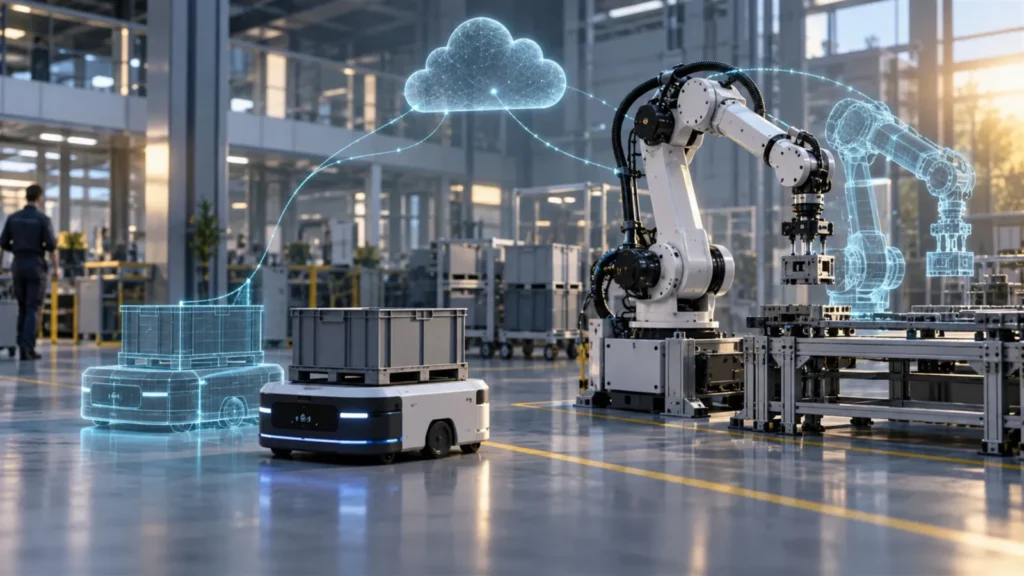
In this context, a digital twin is a continuously updated representation of a machine’s behavior and operating state, together with its surrounding digital ecosystem.
Source
Unite.AI · 8 Oct 2026 · 15:00 CEST
Open the original at Unite.AI ↗