Automation & Agents · 7 Oct 2026 · 19:17 CEST
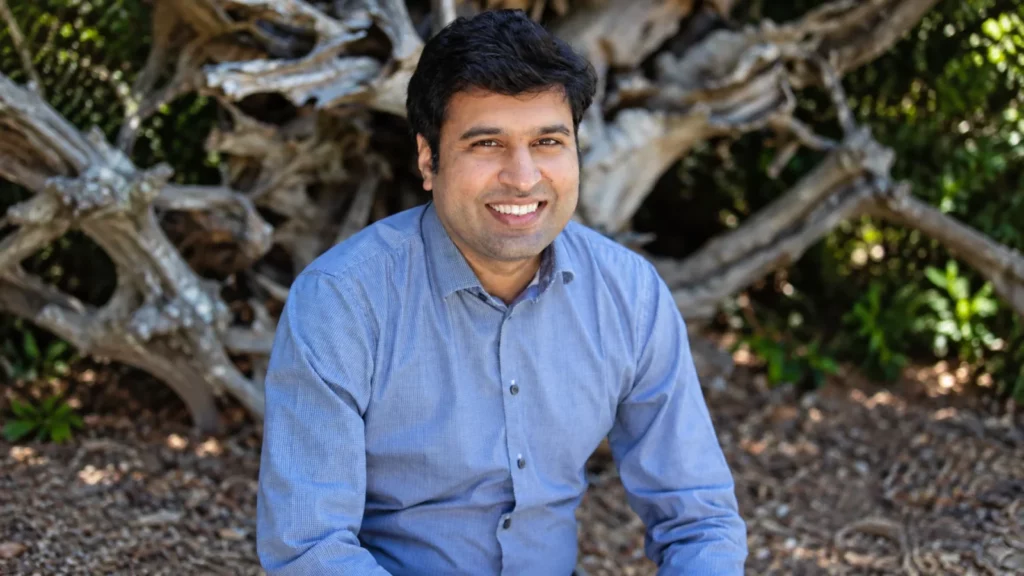
Himanshu Jain, Co-founder and Head of Products at CommerceIQ – Interview Series
Publisher preview · OZZZER analysis pending editorial review.
PUBLISHER ARTICLE PREVIEW
From the original article
Himanshu Jain, Co-founder and Head of Products at CommerceIQ, leads product strategy and development with a focus on building AI agents that automate complex retail and ecommerce workflows. Since co-founding CommerceIQ in 2017, he has helped shape the company’s approach to applying data, automation, and AI to digital commerce. Before CommerceIQ, Jain held product strategy, business development, and customer success leadership roles at Boomerang Commerce, where he worked with major retailers on pricing, assortment, and ecommerce growth strategies.
Earlier in his career, he was a management consultant at A.T. Kearney and spent nearly five years at Capital One UK across product management, credit risk, marketing strategy, analytics, and statistical modeling. He has also advised startups on go-to-market strategy and contributed articles on Amazon and ecommerce to Marketing Land.
CommerceIQ is an AI-powered retail commerce platform designed to help consumer brands manage and optimize their performance across ecommerce channels. Its platform brings together sales, retail media, digital shelf, content, inventory, and competitive data, giving teams a unified view of performance across more than 1,500 retailers and 85 countries. CommerceIQ has increasingly focused on agentic AI through its AllyAI technology, with specialized agents that can analyze retail signals, recommend actions, automate reporting, optimize advertising bids and budgets, and execute selected ecommerce workflows within defined controls.
The company positions this approach as a shift from dashboard-driven retail management toward continuous, AI-assisted execution across sales, media, content, and the digital shelf
You’ve spent more than a decade working across product management, customer success, business development, and more before co-founding CommerceIQ. What made you get into agentic retail, and which lessons from those earlier technology transitions have shaped how you view this one?
Most software before agentic AI was designed to make a human’s job faster. Excel helps you build a model faster. A dashboard helps you make a decision faster. What changed with agentic retail is that software can now do the work itself, not just speed up how a human does it. An agent can learn your environment the way a new hire would.
Your processes, your internal guidelines, how you actually make decisions, and then act toward a goal end-to-end, with a human providing context and auditing the output rather than doing every step. That is a completely different category of software than anything I worked with earlier in product management or customer success, and it is why I think this is the most fundamental technology shift I have seen, not an incremental one.
The pace is also unlike anything before it. Smartphones took years to become ubiquitous. Agentic AI has changed how entire industries work and it is not slowing down. The lesson from earlier transitions that I take most seriously is that people who project from the past make the wrong calls here. The approach I have found works best is to keep an open mind, get your hands dirty, and learn from what is actually happening right now rather than what happened in the last cycle.
You’ve drawn a distinction between “agentic commerce,” where consumers use AI agents to discover and purchase products, and “agentic retail,” where brands use agents to manage how they sell. As both sides become increasingly automated, how do you see the relationship between consumers, brands, and retailers changing?
Retail discovery has gone through a few real shifts. In the 80s and 90s, it was circulars in the mail, a store deciding what to spotlight, and a human choosing from that. Amazon created the endless aisle. Every keyword search became its own unlimited shelf, but a human was still reading titles, skimming reviews, and making the choice alone.
What is changing now is that humans and agents are buying together. You express an intent; an agent can read every product on the page in full, every claim, every review, every bullet, run an intent analysis against what you actually need, and hand you four or five recommendations. You still pick one, but the agent has already done the comparison work a human used to do by skimming.
Source
Unite.AI · 7 Oct 2026 · 19:17 CEST
Open the original at Unite.AI ↗