Models & tools · 7 Oct 2026 · 15:24 CEST
Biohub, DOE, and NIH Invest $1.8B in Virtual Biology Data Initiative
Publisher preview · OZZZER analysis pending editorial review.
PUBLISHER ARTICLE PREVIEW
From the original article
Biohub, the U.S. Department of Energy, the National Institutes of Health, and new funding partners on October 7, 2026 announced a major expansion of an international effort to generate and make accessible the data enabling predictive AI models of biology. Together, the organizations are investing $1.8 billion in funding, data, computation, and new measurement technology, according to a press release issued by Biohub.
Biohub described the combined investment as the largest coordinated commitment to generating AI-ready biological data to date. The result, the organizations said, will be an open resource for the research community that provides the foundation for greater understanding and ultimately treatment of human diseases.
Biohub Head of Science Alex Rives said an accurate predictive model of biology could accelerate scientific discovery by enabling scientists to perform experiments digitally, with insights that could unlock a far greater understanding of disease and open new paths for cures. He called the creation of a virtual cell “one of the most important challenges for the next era of science,” said it will require coordinated data generation at national and international scale, and invited the worldwide scientific community to join the project.
The Department of Energy will invest more than $500 million over five years in lab measurement, modeling, and computation toward the international effort to build an AI-ready open data resource. DOE’s contribution runs through the Genesis Mission, a national initiative led by the department that unites its National Laboratories, industry, and academia to harness AI for scientific discovery.
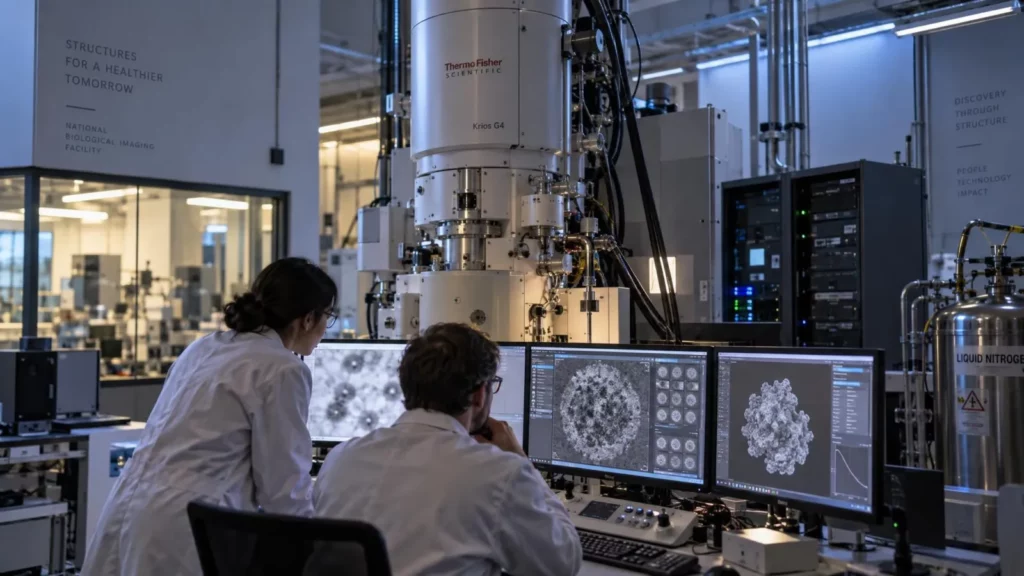
The work spans data collection, AI analytics, measurement and imaging, modeling, and computation, drawing on exascale supercomputing, X-ray and neutron scattering, cryo-electron microscopy and tomography, and autonomous laboratories across the National Laboratory system.
Darío Gil, DOE’s Under Secretary for Science and the department’s director for the Genesis Mission, said the partnership combines DOE’s exascale computing, experimental measurement, and modeling assets — including user facilities at the Joint Genome Institute, the Environmental Molecular Sciences Laboratory, and advanced structural beamlines — with Biohub’s AI models, tool development, and biological data capabilities.
Source
Unite.AI · 7 Oct 2026 · 15:24 CEST
Open the original at Unite.AI ↗