AI Hardware & Infrastructure · 6 Oct 2026 · 16:50 CEST
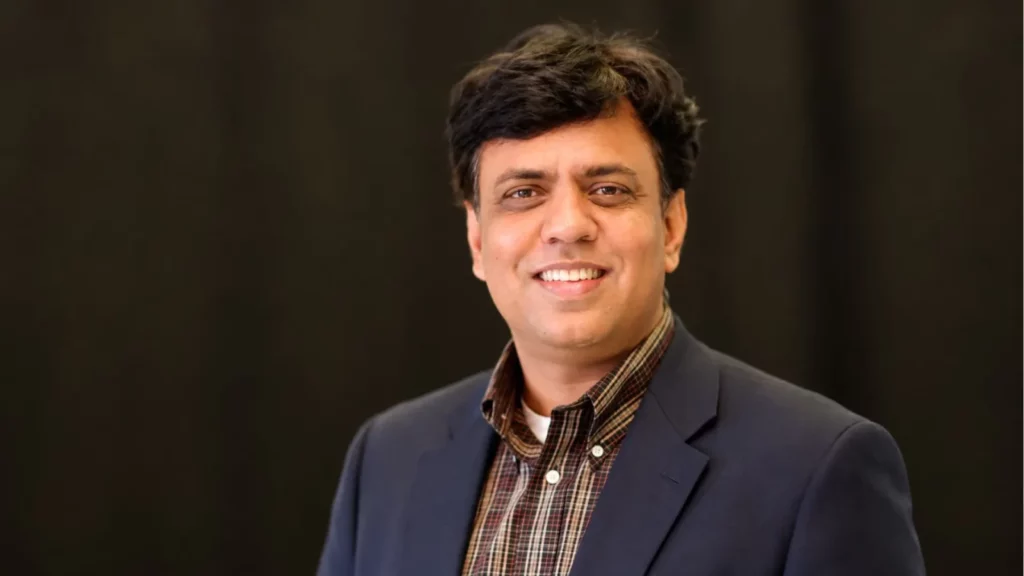
Sushil Kumar, CEO of Cyara – Interview Series
Publisher preview · OZZZER analysis pending editorial review.
PUBLISHER ARTICLE PREVIEW
From the original article
Sushil Kumar, CEO of Cyara is an experienced enterprise software executive and entrepreneur with more than 25 years of leadership across artificial intelligence, DevOps, cloud infrastructure, product strategy, and software testing. He joined Cyara as CEO in December 2025, following his role as co-founder and CEO of RelicX.ai, where he built a generative AI-powered, intent-based test automation platform that was acquired by Harness.
He subsequently led the integration of RelicX’s technology into Harness and helped shape its AI Test Automation strategy. Earlier in his career, Kumar served as General Manager of DevOps at Broadcom, Senior Vice President of Products at CA Technologies, and spent more than 16 years at Oracle, where he held senior product leadership roles and helped scale major enterprise software businesses.
Across these roles, he has focused on building and scaling AI, cloud, DevOps, and automation platforms for large enterprises. His appointment at Cyara is focused on expanding the company’s AI-powered customer experience assurance capabilities and global reach.
Cyara is a customer experience assurance company that helps enterprises test, monitor, and validate customer interactions across voice, digital, messaging, and conversational AI channels. Its Cyara Agentic Platform is designed to address the growing challenges created by AI-driven customer experiences, including testing non-deterministic AI agents, detecting hallucinations and behavioral drift, validating compliance, monitoring production systems, and assessing end-to-end customer journeys.
The platform combines AI agent testing, production monitoring, voice and telecom assurance, digital-channel testing, and CX observability, supporting more than 350 million customer journeys annually across a global footprint spanning more than 140 countries. As enterprises deploy increasingly autonomous AI agents into customer-facing workflows, Cyara is positioning its technology as an assurance layer for evaluating whether those systems behave reliably, safely, and consistently before and after deployment.
You’ve spent much of your career building and scaling enterprise software, from Oracle and CA/Broadcom to founding Relicx and now leading Cyara. How has that experience shaped your view that AI agents should be managed less like traditional software and more like members of a workforce?
I have spent most of my career building and scaling enterprise software, and the discipline we built there was a discipline around deterministic systems. You know what the software is supposed to do. You validate it against that expectation. When it breaks, it tells you: an error, a failed transaction, an alert.
AI agents do not work that way. They are non-deterministic, so the same input can take a different path. More importantly, they can act on behalf of the company. They make commitments: refunds, policies, promises. And when one of those is wrong, nothing breaks. A wrong answer sounds exactly like a right one. The transaction succeeds, the dashboard stays green, and the customer walks away with something the company never agreed to.
Once software can make decisions and commitments, and can be wrong without telling you, it needs a different operating model.
That is where the workforce comparison earns its keep. You do not manage an employee by scripting every decision they will make. You give them a role, you establish the authority that comes with it, and you expand that authority as they earn it. An agent behaves the same way under the same structure.
My read is that autonomy is not a deployment decision. It is a series of promotions. An agent earns each one by showing it can do the job, stay inside its authority, and recognize when it needs help.
What does an “HR-like” operating model for AI agents actually look like inside an enterprise, and which elements should companies put in place first?
Start with the job. Every agent should have something close to a job description before it goes near production. What is it there to accomplish, what information is authoritative for it, what customer data can it use, what decisions can it make on its own, and where does its responsibility end. If a company cannot write that down in a paragraph, the agent is not ready for a role.
It is ready for a demo.
Four things follow from that role, and the order matters. Evidence before launch, which means proving the agent can do the job under conditions that resemble the real world rather than a controlled test. Oversight while it runs, so you know what the agent actually did and not only whether the system responded. Promotion gates, so more authority is granted when there is evidence to support it and not before.
And an owner in the business, not in engineering, who is accountable for what that agent is allowed to do.
Get the order wrong and the rest does not hold. If responsibility is vague, good performance is impossible to prove, and so is failure. The role comes first, and the evidence follows.
If an AI agent is assigned a specific role, how should organizations define its responsibilities, permissions, and boundaries before allowing it to interact with customers or critical systems?
The role says what the agent is for. The permissions say what it can reach. Those are two different conversations, and companies tend to have only the first one.
Be explicit about three things.
Source
Unite.AI · 6 Oct 2026 · 16:50 CEST
Open the original at Unite.AI ↗