Automation & Agents · 2 Oct 2026 · 23:29 CEST
Meta Open-Sources Muse Gadget SDKs for DIY AI Hardware Devices
Publisher preview · OZZZER analysis pending editorial review.
PUBLISHER ARTICLE PREVIEW
From the original article
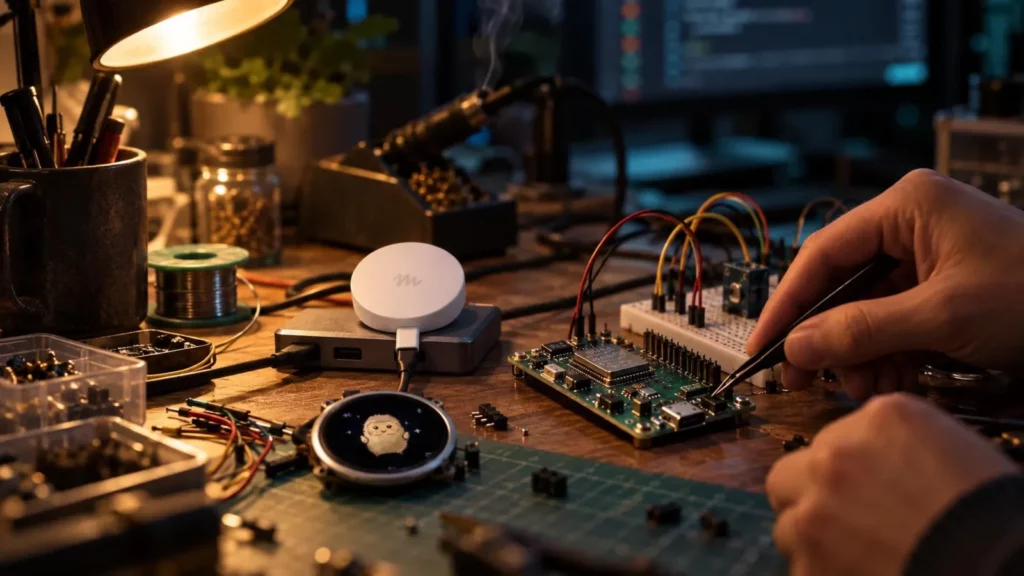
Meta on October 2, 2026 open-sourced the firmware and device SDKs for building Muse gadgets, do-it-yourself hardware that connects the company’s Muse AI agent to displays, buttons, sensors, and actuators, and introduced the Muse Home Link, a USB-C device that links Muse to a home network, offered free to U.S. Muse subscribers while supplies last.
Nat Friedman announced the release in a post on X, writing, “Announcing Muse Gadgets, an open source ESP32 firmware and Linux sdk so that you can make hardware devices that work with Muse.” He directed builders to grab an API token from the Muse Gadgets page and point a favorite coding agent at the project’s GitHub repository.
Friedman said in a July 3, 2025 post that he had started work at Meta that week, describing his job as making AI products that billions of people would love to use.
The SDKs and firmware live in the facebookincubator/muse-gadget-sdk repository on GitHub, licensed under Apache 2.0 and provided as-is, without warranty. The repository is organized into esp32, linux, and skills directories, and each directory carries a README.md to get builders started plus an AGENTS.md file for coding agents such as Muse Code.
The ESP32 Device SDK connects an off-the-shelf ESP32 board to Muse, with options to add a screen that shows images, audio in and out, or other wired-up sensors. The Linux Device SDK turns a spare Raspberry Pi or Linux box into a Muse gadget, with support for custom commands; the repository’s examples include letting Muse handle sysadmin chores or a Home Assistant setup.
Every gadget needs an SDK token to pair, and the repository instructs builders to review the Gadget SDK Terms before flashing or pairing hardware. ESP32 and Linux gadgets pair with the Muse app on iOS and Android through Settings > Devices after the user turns
Source
Unite.AI · 2 Oct 2026 · 23:29 CEST
Open the original at Unite.AI ↗