AI · 2 Oct 2026 · 21:30 CEST
Computational tools for society’s most complex challenges
Publisher preview · OZZZER analysis pending editorial review.
PUBLISHER ARTICLE PREVIEW
From the original article
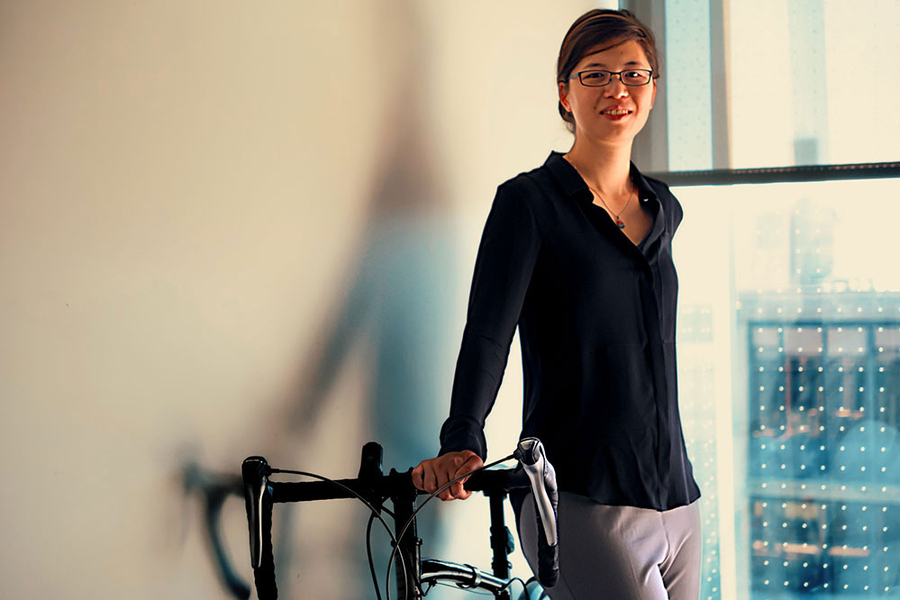
As far back as she can remember, Cathy Wu ’12, MNG ’13 wanted to find ways to solve problems to improve people’s lives. Her parents were Taiwanese immigrants, and her father had a long commute to his job, which took him away from the family. On a tight budget, the rest of the family often stayed home on a street that was too busy for playing outdoors.
Wu and her siblings ended up playing a lot of computer games.
Wu says her desire to make the world a better place, her dad’s daily battle against traffic, and the games she played, like “SimCity,” were the seeds of her motivation to design safe, efficient transportation systems.
Wu is an associate professor in the MIT Department of Civil and Environmental Engineering (CEE) and the Institute for Data, Systems, and Society (IDSS), and a principal investigator in the Laboratory for Information and Decision Systems. Her research focuses on using machine learning and reinforcement learning (RL) to advance reliable strategies for improving a range of complex systems, including transportation.
“Designing transportation systems consists of modeling and analyzing dozens, if not hundreds or thousands, of variants, which means that an evidence-driven approach to designing those systems is simply not within reach of today’s tools,” Wu says. “This is the role that RL plays. If successful, it would free transportation researchers and enable their practitioner partners to design the systems they want.”
Wu credits her older sister with instilling in her the desire to improve people’s lives, and Wu’s interest in transportation fits neatly into that ideal.
“I like transportation because it connects everyone. We all use it, we all experience it, we all have issues with it. So, at some level, we’re all interested in the system being better,” she says.
Wu got interested in applying artificial intelligence to transportation while earning her undergraduate degree at MIT, after attending a lecture on autonomous vehicles by the late professor Seth Teller. The lecture, which Teller gave during an Independent Activities Period robotics competition (that Wu actually won), was the event that honed her particular approach to transportation research, Wu says.
She began working with Teller, and when he stopped concentrating on autonomous vehicles, he encouraged Wu to transfer to Professor Daniela Rus, who had done research on robotaxis.
Source
MIT AI NEWS · 2 Oct 2026 · 21:30 CEST
Open the original at MIT AI NEWS ↗