Models & tools · 1 Oct 2026 · 20:31 CEST
Dense vs. MoE Models: Active Parameters, Throughput, and When to Choose Each
Publisher preview · OZZZER analysis pending editorial review.
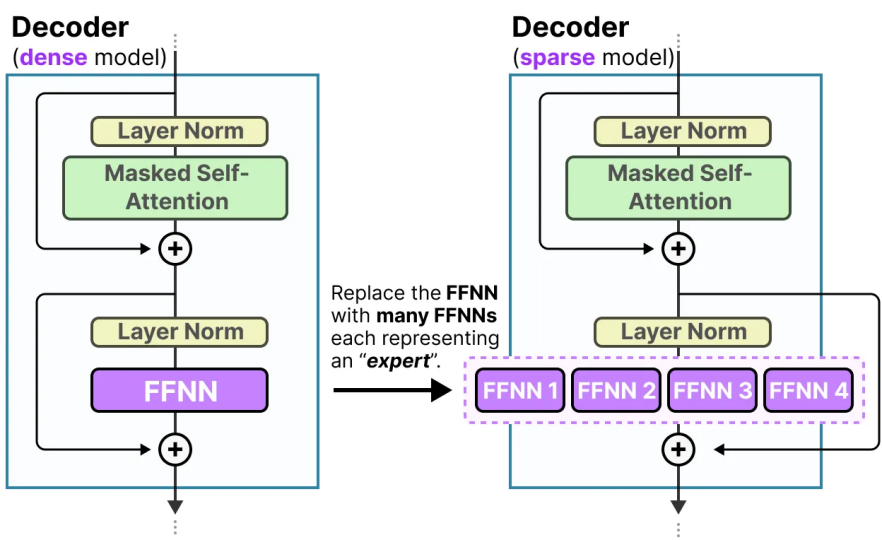
How can a 30B-parameter model activate only 3B parameters per token, and still use the capacity of the larger model? Nemotron 3.5 Lightning illustrates the answer: It uses a Mixture-of-Experts (MoE) architecture that selects only a subset of its parameters for each token. There are two dominant model architectures: Dense model and MoE. How a model organizes its parameters matters as much as how many it has.
The right choice affects throughput, memory cost, and serving complexity more than raw parameter count does. Therefore, choosing between them comes down to your deployment constraints. Think of the difference like two engines with the same total displacement. One fires every cylinder on every cycle; the other activates only the cylinders it needs. In simple terms, dense and MoE models differ in how they use their parameters.
A dense model activates all its parameters for every token. An MoE model stores multiple expert networks but routes each token through only a selected subset. Dense models typically favor simpler, more predictable deployment, while MoE models can deliver greater capacity and throughput when memory and…
Excerpt supplied by the publisher.
Source
NVIDIA · 1 Oct 2026 · 20:31 CEST
Open the original at NVIDIA ↗