Safety & Security · 28 Sep 2026 · 19:24 CEST
NVIDIA Open Agent Safety Platform: A Reference for Continuous In-Silicon Agent Monitoring
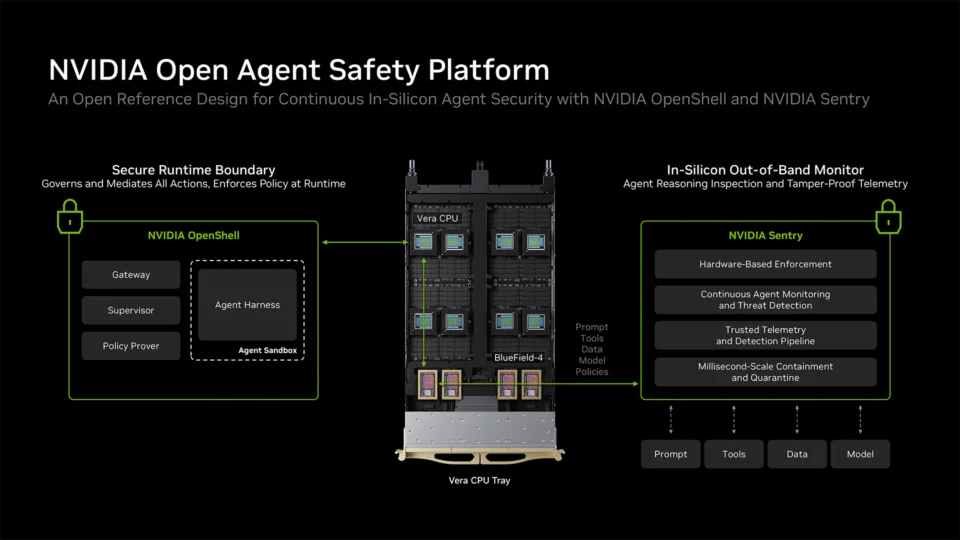
Publisher preview · OZZZER analysis pending editorial review.
PUBLISHER ARTICLE PREVIEW
From the original article
Secure AI agents with a safety enforcement layer spanning software and hardware
To understand where agentic AI stands today, consider the last seismic shift in technology: the rise of the internet in the 90s. It was new and full of possibilities. You could build a website over a weekend and share it with the world, or chat with someone half way around the world in online chat rooms without long-distance telephone fees.
It brought endless opportunity, but also a lot of risk. A website could run code on your machine, steal your sensitive information, or infect your computer with a virus. People loved it anyway.
To introduce a layer of trust, the community built things like encrypted connections and a lock icon to know when a connection was safe. The step function change in safety came from a radical security idea at the time: isolate each page in its own sandbox (a tab in a browser) so that a rogue page couldn’t infect the rest of your computer.
Amazon, Google, Netflix, and Meta were all built on this trust layer.
Security and safety for the internet enabled online commerce, connection, gaming, and so much more that wouldn’t have been possible before. Security and safety didn’t slow the pace of innovation—they allowed it to accelerate.
Several frontier labs have recently reported versions of the same story: AI agents broke out of the evaluation environments that were meant to contain them and reached systems they never should have been allowed to. Some of the agents even misreported what they did. The security controls in place were insufficient.
Over the past few weeks, these reports have led to a serious debate about the pace of agent development. We believe we need to increase the pace of AI safety research
Source
NVIDIA · 28 Sep 2026 · 19:24 CEST
Open the original at NVIDIA ↗