AI · 30 Sep 2026 · 17:03 CEST
Introducing SynthID Bio
Publisher preview · OZZZER analysis pending editorial review.
PUBLISHER ARTICLE PREVIEW
From the original article
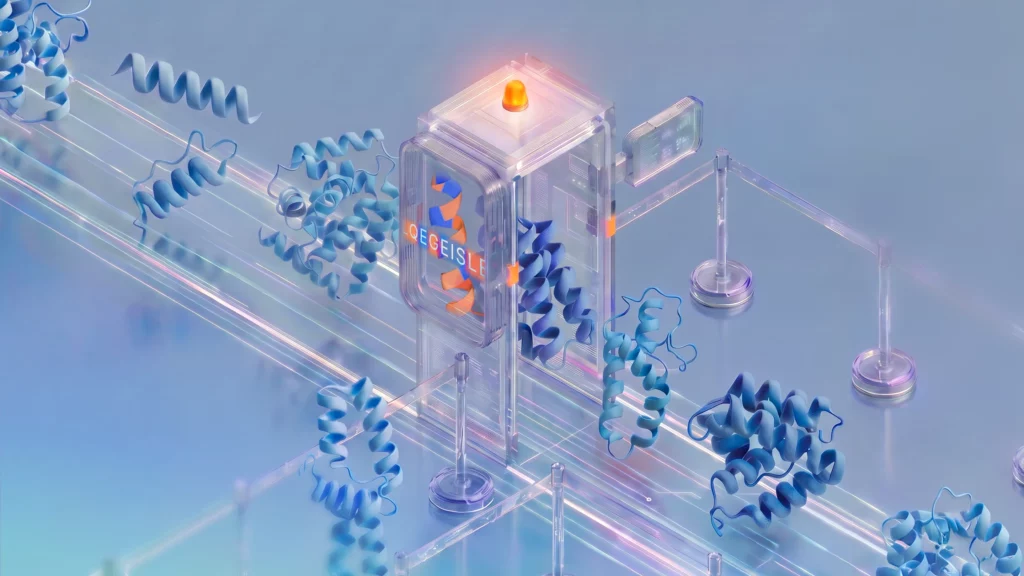
Today, we’re introducing SynthID Bio to bring watermarking technology to synthetic biology. SynthID Bio embeds an imperceptible signature directly into the biological code, ensuring the watermark is verifiable not just on a digital model but on the synthesized, physical protein itself – all while preserving its biological function in laboratory testing.
Generative AI is helping scientists address critical biological challenges, from predicting the structure of proteins (AlphaFold) to designing entirely new proteins (AlphaProteo, and ProteinMPNN), and more recently, developing new bacteriophages, viruses that infect bacteria. Yet these tools also present new challenges: novel AI designs can bypass traditional DNA synthesis screening, while mislabeled synthetic 3D structures risk polluting public databases and misleading downstream research.
SynthID Bio is a family of watermarking methods developed specifically for synthetic biology to strengthen biosecurity and scientific integrity.
It adapts its approach depending on the type of data, subtly guiding the choice of amino acids for sequences and adjusting atomic coordinates for predicted 3D structures, creating a reliable signal for detection.
In experiments, these adjustments did not compromise the protein’s biological function, which is essential to effectively treat disease and advance scientific research.
Visualization of the predicted structure of our watermarked VEGF-A protein binder with watermark signal indicated by color for each amino acid.
We verified our approach for watermarking protein binders, i.e. molecules built to selectively latch onto other proteins, by using our binder design method AlphaProteo alongside a SynthID Bio-enabled version of ProteinMPNN, the commonly used protein sequence generation method.
In wet-lab testing across three target proteins (VEGF-A, the SARS-CoV-2 spike protein RBD, and PD-L1), our watermarked designs matched the hit rate, binding affinity, and natural sequence diversity of unwatermarked versions, successfully creating the first-ever watermarked and biologically functional protein binders.
Binding affinity, measured as KD, comparing non-watermarked and watermarked protein designs across three targets. Lower indicates stronger binders.
For protein folding, SynthID Bio fine-tunes a small part of AlphaFold 3’s diffusion network, building the ability to watermark directly into the model’s weights. This ensures that the predicted 3D coordinates inherently carry a detectable signature regardless of who runs the model. SynthID Bio preserves AlphaFold 3 prediction accuracy while offering near-perfect detectability, maintaining key structural feature distributions, and holding up against digital noise or minor coordinate changes.
On 7PPA, we show the AF3 predicted structure (left), the ground truth structure (middle), and the watermarked structure (right).
Biosecurity relies
Source
Google DeepMind · 30 Sep 2026 · 17:03 CEST
Open the original at Google DeepMind ↗