Safety & Security · 29 Sep 2026 · 15:00 CEST
Interview: Firefox's chief on why he hopes a redesign will help win users from Chrome
Publisher preview · OZZZER analysis pending editorial review.
PUBLISHER ARTICLE PREVIEW
From the original article
Mozilla’s Ajit Varma explains why a redesign suits the fight for the open web.
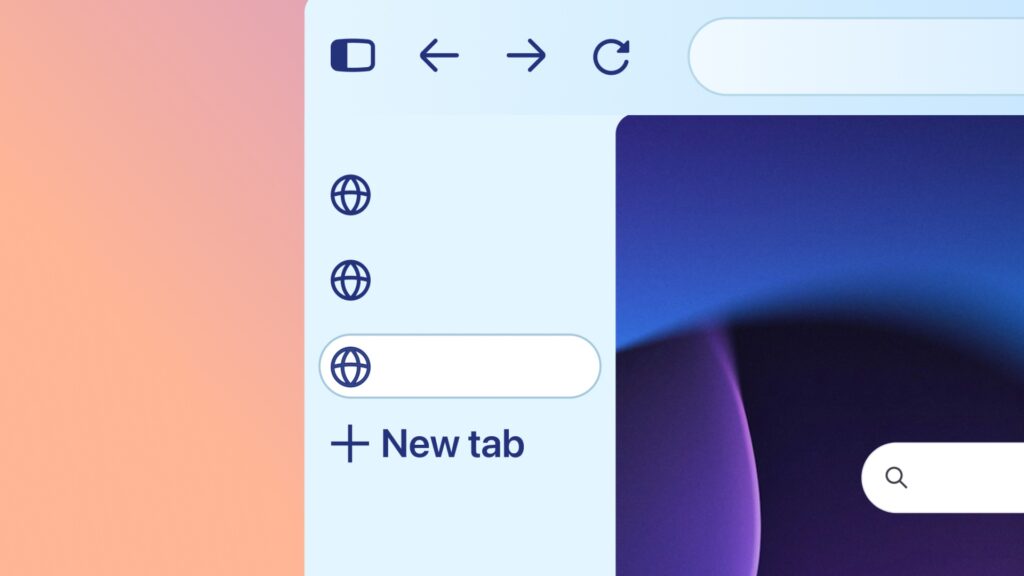
Today, the Firefox 157 update will roll out a redesign of the web browser across desktop and mobile platforms. The team that made it hopes it will help expand the browser’s audience beyond privacy-conscious techies and open-web or open source advocates to a broader audience who might simply pick the browser because they prefer its user experience over competitors like Chrome, Edge, and Safari.
In advance of the redesign’s launch, I spent half an hour chatting with Mozilla’s head of Firefox, Ajit Varma, about Firefox’s current market position and product strategy, and what barriers or opportunities there are for gaining ground in a Chromium-dominated landscape.
Firefox’s interface has recently felt more conservative than niche browsers. And when I asked Paddy Harrington, a senior analyst at Forrester who covers this space, what Firefox’s main barrier to adoption is, he was frank.
“The biggest is they’re not Chrome,” he replied. “That sounds simplistic, but it’s the clear truth. Safari and Edge are built into the leading operating systems in business and consumer markets, yet people still download and deploy Chrome.”
That said, for many of the people who have chosen to use Firefox, “it’s not Chrome” is much of the appeal. Google-led Chromium dominates the web. It doesn’t just power Google’s own Chrome browser (which has majority market share by a wide margin), it powers most of the rest of the competition, too, including Microsoft Edge.
Firefox, which is built on the open source Gecko, serves as a Chromium-free alternative and has become one of the go-to choices for users who don’t want to contribute to one company’s dominance of the open web—though there is even tension there, and a deal to offer Google search as Firefox’s default provides Mozilla with the majority of its revenue.
For now, Firefox seeks independence for the web while remaining financially dependent on its dominant competitor.
But to expand beyond the relatively small market share it now has, Firefox has to inspire users to actively select it over incumbents by actually providing a better browsing experience; most people don’t care whether Chromium dominates, and most have never heard of Gecko.
In our conversation, Varma expressed hope and ambition that these modernizations will help drive more of those users to choose Firefox on its merits as a product. We also discussed the Firefox team’s competing priorities, its development resources, AI features and tooling, the general browser market, and more.
Ars Technica: It’s nice to see a bit of modernization of the design of Firefox. But what problems does this redesign solve? How does it advance browser choice and the open web beyond just being a browser that’s a little more appealing and a little easier to use?
Ajit Varma: Yeah, I think there’s been a lot of questions around, “What are we doing this at the cost of?” Like should we be focused on performance? Should we be focused on compatibility?
We are trying to do all of the above and work faster, and I think that’s one of the challenges that Firefox had in the past, was there was slow decision-making. There was a lot of debate, and in the last like year and a half, we’ve actually been trying to say, can we get a lot more velocity, and compete?
And part of this is made possible by AI tools, to be honest with you. We are able to do a lot more.
People want to feel like they’re in a modern browser—things that match the design language of the operating system. So that’s part of it. We are bringing back compact mode as well… and we also have launched more customization options.
There’s a lot of functionality that’s been built to give all the modern productivity things that people wanted, and those are all very utilitarian, but it’s also the emotional connection, and do people feel like it’s a browser that feels modern as well.
Ars: Sure, I’m happy to see it. But right now, I would guess most users pick Firefox as almost a values statement, right? That’s not always the same thing as thinking it’s the most effective or enjoyable browser to use. And not everyone even cares about that values question, right? So are you trying to win users over by providing superior features and a better experience, to become everyone’s browser?
Or are you just trying to build the best browser for a particular audience with a certain set of values?
Varma: We are focused on building the best browser for a wide group of people. I agree with you that there is a subset of people who really understand the importance of competition and choice in a browser engine. When people look at a lot of competitive browsers, they are built on top of Chromium, and there’s a lot of risks to that.
For me personally, that is the reason that I work at Firefox and work on Gecko; it’s because I don’t want this consolidation to exist that destroys all the things that we love about an open Internet.
When we talk to a lot of users that are the broad set, people don’t understand, like, what is Chromium versus Blink versus Chrome, what is Gecko versus Firefox. A lot of people actually don’t even really know what the difference is between a search engine and a browser, and it’s all conflated.
So the reality is that even though I think a lot of our values are what drive us internally—this preservation of the open Internet—it’s hard for people to connect all those dots. Many of us people are like, well, does the browser feel enjoyable to use? And when I download it for the first time, does it feel special?
Does it feel unique?
And that’s where we do have an opportunity to also differentiate against Chromium browsers. When you look at a lot of those projects, they feel all very similar because it is much easier to fork and make superficial changes than make deeper changes. But we get an advantage by owning the entire stack. We can actually make bolder changes.
I do think that we need to cater to more than just very educated and informed people, going for a mass audience that doesn’t care about Gecko versus Chromium.
Ars: With that mass audience you need it to even occur to them to change. How much of Firefox’s minority position right now is platform obstruction, how much is inertia, how much is Firefox’s own product execution, and how much of it is people picking their desktop browser to match what they’re using on mobile, where you’re not as competitive?
Varma: We do see that when people have a moment to decide what they use, Firefox does really well. That kind of goes into your point around, like, consideration is actually the biggest barrier. A lot of people just don’t really consider what browser they use as an important decision. The reason we know this is because in Europe, you have choice screens on mobile.
This is part of the Digital Markets Act. There’s a split second when you get a new device: here’s the list of browsers, what do you want to use? We see a lot of growth in Firefox since these choice screens were implemented because I think people know Firefox, they understand privacy values, and then that resonates with them.
The biggest indicator, though, of what browser
Source
Ars Technica AI · 29 Sep 2026 · 15:00 CEST
Open the original at Ars Technica AI ↗