AI · 28 Sep 2026 · 11:30 CEST
Solving Math’s Greatest Problems Was an Art Form. Then Came AI
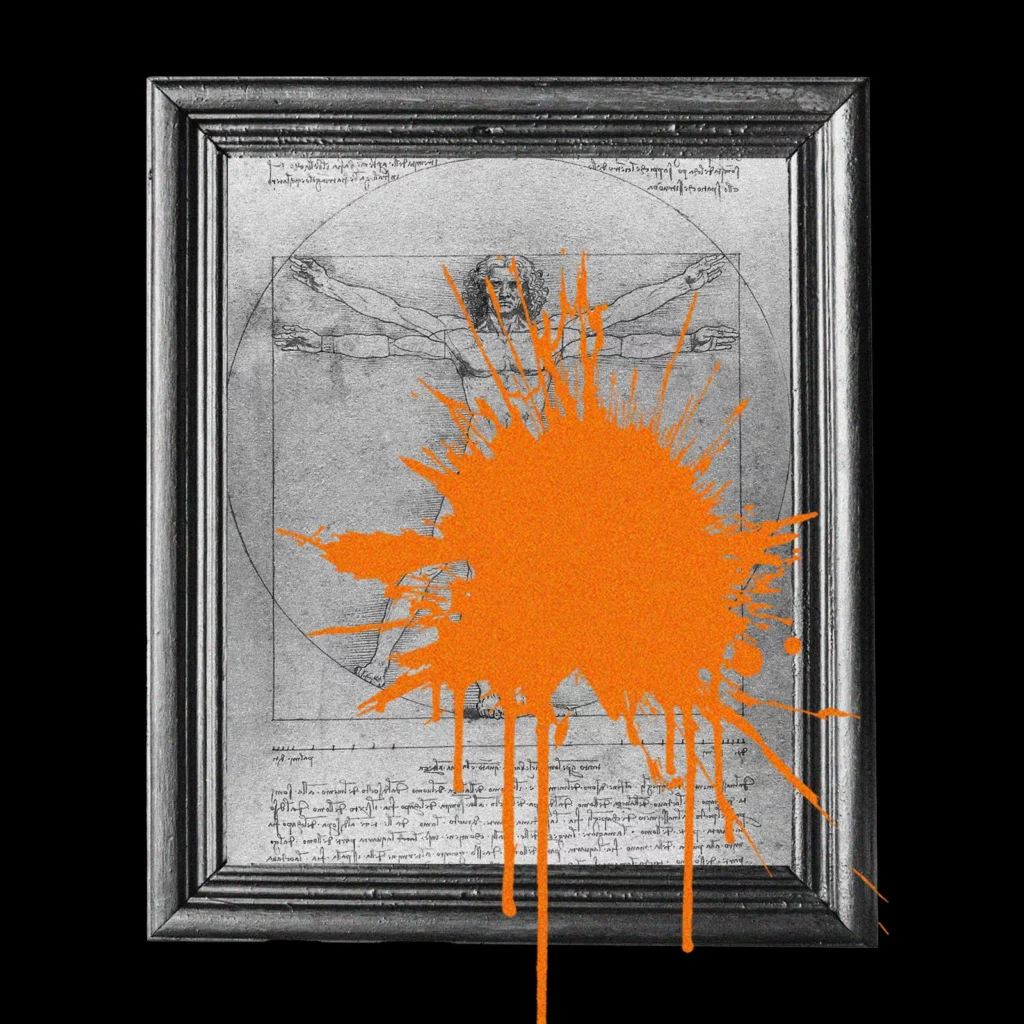
Publisher preview · OZZZER analysis pending editorial review.
PUBLISHER ARTICLE PREVIEW
From the original article
From Suno composing uncanny elevator music to Tilly Norwood delivering customer-service-inflected one-liners, artificial intelligence has rattled creative industries. You can add math to the list after OpenAI said that, using thousands of agents, it had solved a decades-old puzzle known as the Navier-Stokes existence and smoothness problem.
âThe artists and the musicians have already gone through this,â says Juspreet Singh Sandhu, a mathematician at Colorado State University.
Despite what timed high school exams might have you believe, mathematicians arenât focused on getting the right answer as fast as possible. In fact, contrary to mathâs image as a practical subject, the development of new mathematical ideas often resembles artistic exploration, akin to inventing a game or puzzle. Mathematicians typically follow a thoughtful, deliberate process to develop their ideas.
In contrast, OpenAI approached the proof with brute force, which shortcut the process in a way that threatens to undermine human understanding.
âA mathematician, like a painter or poet, is a maker of patterns,â wrote the English mathematician G. H. Hardy in his 1940 essay, A Mathematicianâs Apology. As Hardy describes it, a painter uses shapes and colors, and a poet uses words, while a mathematician constructs patterns out of ideas.
A pacifist, Hardy wrote the essay during World War II to argue that people should pursue mathematics for its own sake, separate from applications, particularly wartime ones. His essay promotes âuselessâ mathematics. He cites famed mathematician Carl Friedrich Gaussâ oft-quoted statement about number theory, the subfield of math which involves the study of integers, as the epitome of beautiful, useless math.
While Hardyâs comparison of math to art holds up, he would turn out to be wrong on some of the specifics: After being useless for centuries, number theory would prove valuable for encryption protocols widely used today to secure your emails and bank accounts.
At this point, though, useless is exactly what OpenAIâs proof is. The puzzle it solves is simply one thatâs been interesting to mathematicians for decades.
Its name comes from the Navier-Stokes equations, which 19th-century scientists developed to describe the flow of viscous fluids. Engineers use the equations to model airflow for airplane design. But mathematicians became enamored with the equations themselves, not their applications.
âMathematiciansâ main interest in the equations was certainly not engineering,â says Jared Speck, a mathematician at Vanderbilt University. They pursued answers to the problem, he says, because of the âmathematical richness, the puzzle aspect of it.â The puzzleâs solution will not help anybody design a more aerodynamic airplane wing. Put another way: Many cakes are cylindrical, but studying the equations that describe a cylinder wonât necessarily help you bake a better cake.
âWhen problems resist solution, they take on a bit of lore,â says Speck. The draw of Navier-Stokes is similar to why people play Sudoku or chess, both of which have no utility other than being fun and intellectually stimulating. The equations describe fluid flow, approximately, in the world we live in. But mathematicians imagined how the equations would apply in a fringe, almost sci-fi context, just because it intrigued them.
They formulated a puzzle: They wanted to know whether the equations implied
Source
· 28 Sep 2026 · 11:30 CEST
Open the original at ↗