Models & tools · 22 Jun 2026 · 12:00 CEST
Daybreak: Tools for securing every organization in the world
Publisher preview · OZZZER analysis pending editorial review.
PUBLISHER ARTICLE PREVIEW
From the original article
New tools, partnerships, and the full version of GPT‑5.5‑Cyber to move past vulnerability discovery and onto the acceleration of end-to-end patch automation.
We’re expanding Daybreak to help democratize patching vulnerable software at machine speed. For example, we’ve applied our models to discover and generate patches for critical vulnerabilities in major browsers, network infrastructure, and operating systems such as FreeBSD and the Linux kernel. To scale the impact of these capabilities:
Codex Security: We’re launching an update to the Codex Security plugin, which implements what we’ve learned from internal and customer usage of our models into a solution to accelerate the process of discovering and patching vulnerabilities in existing systems as well as automatically preventing new vulnerabilities from ever reaching production.
GPT‑5.5‑Cyber: Following an initial permissive-only preview, we’re launching the full version of GPT‑5.5‑Cyber through our continued limited release to trusted defenders. This model sets new state-of-the-art performance on CyberGym, reaching 85.6% compared with 81.8% for GPT‑5.5.
Daybreak Cyber Partner Program: Enabling security partners to scale the benefits to more organizations through our most capable models with trusted access in their products and services.
Patch the Planet: an initiative founded with Trail of Bits in collaboration with HackerOne, Calif, researchers, and maintainers to help widely used open-source projects move from findings to fixes.
More than 30 open-source projects have committed to participate, with initial participants including cURL, Go, Python, Sigstore, and pyca/cryptography.
With Patch the Planet, we are working with researchers, maintainers, enterprises, and partners to make powerful cyber capability available to defenders with appropriate access, governance, and human oversight. Hear from Clint and Dan about this here.
AI has changed the physics of cybersecurity. Frontier AI models have been increasingly accelerating vulnerability discovery. The bottleneck historically has been finding vulnerabilities, but now defenders are overwhelmed with the number of vulnerabilities found. Instead, the bottleneck is now patching vulnerabilities.
For years, finding serious vulnerabilities required rare expertise, time, and deep familiarity with complex systems. Now, models can navigate large codebases, reason through attack paths, validate hypotheses, and surface security issues that might otherwise stay hidden. Defenders absolutely need access to these capabilities, and also need tools to fix what we can now find, before attackers do.
Vulnerability reports, on their own, do not protect anyone. The value comes from validating the issue, understanding its impact, developing and testing a patch, coordinating disclosure, and helping teams deploy the fix. We are investing alongside our partners to improve these latter steps, in order to turbocharge defenders and convert model capability into real-world risk reduction.
Frontier defensive capabilities should not be concentrated in the hands of a few. Software touches all aspects of life, from critical infrastructure to business applications and government networks. As AI changes the pace of vulnerability discovery, defenders everywhere need democratized access to these models to find, fix, and protect their infrastructure before attackers can identify and abuse these flaws.
Daybreak brings together the frontier cyber capabilities OpenAI’s models, Trusted Access for Cyber, Codex Security workflows, and ecosystem partners to help approved defenders validate vulnerabilities, prioritize risk, generate and test fixes, and produce evidence inside existing security and development workflows. Our goal is to provide organizations the tools they need to stay secure even as the cyberthreat landscape continues to accelerate.
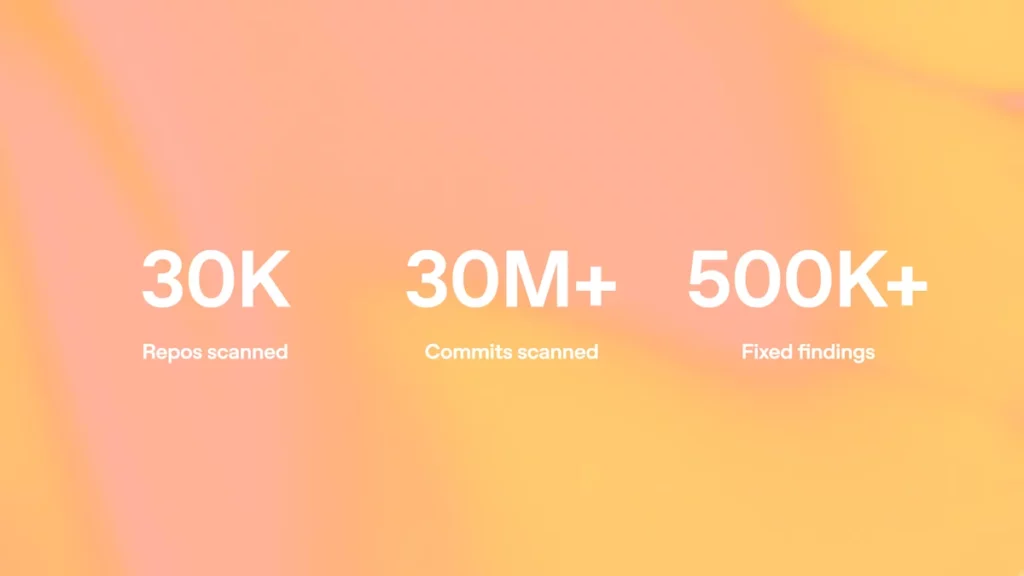
Since launching Codex Security cloud in research preview in March, it has scanned over 30 million commits across more than 30,000 codebases; human reviewers have manually marked more than 70,000 findings as fixed, and over 500,000 findings have automatically been determined to be fixed.
We built Codex Security around a simple premise: put the equivalent of a security engineer next
Source
OpenAI · 22 Jun 2026 · 12:00 CEST
Open the original at OpenAI ↗