AI · 22 Jun 2026 · 12:00 CEST
Patch the Planet: a Daybreak initiative to support open source maintainers
Publisher preview · OZZZER analysis pending editorial review.
PUBLISHER ARTICLE PREVIEW
From the original article
We are introducing Patch the Planet, a Daybreak initiative built with Trail of Bits to help maintainers strengthen the critical open-source software the world relies on. We’re pairing AI-assisted security research using our most cyber-capable models with expert human review to not only identify vulnerabilities, but help patch them.
AI is accelerating vulnerability discovery, but discovery alone does not protect users. Many maintainers are already being asked to sort through more reports, more quickly, with the same limited time and resources. Patch the Planet is built to reduce that burden, not add to it: security engineers review findings before they reach maintainers, work with projects to develop patches and tests, and build reusable workflows that help teams continue improving security after the first fixes land.
Trail of Bits has committed their entire security research organization towards this effort for our initial surge. They are working directly with maintainers to investigate and validate vulnerabilities, develop and test patches, and coordinate disclosure of vulnerabilities.
Additionally, we will be partnering with HackerOne and Calif who are helping us take our efforts further with vulnerability triage, coordinated disclosure, and additional focused vulnerability discovery efforts.
Each engagement under Patch the Planet begins in consultation with the maintainer. For each collaboration, security engineers work with maintainers to understand each project’s needs, preferences, and where additional security effort would be most useful: vulnerability validation, patch development, CI/CD improvements, or longer-term security engineering. Once aligned, researchers investigate potential vulnerabilities, validate meaningful issues, develop or refine patches, support testing, and coordinate disclosure through the project's established channels.
Initial participants include cURL, NATS Server, pyca/cryptography, Sigstore, aiohttp, the Go project, freenginx, Python, and python.org. These projects support widely used networking, cryptography, software supply chain, and language infrastructure, where stronger security can benefit a broad range of downstream products and services. Additional projects will join in future rounds.
Security researchers are equipped with our frontier models as well as Codex Security to support the analysis, patch development, testing, and documentation. Participating projects receive access to ChatGPT Pro; conditional access to Codex Security; and API credits for core open-source development, maintainer automation, and release workflows. Trail of Bits has developed AI-assisted workflows for deduplication, triage, and patching that projects can run with this support.
Trail of Bits has dedicated security engineers to work full-time with Codex and GPT‑5.5‑Cyber across 19 open-source projects, and has already identified hundreds of security issues and merged dozens of patches, with many more still undergoing coordinated disclosure.
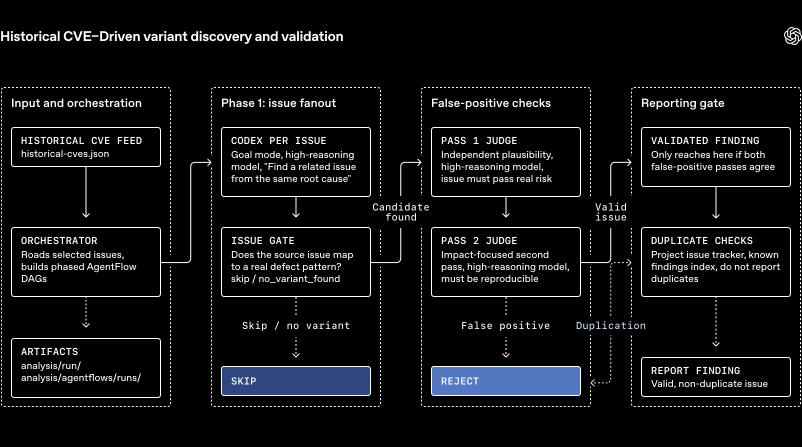
The initial sprint also produced reusable security infrastructure: fuzzing harnesses, historical-CVE analysis pipelines, differential-testing systems, threat models, expanded test suites, and workflows for deduplication, false-positive filtering, severity correction, and patch generation. Some project-specific details will be shared later as testing, remediation, and coordinated disclosure progress. A few early examples show what the team was able to build and find:
A fuzzing
Source
OpenAI · 22 Jun 2026 · 12:00 CEST
Open the original at OpenAI ↗