Finance · 10 Aug 2026 · 19:00 CEST
What building an AI-native finance function taught me
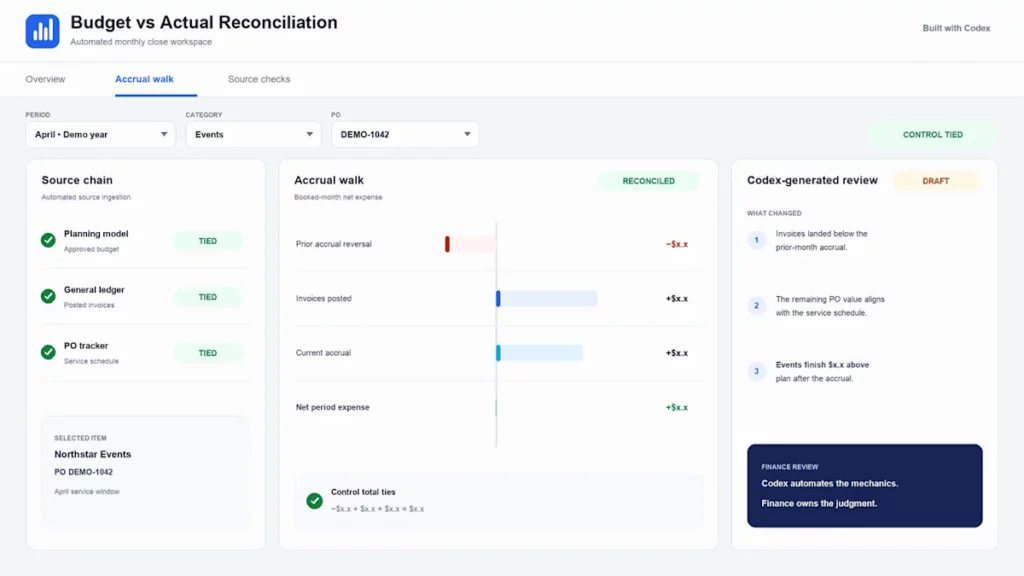
Publisher preview · OZZZER analysis pending editorial review.
PUBLISHER ARTICLE PREVIEW
From the original article
Finance has become a real-time function. To me, the opportunity is much bigger than closing the books faster or refreshing a forecast more often. It is about seeing the business as it changes, helping leaders act sooner, and giving finance teams more time to shape what happens next.
When I joined OpenAI two years ago, there was only a small finance team supporting a company growing at extraordinary speed. We needed to build the function from the ground up and make AI fundamental to how we work, make decisions, and support the business.
I also saw a familiar starting point. Closing the books and updating forecasts still involved manual, recurring work: finding information, explaining what changed, and assembling the inputs for a decision. We had access to the most advanced AI tools in the world, and we were still learning how to redesign finance around them.
So we set two bold ambitions: a zero-day close and automated, continuously updated forecasting.
The idea behind a zero-day close is to give leaders a real-time, reconciled, and traceable view of the company’s financial position. Continuous forecasting builds on that foundation, showing how the business is changing, what could happen next, and which decisions could alter the outcome.
We are still building toward both ambitions. The work has already changed how our team operates. It has pushed us beyond the limitations of static spreadsheets, manual searches for supporting records, and presentations toward live tools built on the full context and data of the business. It has also given finance professionals the ability to build the tools their work requires and carry their expertise further.
For me, that is the real promise of an AI-native finance function: a team that understands what is happening as it happens, helps leaders see the choices ahead, and gives the business more time to act while the outcome can still change.
Getting there requires more than adopting new technology. It requires redesigning work around the decisions that matter, giving people room to experiment, building clear accountability into every workflow, and measuring the dependable work AI completes to provide a clear ROI.
Here are five practical lessons from our experience that every CFO can apply.
The first step was broad access. People need the freedom to explore AI in the context of their own work. Access creates the most value when it is paired with structured experimentation around real problems.
We brought sales engineers into a finance hackathon and asked the team to bring work they wanted to transform. One result was IR-GPT, a custom GPT grounded in the approved materials our investor relations team uses to answer diligence questions. We also began building custom GPTs for areas including procurement and tax.
The hackathon turned AI from an abstract capability into a working tool. In a single day, people could identify a recurring task, build a solution, test it with colleagues, and improve it. The use cases came from the people closest to the work, while technical experts helped them move faster.
For CFOs, the lesson is simple: you need bottom-up experimentation and top-down strategy. Put secure, capable AI in people’s hands and let those closest to the work identify better ways of
Source
OpenAI · 10 Aug 2026 · 19:00 CEST
Open the original at OpenAI ↗