AI · 25 Aug 2026 · 09:00 CEST
Jalapeño’s first results show industry-leading speed and efficiency in AI inference
Publisher preview · OZZZER analysis pending editorial review.
PUBLISHER ARTICLE PREVIEW
From the original article
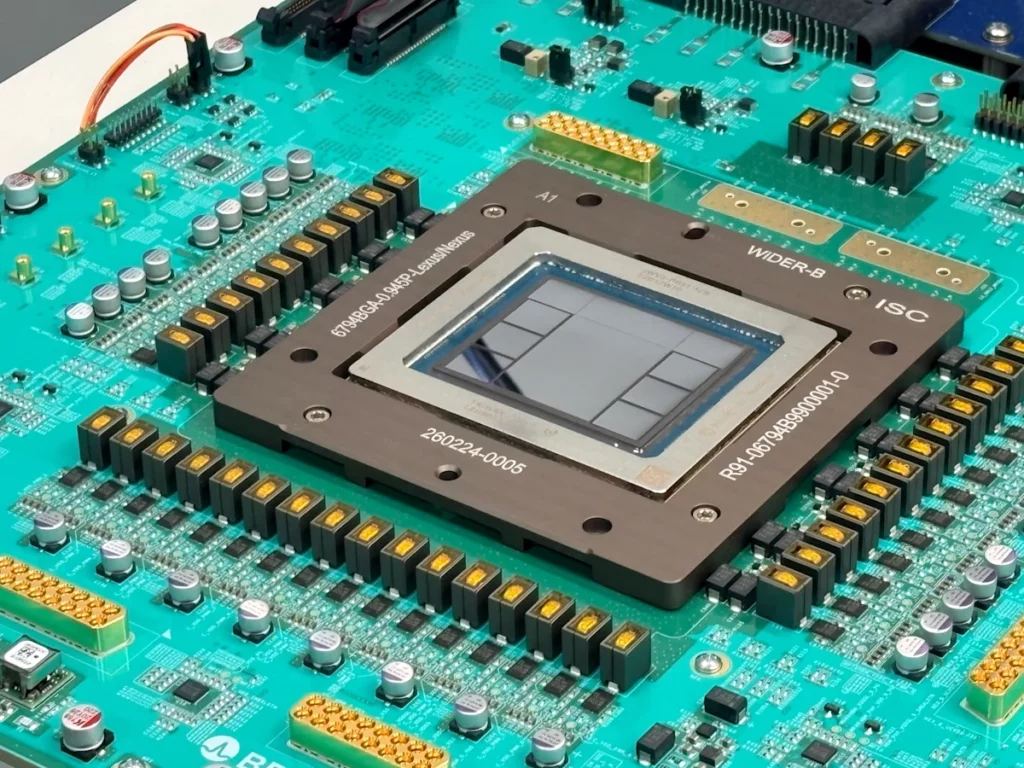
Since announcing Jalapeño, OpenAI’s first custom inference chip, we have been testing the chip and the system built around it. The results show a significant performance advance: Jalapeño can serve more AI work per unit of power while also returning responses more quickly. Jalapeño delivers both higher throughput and lower latency with one architecture, where existing hardware systems often have to make a tradeoff between the two.
For customers, that can mean faster responses, more responsive agents, and more reliable access as demand grows. Our mission is to ensure that artificial general intelligence benefits all of humanity. These gains will help make increasingly capable AI more affordable and more broadly available.
OpenAI models also accelerated Jalapeño’s development. Earlier generations helped the team design and bring up the chip, while our latest models are accelerating how we optimize and program it. Jalapeño’s performance extends across GPT‑OSS 120B, DeepSeek R1, and Kimi K2.5 1T, showing that the architecture works across models developed both inside and outside OpenAI.
Across all three, Jalapeño delivered 1.5 to 1.9 times more AI work per watt at peak throughput and 1.7 to 3.6 times lower end-to-end latency than the comparison systems. For highly interactive workloads, it delivered 2.1 to 4.1 times higher performance.
Jalapeño is also evidence of a broader full-stack advantage. OpenAI can design models, products, serving software, chips, memory, networking, and systems together, using what we learn from real workloads to improve every layer of the stack. Jalapeño is working first-party silicon with measured results, and it is the beginning of a multigenerational platform.
In the months ahead, we will ramp Jalapeño to deliver faster, more capable, and more efficient products for our customers.
We evaluate performance at a matched user experience, measuring how much useful AI work each system can complete per unit of power while meeting the latency customers and interactive agents require. This matters especially for agents, which need to complete many steps in sequence, so delays can compound across an entire task.
To understand how Jalapeño performs in practice, we tested it on InferenceX, a public benchmark from SemiAnalysis that measures the full process of serving an AI request. We compared Jalapeño with leading commercially available AI systems across the tested operating range, from high-throughput serving to highly interactive, low-latency use. Jalapeño delivered a better combination of throughput, power efficiency, and latency.
Although performance is sometimes reported per chip, we believe the more useful
Source
OpenAI · 25 Aug 2026 · 09:00 CEST
Open the original at OpenAI ↗