Unclassified · 23 Jun 2026 · 06:00 CEST
New chip could help tiny robots traverse complex environments
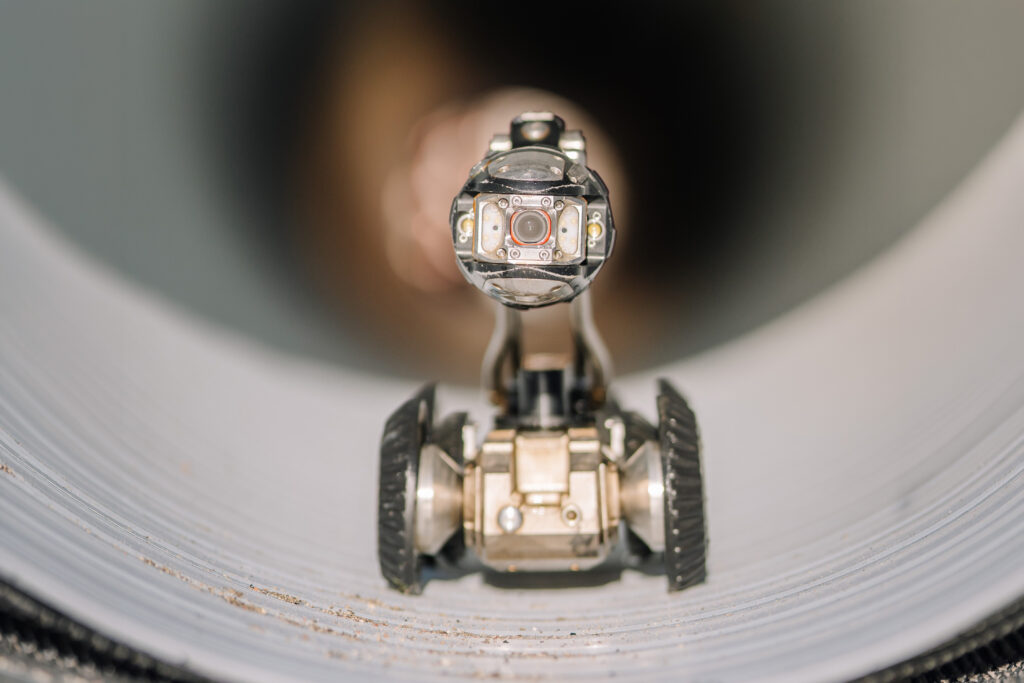
Publisher preview · OZZZER analysis pending editorial review.
PUBLISHER ARTICLE PREVIEW
From the original article
A new chip developed by MIT researchers could help tiny, low-power UAVs avoid obstacles as they zip around tight corners inside an industrial HVAC system to check for gas leaks.
The chip allows small autonomous robots and other battery-limited devices to construct detailed 3D maps of their environments in real-time using only about as much power as a single LED. A robot could use such a map to plan a collision-free path to reach its goal.
Typically, generating such thorough maps requires power-hungry systems and a great deal of memory to build and store 3D representations of the obstacles in a robot’s environment.
The MIT researchers took a different approach by combining an extremely efficient mapping algorithm with specialized hardware designed to accelerate its workload, which minimizes memory and power consumption.
This system-on-a-chip consumes only about 6 milliwatts of power, a fraction of the power required by other systems.
This low-power operation could also make the chip well-suited for lightweight augmented reality headsets that can be worn for extended periods, for applications like educational medical simulation or detailed repair and assembly work.
“This paper showcases a key example of how you can leverage co-design of the algorithm and hardware to really push energy efficiency. While there has been a lot of work looking into compact 3D maps, what stands out about this work is that it also ensures that the process to generate those maps is as efficient as possible.
Our chip allows you to store very large maps in a very small space, and do it in a very energy efficient manner,” says Vivienne Sze, a professor in the Department of Electrical Engineering and Computer Science (EECS), a member of the Research Laboratory of Electronics (RLE), and senior author of a paper on the chip.
She is joined on the paper by co-lead authors and MIT graduate students Zih-Sing Fu and Peter Zhi Xuan Li as well as Sertac Karaman, a professor of aeronautics and astronautics and the director of LIDS. The work was recently presented at the IEEE Very Large-Scale Integrated Circuits Symposium.
For a robot, generating a 3D map that includes the obstacles in its environment usually demands a lot of power because it must store images captured by its camera, and process all the 3D pixels in each image multiple times.
Source
MIT News · 23 Jun 2026 · 06:00 CEST
Open the original at MIT News ↗