Unclassified · 1 Sep 2026 · 06:00 CEST
Ila Kumar: Innovating with communities
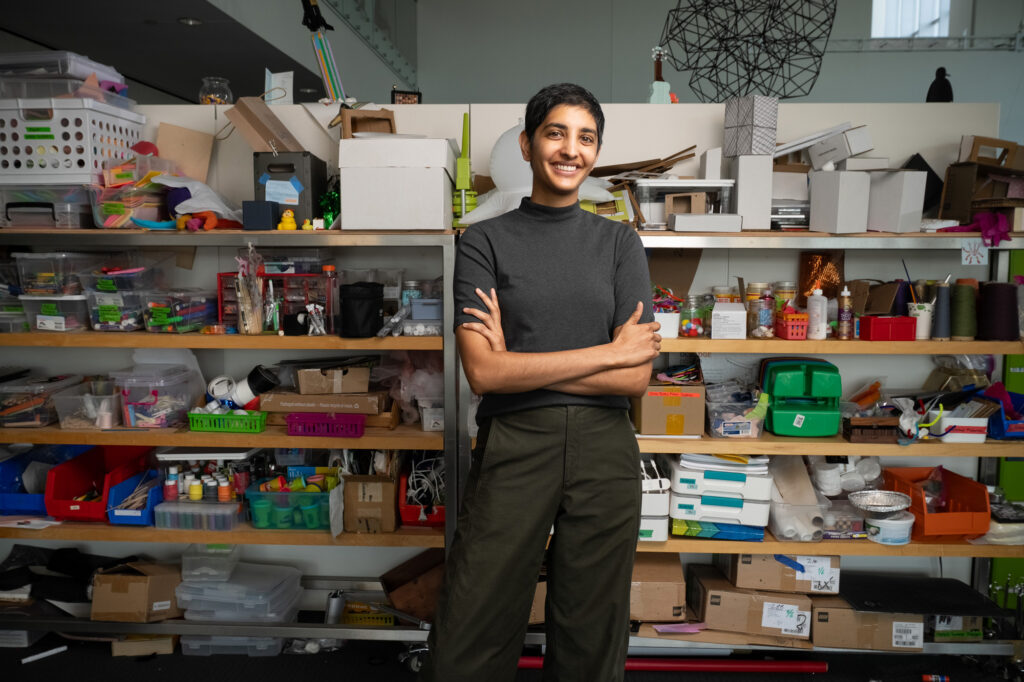
Publisher preview · OZZZER analysis pending editorial review.
PUBLISHER ARTICLE PREVIEW
From the original article
Images for download on the MIT News office website are made available to non-commercial entities, press and the general public under a Creative Commons Attribution Non-Commercial No Derivatives license. You may not alter the images provided, other than to crop them to size. A credit line must be used when reproducing images; if one is not provided below, credit the images to "MIT."
Before Ila Kumar thinks about how to build technology, she asks a different question: What is the context that technology will operate in, and who needs to be involved in the design?
For Kumar, meaningful innovation doesn’t result from engineers or designers working in isolation. Instead, she believes the best innovations emerge when the people who stand to benefit from a technology help create it from the very beginning.
That philosophy has guided her research in the Lifelong Kindergarten group, where she works alongside young people who have experienced trauma during childhood, particularly those involved in the child welfare system, to reimagine how technology can support healing, connection, and independence.
“I really think that community-based design is the only way that we can make technology that accounts for communities’ needs, but also their barriers, their cultures, their concerns,” Kumar says. “It’s the only way that we can make really sustainable and positively impactful technology.”
Today, Kumar is preparing to enter the sixth and final year of her PhD. But when she first arrived at MIT in 2021, she envisioned staying only long enough to complete a master’s degree. However, Kumar quickly fell in love with her work and decided to stay at MIT and pursue her doctorate.
Before graduate school, Kumar grew up in Philadelphia, attended the University of Pennsylvania, and worked on several projects at the intersection of technology and mental health or psychology research.
Through those experiences, Kumar began to question whether the technology she was helping to develop was having the sustained impact she hoped for. “I had done a number
Source
MIT News · 1 Sep 2026 · 06:00 CEST
Open the original at MIT News ↗