OZZZER · AI NEWS

Latest AI news.
Editorial picks.
AI News

Selected signals with a direct route back to each original source.

Latest stories

Introducing WeatherNext 3, our most advanced and accurate global weather AI model

Models & tools

Introducing WeatherNext 3, our most advanced and accurate global weather AI model

Publisher preview

Our flagship AI weather forecasting model now includes real-time satellite data, hourly refreshes, higher resolution, precise precipitation forecasting, and clean energy variables. It’s now integrated across Search, Gemini, Maps, Google Maps Platform, and Cloud. Google has launched WeatherNext 3, an advanced AI model that provides more accurate, high-resolution weather forecasts by using real-time satellite data instead of traditional physics simulations. This update delivers hourly, localized predictions that are five times sharper than previous versions, offering significant improvements for agriculture, renewable energy, and daily planning. You can now access these enhanced…

Google DeepMind · 3 Sep 2026 · 17:02 CESTRead story →Original ↗

Share
LinkedInX
Fine-tuning a 350M Model for Better Structured Outputs in 100 GRPO Steps

Models & tools

Fine-tuning a 350M Model for Better Structured Outputs in 100 GRPO Steps

Publisher preview

Structured output is one of the most common real-world tasks for LLMs, yet most benchmarks fold it into broader reasoning or extraction scores rather than measuring it on its own. Whether a model reliably returns valid, parseable output in the requested format and shape — schema compliance — is often what decides whether it can be wired into a downstream system at all. Note that the training pipeline described here is not the one used to train the RL model described in the IFStruct blog. This notebook doesn't aim to…

Hugging Face · 3 Sep 2026 · 02:00 CESTRead story →Original ↗
Share
LinkedInX

Models & tools

The full stack behind abundant intelligence

Publisher preview

Progress in AI compounds fastest when the entire system improves together. That is how I think about OpenAI’s compute strategy: one integrated system spanning data centers and chips, frontier models, our developer platform, consumer and enterprise products, and AI-native devices, with each layer strengthening the next. Better software makes hardware more productive. Hardware designed for our workloads improves speed and efficiency. More capable models unlock better products, which generate more demand, usage, and learning. Those signals flow back through the system and help us improve it again. Today, we shared…

OpenAI · 25 Aug 2026 · 09:05 CESTRead story →Original ↗
Share
LinkedInX

Models & tools

Pacing model development in an era of cyber-critical capabilities

Publisher preview

Over the past several weeks, two developments have underscored the growing risks associated with increasingly capable AI systems: the OpenAI-Hugging Face incident and, separately, preliminary evidence that one of our upcoming models, Astra, may meet the Critical cybersecurity capability threshold under our Preparedness Framework. Together, these developments, combined with rapid progress in our internal research, have added urgency to our work on strengthening our monitoring, alignment, and containment safeguards across all stages of the training process. As models become more capable, the risks associated with developing and testing them internally…

OpenAI · 18 Aug 2026 · 13:00 CESTRead story →Original ↗
Share
LinkedInX

Models & tools

Previewing Ultrafast mode: GPT-5.6 Sol at up to 14X the speed

Publisher preview

A new speed class for frontier intelligence, turning speed into a competitive advantage. Today, we’re sharing an early look at Ultrafast, a new service tier that runs GPT‑5.6 Sol up to 14× faster than Standard processing, launching first in the OpenAI API. Powered by Cerebras, Ultrafast generates up to 750 output tokens per second, bringing our most intelligent model at the time of this announcement to products and workflows where every second matters. With GPT‑5.6, we’re pushing the frontier on what our models can do and making them more efficient…

OpenAI · 13 Aug 2026 · 12:00 CESTRead story →Original ↗
Share
LinkedInX

Models & tools

Daybreak models are now available on AWS

Publisher preview

Earlier this year, OpenAI frontier models and Codex became generally available on AWS, giving enterprises a new path to bring advanced AI into production. Today, we’re sharing the next step in our work with AWS: making Daybreak capabilities available through Amazon Bedrock. With Daybreak Access, defenders can use frontier cyber models within their existing AWS environments. Daybreak Blue and Daybreak Red access levels are both available in AWS: Daybreak Blue provides access to frontier general-purpose models, including GPT‑5.6

OpenAI · 11 Aug 2026 · 12:00 CESTRead story →Original ↗
Share
LinkedInX
With a feel for physics, AI models simulate a wider range of real-world scenarios

Models & tools

With a feel for physics, AI models simulate a wider range of real-world scenarios

Publisher preview

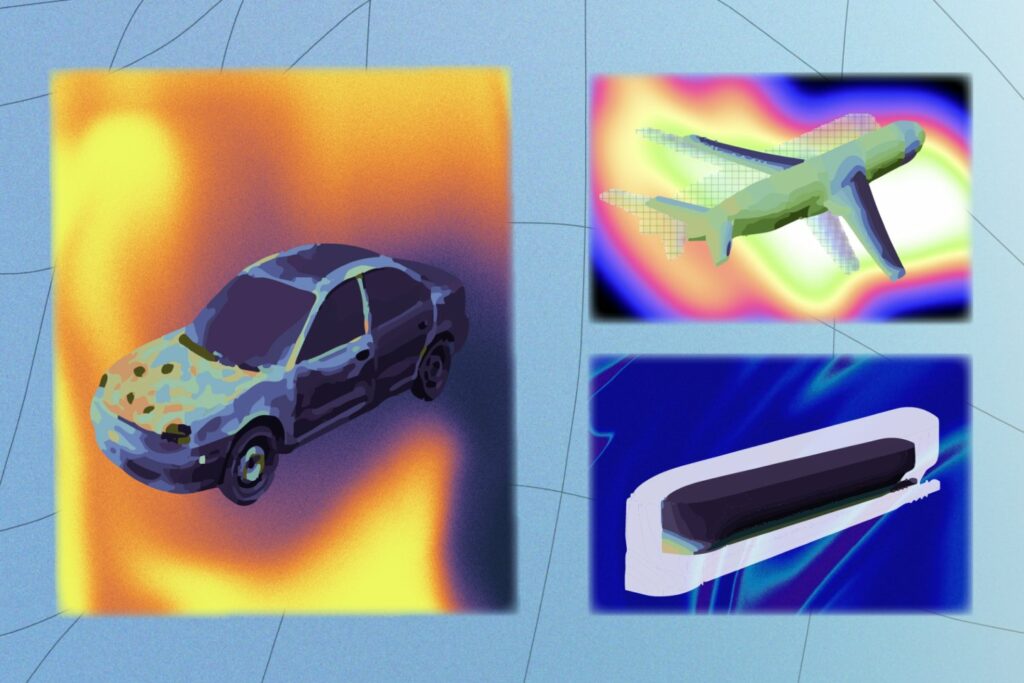
Artificial intelligence models are jacks of many trades, including writing, generating images, and creating 3D models. But they aren’t as helpful when it comes to testing robots or designs for vehicles in diverse environments, since they don’t understand physics as well as they do pixels or text. To build an AI system that can reliably simulate a variety of physical scenarios, engineers need a range of physics data at a scale that isn’t yet feasible. That’s because it’s very time-consuming to get neural networks just a few data points they…

MIT News · 10 Aug 2026 · 21:25 CESTRead story →Original ↗
Share
LinkedInX
Putting frontier cyber models in more trusted hands

Models & tools

Putting frontier cyber models in more trusted hands

Publisher preview

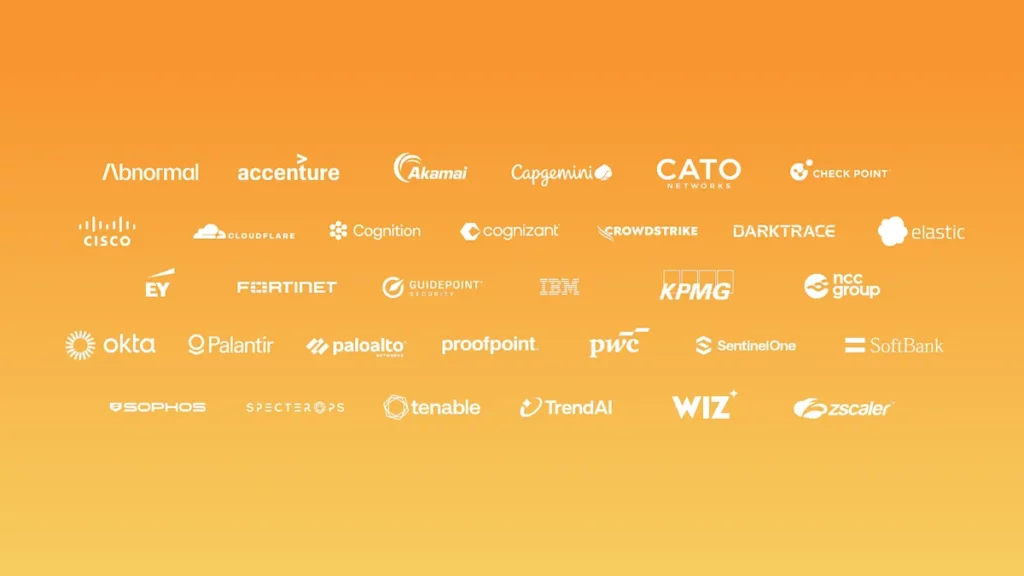
Expanding the Daybreak Cyber Partner Program to close the growing defense gap. We’re bringing OpenAI’s frontier cyber models to the security partners protecting organizations around the world. Together, we’re putting frontier intelligence directly into the products, services, and security operations defenders already depend on. More organizations can now find serious vulnerabilities, fix them faster, and stay ahead of threats moving at machine speed. AI is changing cybersecurity faster than most organizations can respond. Attackers can identify vulnerabilities, develop exploits, and move through complex systems with increasing speed and scale. At…

OpenAI · 10 Aug 2026 · 12:00 CESTRead story →Original ↗
Share
LinkedInX

Models & tools

Third-party cyber evaluations involving OpenAI models

Publisher preview

Independent testing plays an important role in helping us validate and further understand risks before deployment. Some cyber evaluations intentionally use custom configurations, including lowered safeguards to measure underlying capability—not how models ordinarily behave in publicly available deployments. During recent evaluations, two external testing partners identified incidents in which testing configurations and controls combined with the advancing capabilities of the recent models allowed for model activity to extend beyond their intended testing boundaries. The incidents underscore the importance of collaborating across the industry and with third party evaluators to evolve…

OpenAI · 4 Aug 2026 · 21:00 CESTRead story →Original ↗
Share
LinkedInX
Circles powers telco personalization with OpenAI technology

Models & tools

Circles powers telco personalization with OpenAI technology

Publisher preview

Circles uses the OpenAI API to personalize support and resolve issues in real time, driving 22% ARPU growth in markets like Singapore. increase in development efficiency using Codex for design, coding assistance, and unit testing Telcos have rich customer signals across usage, billing, network activity, and location, but turning those signals into timely, personalized action remains difficult. Circles saw an opportunity to rethink the telco experience around that challenge, using OpenAI to build an AI-native telco stack that can connect support, personalization, operations, and monetization in real time. The result…

OpenAI · 3 Aug 2026 · 02:00 CESTRead story →Original ↗
Share
LinkedInX
How Codex became a collaborator for OpenAI’s creative team

Models & tools

How Codex became a collaborator for OpenAI’s creative team

Publisher preview

This is part of our series sharing internal examples of how OpenAI is using its own technology and APIs. These tools are being used internally, at OpenAI, and are shared here as illustrative examples of how frontier AI is supporting use cases across our teams. Most people assume Codex is just for engineers and developers, but for Chad Nelson, Creative Specialist at OpenAI, Codex has become a creative problem solver and collaborator. Chad’s role is to explore what OpenAI models can make possible for creative teams, then turn those possibilities…

OpenAI · 16 Jul 2026 · 09:00 CESTRead story →Original ↗
Share
LinkedInX