OZZZER · AI NEWS

Latest AI news.
Editorial picks.
AI News

Selected signals with a direct route back to each original source.

Share AI News
LinkedInX

Latest stories

How a medical database developed at MIT evolved into a global standard of data-sharing

Unclassified

How a medical database developed at MIT evolved into a global standard of data-sharing

Publisher preview

Before the advancement of scientific data storage and collaboration via the cloud, medical investigators seeking health research breakthroughs had to overcome significant obstacles to collaboration and key clinical data gathering. Data were siloed and difficult to distribute, so those looking to undertake research had no option but to gather them themselves. This not only made research more expensive, but it was challenging to compare findings across datasets. In 1975, researchers studying arrhythmias at MIT and Boston’s Beth Israel Hospital envisioned another way: the team began collecting and digitizing electrocardiogram recordings…

MIT News · 29 Jul 2026 · 16:00 CESTRead story →Original ↗

Share
LinkedInX
MIT projects selected for funding under US Department of Energy’s Genesis Mission

Unclassified

MIT projects selected for funding under US Department of Energy’s Genesis Mission

Publisher preview

MIT researchers are set to contribute to the U.S. Department of Energy’s (DOE) Genesis Mission, with 15 collaborative projects among those selected for funding under Genesis Phase I, DOE announced Wednesday. The Genesis Mission, a national initiative, intends to build “the world’s most powerful integrated science discovery platform” by incentivizing cross-sector collaborations that leverage AI, supercomputing, quantum systems, and advanced scientific instruments to accelerate breakthroughs in energy, scientific discovery, and national security. “MIT researchers are proud to be leading and contributing to projects under the Genesis Mission, in vital areas…

MIT News · 23 Jul 2026 · 14:00 CESTRead story →Original ↗
Share
LinkedInX
Following the questions where they lead

Unclassified

Following the questions where they lead

Publisher preview

Ever since she was a child playing on her family’s farmland in Wisconsin, Bailey Flanigan was guided by her own selective, yet wide-ranging, curiosity. Describing her young self as spirited and a bit unruly, she directed her energies to everything from building booby traps to doing experimental construction projects to exploring an intense interest in medicine to writing fiction and music to planning nonprofit organizations to help lessen social inequality. “I found myself unmotivated to take all the AP [advanced placement] classes for the sake of it. My interest was…

MIT News · 17 Jul 2026 · 19:25 CESTRead story →Original ↗
Share
LinkedInX
3 Questions: Neural transparency and the future of AI design

Unclassified

3 Questions: Neural transparency and the future of AI design

Publisher preview

Millions of people are now designing their own personalized artificial intelligence companions, yet most have little idea how those creations will actually behave. In a new paper, MIT Media Lab Assistant Professor Pat Pataranutaporn and his graduate student researchers Anthony Baez and Sheer Karny introduce “neural transparency,” a tool that lets everyday users glimpse inside an AI’s neural network before their chatbot ever says a word. The work is being presented this week at the ACM Conference on Intelligent User Interfaces. In this interview, Pataranutaporn, who is the Asahi Broadcasting…

MIT News · 15 Jul 2026 · 22:25 CESTRead story →Original ↗
Share
LinkedInX
Can AI build a jet engine? JARVIS Challenge tests role of AI copilots in tough-tech engineering

Unclassified

Can AI build a jet engine? JARVIS Challenge tests role of AI copilots in tough-tech engineering

Publisher preview

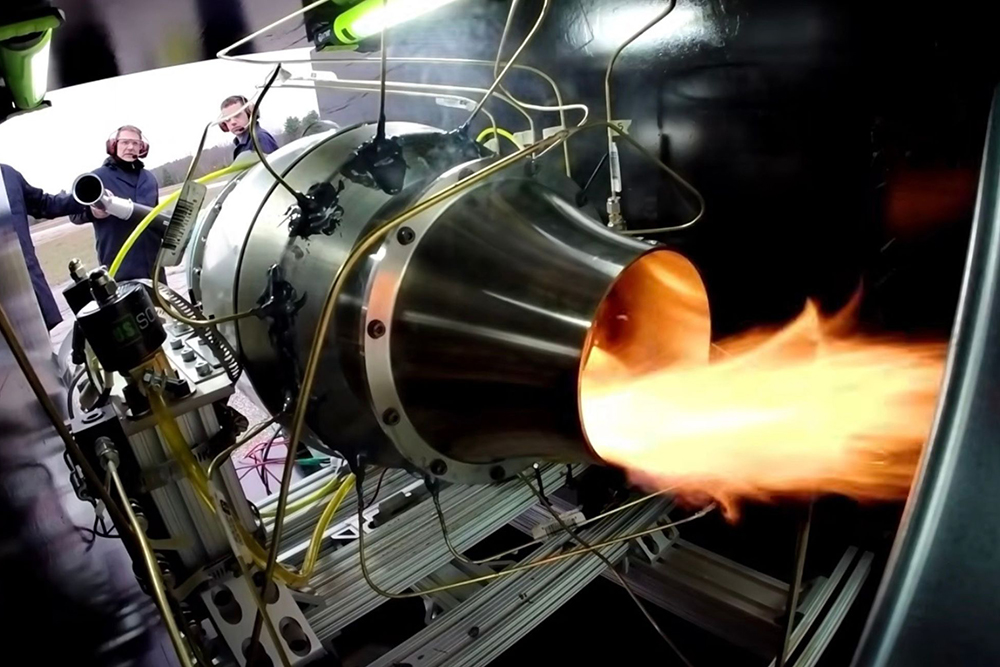
Artificial intelligence has rapidly transformed software engineering. Generative AI and large language models (LLMs) can create huge volumes of code and documentation; machine-learning algorithms can monitor performance and detect security vulnerabilities. But when the task is to conceive, design, and make a complex physical system such as a jet engine, are those AI tools equally transformative? This past semester, the JARVIS Challenge (Jet-engine AI Research and Validation Intensive Sprint) set out to explore whether AI can compress the design-build-test cycle, asking MIT undergraduates to discover whether AI can help them…

MIT News · 14 Jul 2026 · 20:00 CESTRead story →Original ↗
Share
LinkedInX
How MIT students are helping to prevent cyberattacks

Unclassified

How MIT students are helping to prevent cyberattacks

Publisher preview

In May 2019, the government of Baltimore, Maryland, fell into chaos. Cybercriminals had locked the city out of many of its critical files and demanded payment to decrypt them. The city refused to pay ransom. The attack incapacitated a swath of services, including real estate transactions and bill payment, and recovery costs soared into the millions. The syllabus of class 11.074/11.274 (Cybersecurity Clinic), a course in the MIT Department of Urban Studies and Planning (DUSP), includes a case study on Baltimore’s situation as an example of increasingly common ransomware attacks…

MIT News · 13 Jul 2026 · 21:10 CESTRead story →Original ↗
Share
LinkedInX
New method aims to keep kids safe from illegal AI-generated content

Unclassified

New method aims to keep kids safe from illegal AI-generated content

Publisher preview

Images for download on the MIT News office website are made available to non-commercial entities, press and the general public under a Creative Commons Attribution Non-Commercial No Derivatives license. You may not alter the images provided, other than to crop them to size. A credit line must be used when reproducing images; if one is not provided below, credit the images to "MIT." With the exploding popularity of generative artificial intelligence, many open-source models are now available online for anyone to adapt for their task, such as generating product renderings…

MIT News · 13 Jul 2026 · 06:00 CESTRead story →Original ↗

Share
LinkedInX
Tiny robot boats build floating structures

Unclassified

Tiny robot boats build floating structures

Publisher preview

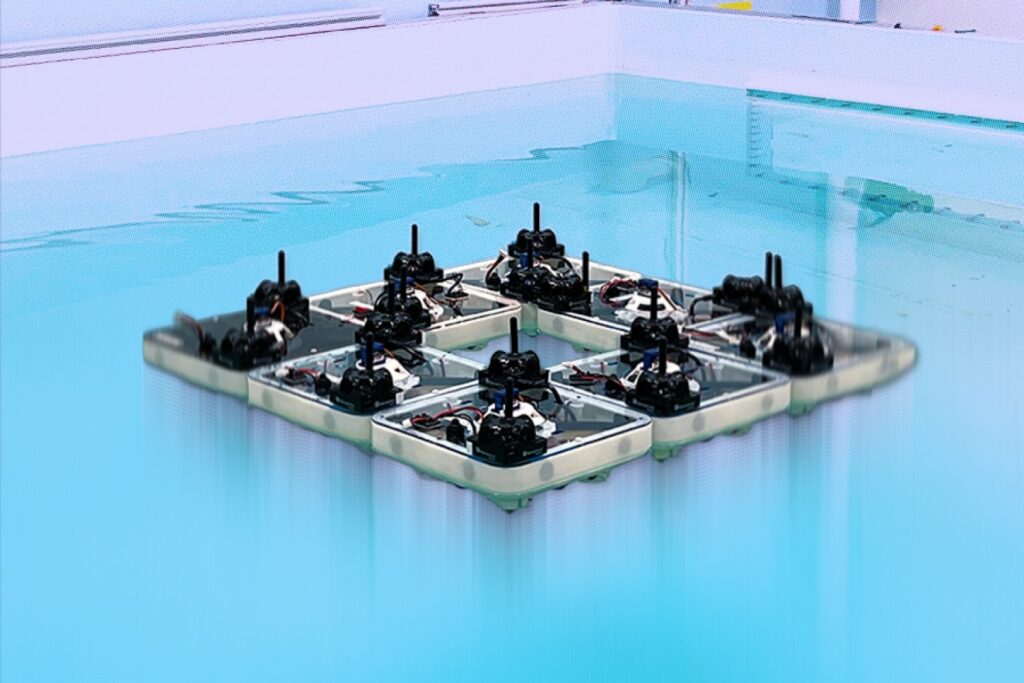
Most people think of the waterfront as the edge of the city. A team of MIT researchers sees it as a dynamic, Lego-like construction site. Their new system, called “FloatForm,” is a swarm of small square robotic boats that assemble themselves into larger structures on the water, break apart, and reassemble into something new, all with minimal human direction. Each robot, about the size of a dinner plate at 21 centimeters square, is a self-contained vessel with its own thrusters, sensors, and magnetic latches. Together, they hint at a future…

MIT News · 9 Jul 2026 · 17:50 CESTRead story →Original ↗
Share
LinkedInX
Jesse Thaler named director of the Laboratory for Nuclear Science

Unclassified

Jesse Thaler named director of the Laboratory for Nuclear Science

Publisher preview

Professor Jesse Thaler has been named director of the MIT Laboratory for Nuclear Science (LNS), effective Aug. 1. He succeeds Professor Bolek Wyslouch, who directed LNS for the past decade. Thaler is a theoretical particle physicist who combines techniques from quantum field theory and machine learning to address outstanding questions in fundamental physics. “In his research, Jesse has done pioneering work on particle jets at the Large Hadron Collider and is a leader in combining AI and machine learning with fundamental particle physics,” says Nergis Mavalvala, dean of the MIT…

MIT News · 7 Jul 2026 · 16:45 CESTRead story →Original ↗
Share
LinkedInX
MIT in the media: Innovating and educating for the next 250 years of America

Unclassified

MIT in the media: Innovating and educating for the next 250 years of America

Publisher preview

Without federal support for curiosity-driven research, the innovation and talent pipeline that has helped ensure our nation’s prosperity and safety could run dry, warned President Sally Kornbluth during a Washington Post Live event. During "The Next Generation," a panel discussion moderated by Washington Post reporter Zachary Goldfarb at The Washington Post’s “Building America Summit,” Kornbluth and Arizona State University (ASU) President Michael Crow joined forces for a spirited discussion on the importance of curiosity-driven research, examining how universities are preparing the next generation of scientists to lead in America’s rapidly…

MIT News · 1 Jul 2026 · 22:30 CESTRead story →Original ↗
Share
LinkedInX

Unclassified

How ChatGPT adoption has expanded

Publisher preview

ChatGPT adoption is widening and deepening around the world. New OpenAI Signals data shows that people use ChatGPT more often and for a broader range of tasks over time, while its user base is becoming more global and more diverse. Using aggregated data, OpenAI Signals measures how people interact with Individual ChatGPT plans (these include Free, Go, Plus, and Pro plans) over time. This analysis offers a view into how Individual AI usage is evolving as ChatGPT reaches global scale. The visualizations below highlight several core trends in global AI…

OpenAI · 30 Jun 2026 · 11:00 CESTRead story →Original ↗
Share
LinkedInX
Core dump epidemiology: fixing an 18-year-old bug

Unclassified

Core dump epidemiology: fixing an 18-year-old bug

Publisher preview

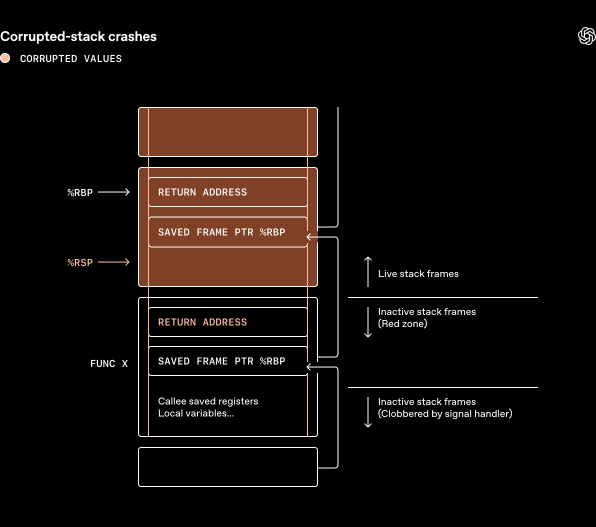
By Nathan Bronson, Member of Technical StaffOpenAI’s models and agents increasingly rely on scalable data infrastructure in order to search for relevant data at inference time: when the models are thinking about your question. Some of these services are written in C++, whose low-level control of the system lets us maximize performance and minimize memory usage. Those efficiency benefits are important as we scale, but C++’s lack of memory safety means that bugs can cause crashes by writing to incorrect or non-existent memory addresses. A few months ago we observed…

OpenAI · 30 Jun 2026 · 02:00 CESTRead story →Original ↗
Share
LinkedInX