OZZZER · AI NEWS

Latest AI news.
Editorial picks.
AI News

Selected signals with a direct route back to each original source.

Share AI News
LinkedInX

Latest stories

Generating scenarios for extreme events, without extreme data

Unclassified

Generating scenarios for extreme events, without extreme data

Publisher preview

Images for download on the MIT News office website are made available to non-commercial entities, press and the general public under a Creative Commons Attribution Non-Commercial No Derivatives license. You may not alter the images provided, other than to crop them to size. A credit line must be used when reproducing images; if one is not provided below, credit the images to "MIT." Can a city’s seawall stand up to a blockbuster storm? Will a region’s power grid hold against record-breaking heat? And can a town’s fire-fighting resources contain a…

MIT News · 24 Aug 2026 · 20:00 CESTRead story →Original ↗

Share
LinkedInX
Paving the way for greener ammonia production

Unclassified

Paving the way for greener ammonia production

Publisher preview

Ammonia is one of the most important chemicals produced in the world, ranking second only to sulfuric acid in the total volume produced each year. It is used mostly to make fertilizer, which is essential to feeding the world’s population. Yet its production accounts for up to 2 percent of the world’s energy consumption and about 1.5 percent of greenhouse gas emissions, so the search has been underway for ways to produce ammonia more sustainably. The traditional way of making ammonia, in use for more than a century and accounting…

MIT News · 20 Aug 2026 · 20:45 CESTRead story →Original ↗
Share
LinkedInX
Stampli cuts launch hours by 68% using ChatGPT Work

Unclassified

Stampli cuts launch hours by 68% using ChatGPT Work

Publisher preview

With a fixed deadline and design resources committed elsewhere, Stampli used Codex and ChatGPT Work to compress weeks of launch production into days. Stampli is an intelligent procure-to-pay platform that connects procurement, accounts payable, vendor management, payments, and employee spend. Its Deep Finance™ product transforms the data moving through Stampli’s procure-to-pay platform into executive spend intelligence for CFOs, VPs, and other business leaders. Launching it meant product development, positioning, design, communications, enablement, and operations all moving in parallel, on a fixed timeline, with design resources and outside contractors already committed…

OpenAI · 20 Aug 2026 · 02:00 CESTRead story →Original ↗
Share
LinkedInX
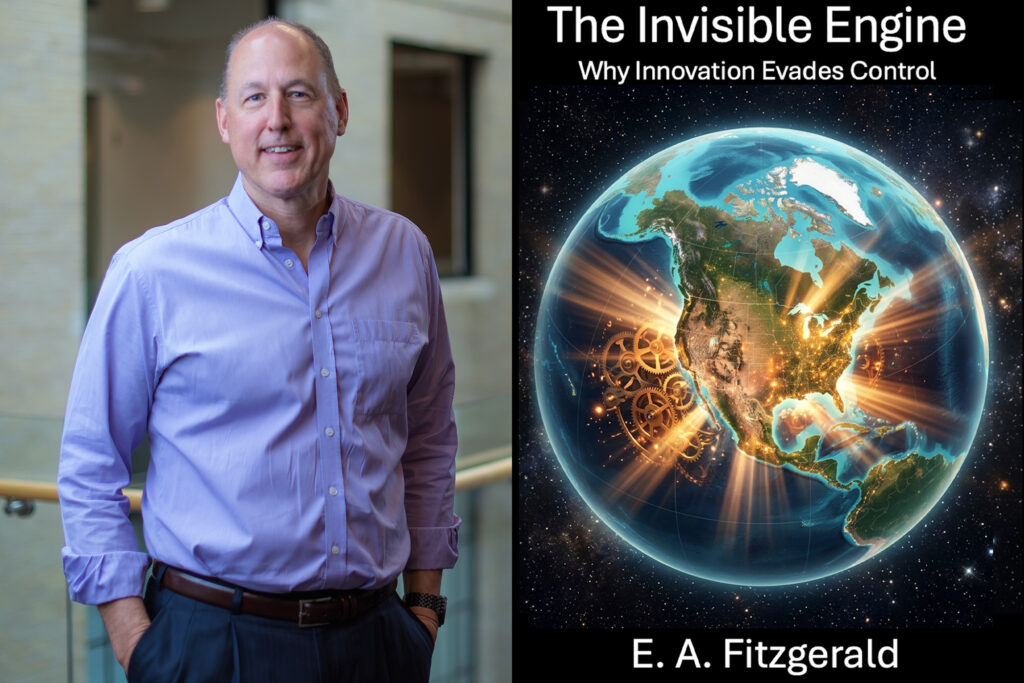
Q&A: Rethinking how innovation happens

Unclassified

Q&A: Rethinking how innovation happens

Publisher preview

Innovation is a concept that has become mythologized in the modern era: what it is, how to manage it, how to teach it, and how to get it to work for us. Despite these explorations, it remains fundamentally misunderstood, writes Eugene Fitzgerald, the Merton C. Flemings SMA Professor in MIT’s Department of Materials Science and Engineering, in his latest book, “The Invisible Engine: Why Innovation Evades Control.” Fitzgerald draws on a decade of work leading international research programs, including the MIT and Masdar Institute Cooperative Program and the MIT-Singapore Alliance…

MIT News · 17 Aug 2026 · 21:50 CESTRead story →Original ↗
Share
LinkedInX
OpenAI appoints Dali Rajic as Chief Revenue Officer

Unclassified

OpenAI appoints Dali Rajic as Chief Revenue Officer

Publisher preview

As enterprise AI deployment accelerates, OpenAI is building on its global scale to grow even faster. Dali Rajic will be joining as Chief Revenue Officer, leading OpenAI’s global revenue organization. OpenAI brings together research, products, deployment, and infrastructure to make AI more capable, more affordable, and broadly useful. Our products now reach more than one billion weekly active users and more than two million businesses—twice as many as a year ago. Denise Dresser helped make that possible. During a formative period for both OpenAI and the enterprise AI market, she

OpenAI · 13 Aug 2026 · 11:00 CESTRead story →Original ↗
Share
LinkedInX
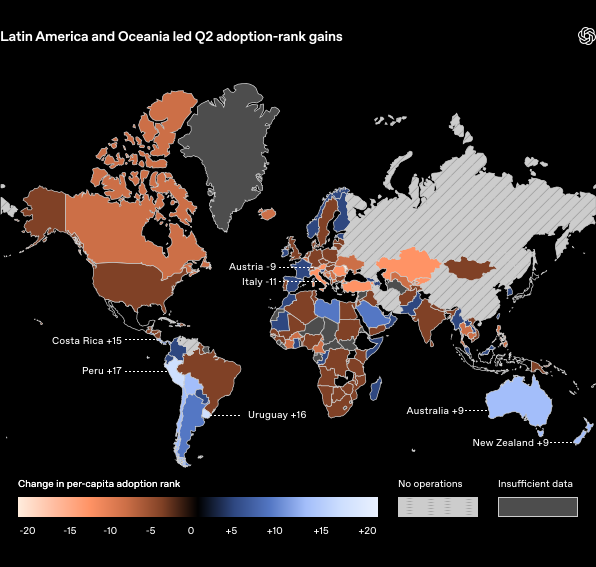
From asking to doing: How the world is putting ChatGPT to work

Unclassified

From asking to doing: How the world is putting ChatGPT to work

Publisher preview

AI is moving from something people ask to something they put to work. For the first time, OpenAI is publishing country-by-country data showing how people around the world use ChatGPT. The findings reveal a technology that is moving beyond answers and into action, spreading beyond early adopters, and becoming useful to more people in more ways: From asking to doing: At work, people are more than twice as likely to use ChatGPT to complete a task or create something, from writing and coding to analysis, than they are outside work.…

OpenAI · 6 Aug 2026 · 02:00 CESTRead story →Original ↗
Share
LinkedInX
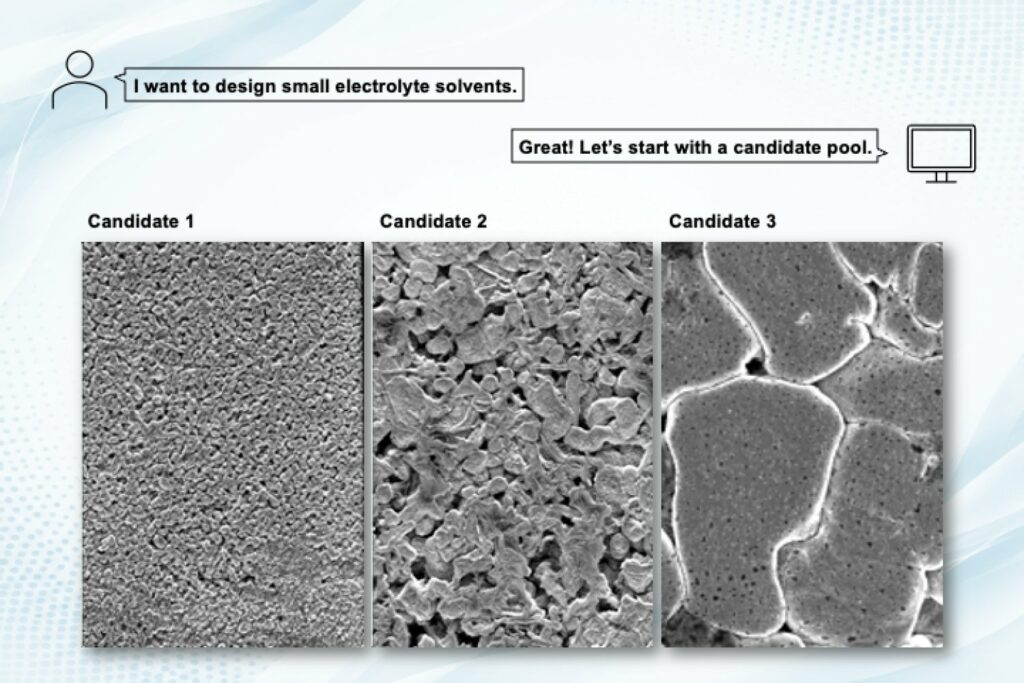
Solving the solvent problem

Unclassified

Solving the solvent problem

Publisher preview

Lithium-ion batteries are the leading choice in today’s electric vehicle and battery energy storage system industries, but they contain a number of critical minerals — including lithium, cobalt, nickel, and graphite — that are considered essential for economic and national security reasons, and therefore vulnerable to supply chain disruptions. As renewable energy, electrified infrastructure, and high-power digital technologies continue to grow, there is an increasing need for energy storage systems that are low-cost, resource-abundant, and capable of fast charging and discharging. That need, among other reasons, has motivated a group…

MIT News · 4 Aug 2026 · 20:50 CESTRead story →Original ↗
Share
LinkedInX
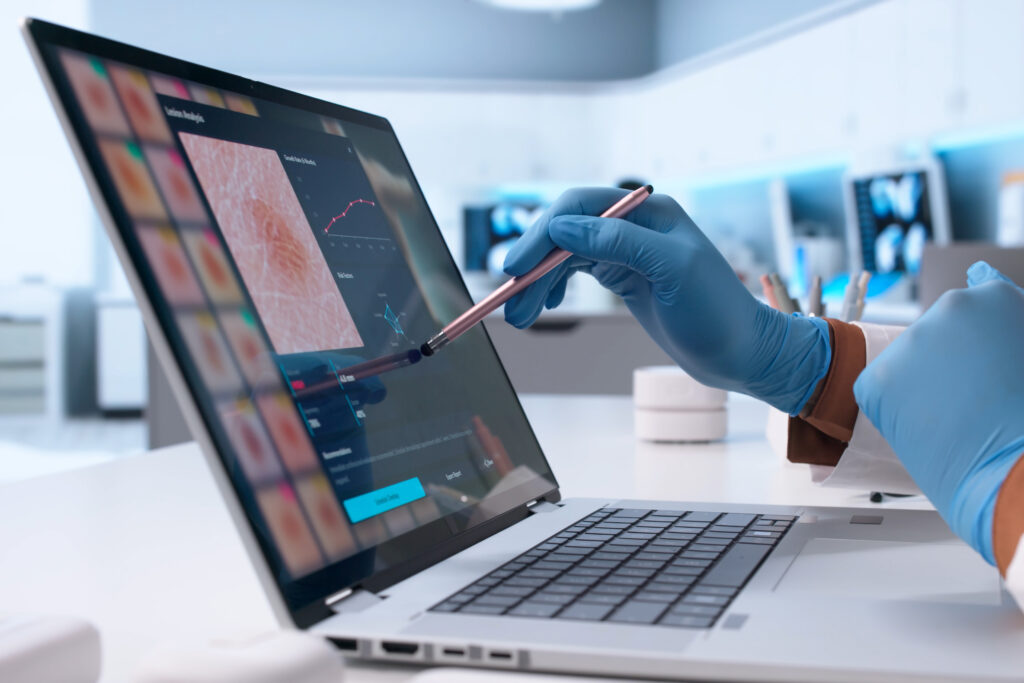
The benefits of medical AI assistance vary based on user expertise

Unclassified

The benefits of medical AI assistance vary based on user expertise

Publisher preview

A one-size-fits-all approach likely isn’t the best strategy when designing artificial intelligence systems that assist users in disease diagnosis. A new study by researchers at MIT and elsewhere found that, while AI assistance generally improved the accuracy of non-experts and clinicians in diagnosing skin diseases, AI explainability methods had different impacts depending on the users’ knowledge level. Explainable AI methods help users know when to trust a model’s predictions by describing or validating the model’s decision-making. For instance, a model might use a heat map to highlight image regions that…

MIT News · 4 Aug 2026 · 11:00 CESTRead story →Original ↗
Share
LinkedInX
Apple is getting this wrong

Unclassified

Apple is getting this wrong

Publisher preview

Apple is one of the greatest companies of all time, and built a reputation for obsessing over the smallest details. This careless, aggressive and oddly personal lawsuit sadly doesn’t live up to that reputation. Apple had claimed that they contacted OpenAI in February and that we didn’t respond. They now admit that their outside lawyers emailed the wrong person after confusing two Asian last names—only after we brought this to their attention. Apple also claimed they had a discussion with our General Counsel, which they now concede never happened. But…

OpenAI · 4 Aug 2026 · 00:00 CESTRead story →Original ↗
Share
LinkedInX
Alexander Rakhlin named director of the MIT Statistics and Data Science Center

Unclassified

Alexander Rakhlin named director of the MIT Statistics and Data Science Center

Publisher preview

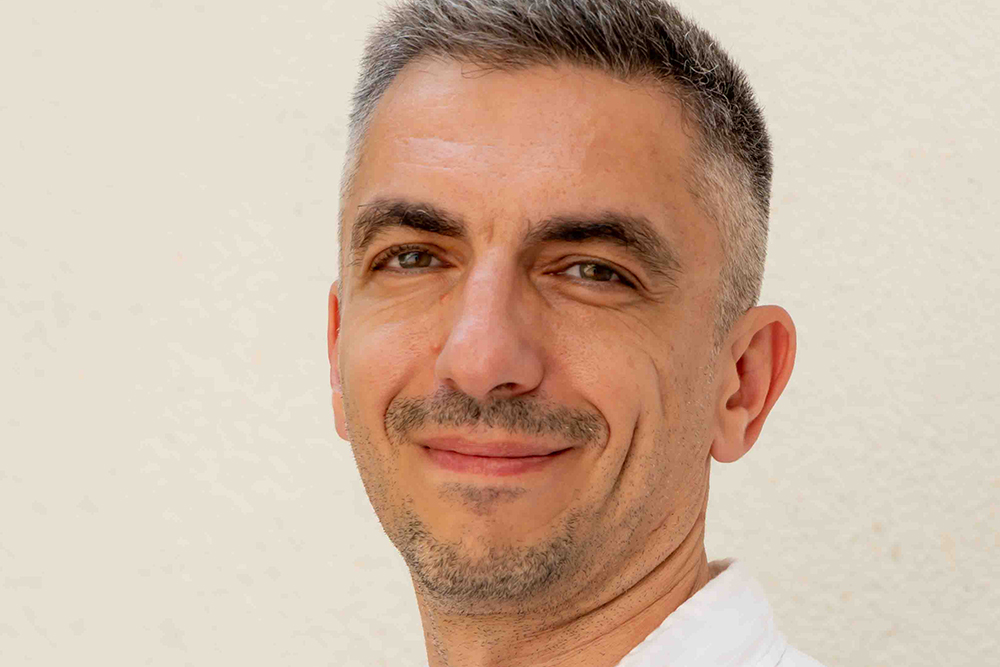
Alexander “Sasha” Rakhlin PhD ’06, the Distinguished Professor in Data, Systems, and Society at the MIT Institute for Data, Systems, and Society (IDSS); a professor of brain and cognitive sciences at MIT; and a principal investigator in the MIT Laboratory for Information and Decision Systems (LIDS) has been named the next director of the MIT Statistics and Data Science Center (SDSC). Rakhlin succeeds Ankur Moitra, the Norbert Wiener Professor of Mathematics, associate director of the IDSS, and a faculty member in the MIT Department of Electrical Engineering and Computer Science…

MIT News · 3 Aug 2026 · 21:50 CESTRead story →Original ↗
Share
LinkedInX

Unclassified

Ten advances in mathematics and theoretical computer science

Publisher preview

We want to empower scientists and mathematicians with tools that accelerate discovery. That is why we recently announced ChatGPT for Academic Researchers⁠, an initiative providing 100,000 scientists and mathematicians with free access to our best ChatGPT models. We also continue to evaluate our models on open research problems during development. In May, we shared an AI-generated disproof⁠ of the Erdős unit-distance conjecture, discovered while evaluating an unreleased model. This work has already inspired further developments in mathematics and theoretical computer science1. Today, we are sharing a selection of ten results,…

OpenAI · 1 Aug 2026 · 02:00 CESTRead story →Original ↗
Share
LinkedInX
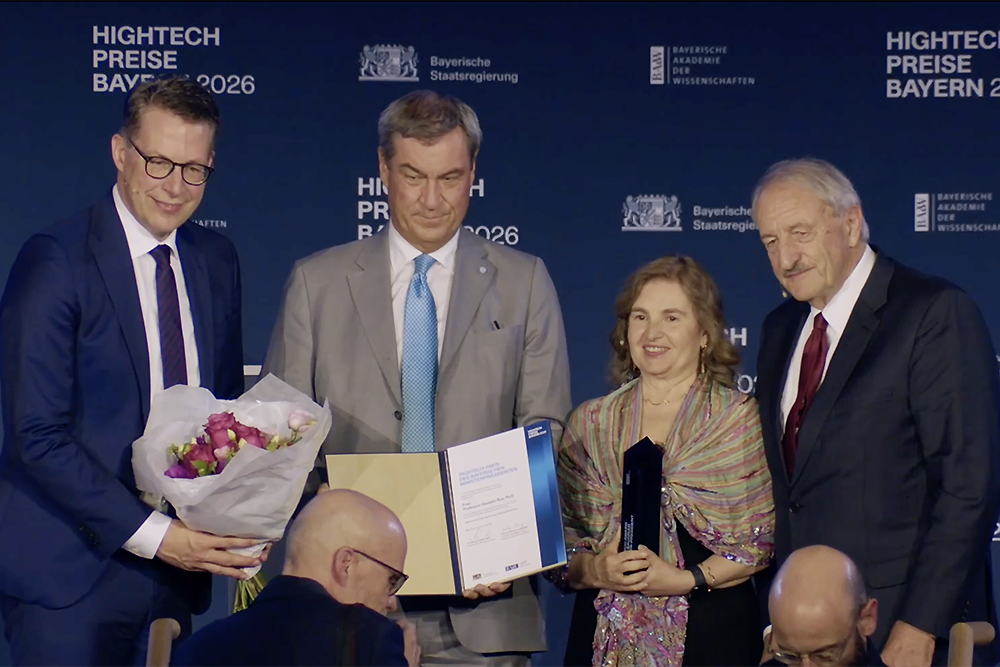
Daniela Rus receives Bavarian Minister-President’s High-Tech Prize

Unclassified

Daniela Rus receives Bavarian Minister-President's High-Tech Prize

Publisher preview

Daniela Rus, director of MIT's Computer Science and Artificial Intelligence Laboratory (CSAIL) and the Panasonic Professor of Computer Science, has received the 2026 High-Tech Prize of the Bavarian Minister-President for her contributions to robotics, artificial intelligence, and autonomous systems. Awarded jointly by the Bavarian State Government and the Bavarian Academy of Sciences and Humanities, it is the most highly endowed award for technology and engineering in Germany. Rus accepted the prize on July 23 at the Herkulessaal of the Munich Residence. The selection committee cited four strands of her work:…

MIT News · 30 Jul 2026 · 23:00 CESTRead story →Original ↗
Share
LinkedInX