OZZZER · AI NEWS

Latest AI news.
Editorial picks.
AI News

Selected signals with a direct route back to each original source.

Share AI News
LinkedInX

Latest stories

Unclassified

Inside Genebench-Pro

Publisher preview

These 10 case studies showcase representative questions from GeneBench-Pro. Each case study includes the original prompt, datasets, and supporting materials. For an overview of the benchmark and key findings, see the announcement blog. Estimate whether a synthetic TXR1-directed inhibitor has positive clinical utility in tumors whose target activation is driven by a structural variant. TXR1, TXR1i, DLR1, and star-allele labels are synthetic benchmark labels. The target subgroup has to be recovered from long-read, expression, tumor-quality, and pharmacogenomic evidence before benefit and toxicity can be interpreted as a treatment decision. A…

OpenAI · 30 Jun 2026 · 02:00 CESTRead story →Original ↗

Share
LinkedInX
MIT in the media: Exploring how curiosity-driven science is an essential ingredient in America’s success

Unclassified

MIT in the media: Exploring how curiosity-driven science is an essential ingredient in America’s success

Publisher preview

Over the past 80 years, America’s bold, sustained investment in scientific research, and the discoveries, ideas and innovations that flowed from it made America a world leader. The nation’s scientific leadership has been essential to our shared prosperity and national security, and delivered real benefits for all Americans. On June 16, Scientific American released a special section, “The Young American Scientists,” which celebrates early-career professionals actively engaged in scientific research, and features commentary from MIT faculty on why they continue to be so devoted to curiosity-driven science, demonstrating how their…

MIT News · 25 Jun 2026 · 18:00 CESTRead story →Original ↗
Share
LinkedInX
New chip could help tiny robots traverse complex environments

Unclassified

New chip could help tiny robots traverse complex environments

Publisher preview

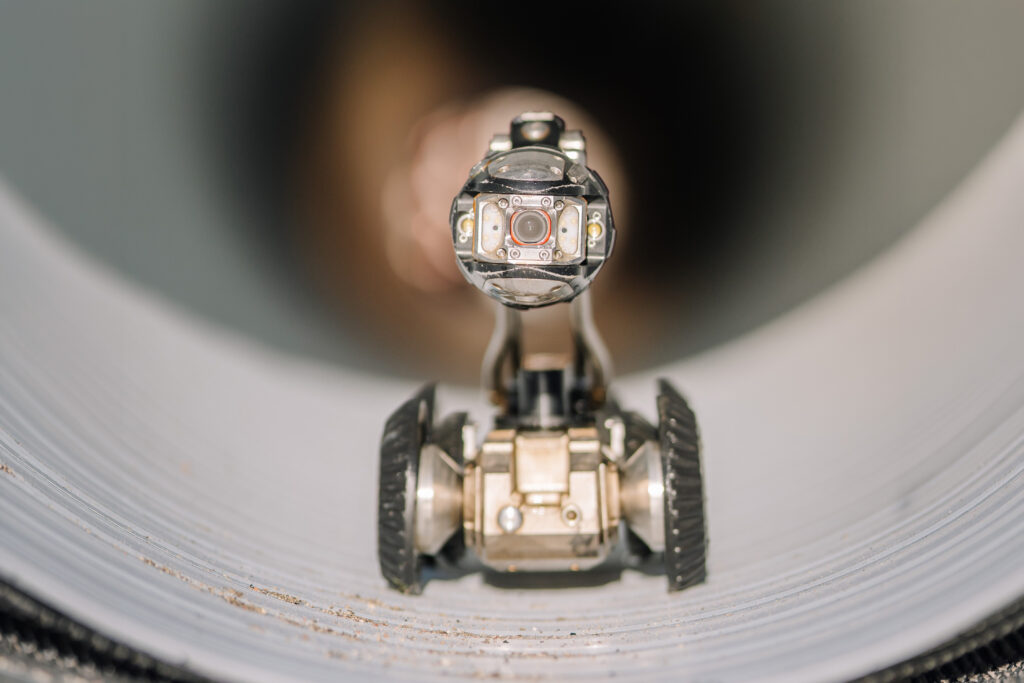
A new chip developed by MIT researchers could help tiny, low-power UAVs avoid obstacles as they zip around tight corners inside an industrial HVAC system to check for gas leaks. The chip allows small autonomous robots and other battery-limited devices to construct detailed 3D maps of their environments in real-time using only about as much power as a single LED. A robot could use such a map to plan a collision-free path to reach its goal. Typically, generating such thorough maps requires power-hungry systems and a great deal of memory…

MIT News · 23 Jun 2026 · 06:00 CESTRead story →Original ↗
Share
LinkedInX
MIT in the media: For the future of tech, “Massachusetts can absolutely lead”

Unclassified

MIT in the media: For the future of tech, "Massachusetts can absolutely lead"

Publisher preview

On June 9, The Boston Globe released its 2026 “Tech Power Players” list, recognizing 50 influential local leaders in technology and business across Massachusetts. The list includes eight MIT affiliates including President Sally Kornbluth, Prof. Daniela Rus (director of CSAIL), Prof. Regina Barzilay, Prof. Yet-Ming Chiang, Prof. Max Tegmark, Ana Bakshi (executive director of the Martin Trust Center for MIT Entrepreneurship), Katie Rae CEO and Managing Partner of Engine Ventures), and Senior Lecturer Brian Halligan, along with a number of MIT alumni. In addition to recognizing individual leaders, the Power…

MIT News · 18 Jun 2026 · 06:00 CESTRead story →Original ↗
Share
LinkedInX
Dreaming: Better memory for a more helpful ChatGPT

Unclassified

Dreaming: Better memory for a more helpful ChatGPT

Publisher preview

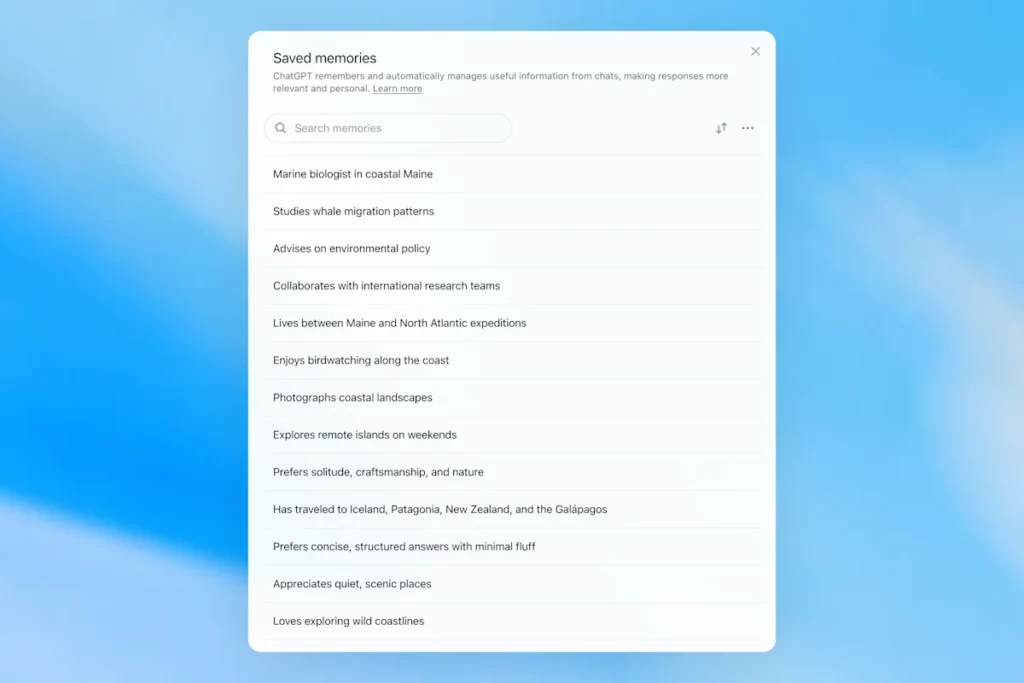
Improving memory synthesis in ChatGPT to optimize for freshness, continuity and relevance. Today we’re beginning to roll out a more capable and scalable system for synthesizing memory, developed to tackle the staleness, correctness, and scalability challenges that we observe when memory is applied to the hundreds of millions of users and multi-year time horizons in ChatGPT. Memory is what helps ChatGPT learn your preferences, projects, and constraints, allowing future conversations to start from shared context rather than from scratch. Over the last two years, memory has grown into a critical…

OpenAI · 4 Jun 2026 · 11:00 CESTRead story →Original ↗
Share
LinkedInX